
 Login
Login























Accurate estimates decide whether a move goes smoothly or turns into a loss, a complaint, or a bad review. Customers judge businesses by service quality, as roughly nine out of ten people say customer service influences whether they’ll do business with a company, and most say it affects whether they’ll come back. Those two facts together change the job of estimating from an administrative step into a competitive one.
If your quotes are slow, inconsistent, or leave customers surprised at the final cost, you lose in three ways:
- You waste resources
- You lose bookings
- You destroy trust that could have driven repeat business
Digital moving surveys and automated cube sheets stop that slide by capturing what actually exists in a home, turning that record into a repeatable volume and labor calculation, and tying the whole package directly into scheduling and billing. In this article, I’ll explain why traditional methods fail, what digital surveys and cube sheets do differently, and how Arrivy puts these pieces into a single, usable workflow that makes estimates repeatable, defensible outcomes.
The solution is being adopted fast
A recent market analysis estimates the field service management market will rise to USD 9.60 billion by 2030. This fast growth is driven by companies that can reliably deliver service at scale.
Recommended Reads
The Problem with Traditional Moving Estimates
In-person surveys are time-consuming and costly
Sending a crew or estimator to a site for a physical survey is often the safest way to get an accurate quote, but it comes with real costs. Travel time, back-and-forth scheduling, and the labor of a trained estimator add to the price of doing business. That work also slows your pipeline when a job that could be won in a day takes multiple days from first contact to delivered estimate, and each day adds the risk that the customer will get another quote or lose interest.
Phone-based estimates often lead to errors
Phone estimates are fast, but they rely on the customer’s ability to describe their home, their belongings, and access details accurately. They might typically forget bulky items, underreport specialty pieces, or miss access constraints like stairs or elevator reservations. Such omissions cause understaffed crews, overloaded trucks, surprise charges, and unhappy customers.
Customer trust issues with “hidden costs”
The most damaging result of a poor estimate is a broken relationship. When a customer receives a final bill that is significantly higher than the quote, they feel the company misled them. Complaints, negative reviews, and disputes are costly to resolve and bluntly contagious when buyers talk to other buyers. In an industry where service quality can make or break a sale, transparency matters as much as price.
What Are Digital Moving Surveys?
A digital moving survey is a structured, mobile-first form that field crews fill out to capture the details of a move. It replaces pen-and-paper checklists with a form that can collect item lists, room-by-room inventories, custom measurements, photos, and notes. Good digital surveys include mandatory fields, dropdowns for common items, and the ability to attach images and signatures so nothing is left to memory.
Arrivy’s digital forms let teams build customized survey templates, add calculations, capture photos and e-signatures, and operate offline when connectivity is poor, then sync back automatically when service resumes. That combination of structure and flexibility is what converts raw observations into usable data.
Benefits for movers (faster, scalable, flexible scheduling)
Digital surveys speed quoting because the crew captures consistently structured data on the first visit, and that data flows immediately into office systems. Fewer manual handoffs mean fewer transcription errors. The same survey templates scale across crews and locations, so pricing logic and assumptions stay consistent even as you grow. Arrivy also lets movers schedule surveys flexibly..
Benefits for customers (convenience, transparency, less disruption)
Customers don’t want to rearrange their day for a long, intrusive visit. Arrivy offers a self-service portal that allows customers to schedule appointments according to their convenience. Digital surveys let crews capture what’s needed during a short, focused on-site inspection using structured forms and photos, so the work is done faster and with minimal interruption. Because photos and an itemized list are attached to the survey and available to both the office and the customer, everyone sees exactly what was recorded, which increases transparency and cuts down on later questions about charges.

What Is a Cube Sheet and Why Does It Matter?
A cube sheet is a calculation that translates an inventory list into volume by determining how many cubic feet or cubic meters the items will occupy in a truck. In moving, cube sheets are the baseline for truck size selection, load planning, and labor estimation.
How cube sheets help calculate load volume & truck space
Cube calculations use predefined item dimensions for common pieces (sofa, dresser, mattress) plus any custom measurements captured during the survey. Those item volumes are added together, and the total helps determine needed truck bays, whether two trucks are required, and how to sequence loading to avoid rehandling. Cube sheets also feed labor models. For example, more volume typically equals more handling hours and sometimes more specialized movers.
Common challenges with paper-based cube sheets
Paper cube sheets are slow to compute and easy to misread. Different estimators use different item assumptions, causing inconsistent quotes. Moreover, historic comparisons are difficult when cube sheets are scattered across files. These gaps create two problems:
- Underestimates that leave you short on crew and truck space
- Overestimates that price you out of competitive bids
The Digital Advantage: How Tech Improves Estimates
Real-time data capture with digital forms & mobile apps
Digital surveys capture the inventory and photos directly on the device, and the data syncs to the office in real time. That means the person who prices the job is looking at the same, structured dataset that the field crew collected. Arrivy’s forms support offline capture and automatic syncing so data integrity survives poor cell coverage.
Automatic volume calculation (cube sheets linked to inventory items)
When cube logic is attached to the inventory captured in a survey, volume gets calculated automatically. Predefined item categories supply standard dimensions; if a surveyor records a custom measurement, the system uses that in the cube math. The result is a machine-produced cube sheet that’s repeatable and auditable, not a hand-drawn approximation.
Standardized, consistent estimates across teams
Automation enforces the rules. Every estimator uses the same category definitions, the same dimensional assumptions, and the same labor multipliers. Standardization removes confusion and ensures that a price given in Boston follows the same logic as a price given in Dallas. That consistency makes it far easier to scale quoting without inflating your support headcount.
Reducing disputes and improving customer trust
Digital surveys + automated cube sheets create a shared record. The customer can be shown the photos, the item list, and the cube math used to calculate the price. When both sides work from the same data, disputes drop. Customers understand what they’re paying for and how the price was reached, which increases willingness to sign and pay on schedule.
How Arrivy Helps Movers Digitize Surveys & Cube Sheets
Arrivy packages the building blocks movers need and ties them into scheduling, dispatch, and invoicing so the estimate does not live in isolation. The platform’s Operations Cloud™ and Digital Forms module give you the tools to capture accurate job data at the point of truth, turn that data into usable cube math, and send it straight into scheduling and billing without manual retyping.
Digital forms that work where your crews work
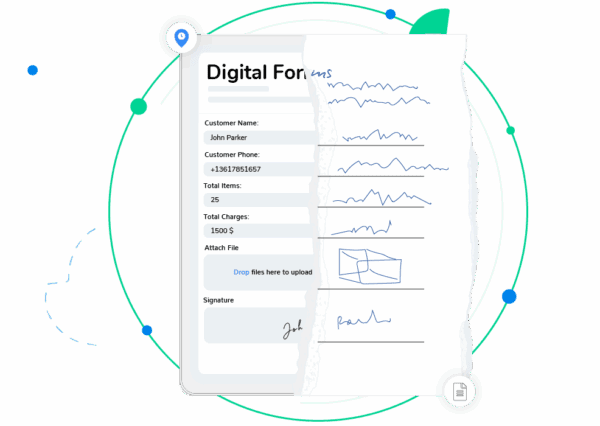
Arrivy’s form builder lets you create the exact survey templates your teams need, and those forms run in a mobile app that works offline. Crews capture room-by-room inventories, custom measurements, and photos on a phone or tablet, and the app stores that record until connectivity returns so nothing gets lost in low-coverage sites like basements or warehouses. You can also generate BOLs and PDFs in the field, so the paperwork is done before the truck leaves.
Automatic cube math tied to survey items
When the survey captures items and measurements, the same record can drive cube calculations so volume is computed automatically rather than by hand. That means the itemized list your crew records immediately becomes a defensible cube sheet for truck planning and labor estimates, which reduces guesswork at dispatch and lowers the chance you show up under-resourced on moving day.
Scheduling and dispatch that respect the estimate
Arrivy Operations Cloud™ centralizes job status and crew assignments on a single dashboard, so dispatchers can see resource needs alongside real-time job progress. If a cube sheet shows you need a larger truck or extra movers, dispatch sees that immediately and can reschedule or reassign before a conflict occurs. That results in fewer last-minute truck calls and reduced overtime.
Time and task tracking tied to the plan
The platform’s time-tracking tools, such as easy clock in/out, task-specific timing, and automated reminders, let you measure the real labor a job consumed versus the estimate. That visibility feeds continuous improvement. You learn which job types need more crew, which packing tasks slow you down, and where to adjust pricing or training to protect margins.
Customer-facing transparency that reduces disputes
Arrivy keeps customers informed with live tracking, milestone notifications, and a branded portal where they can view the item list, photos, and status updates. Because the same photos and cube math used to produce the quote are visible to the customer, there is less surprise at billing and fewer disputes about what was or wasn’t included.
Workflows and integrations that close the loop
Arrivy’s workflows are highly customizable so your survey → cube → dispatch → invoice process can match how you operate.
The Operations Cloud™ also offers two-way integrations with tools movers already use, like MoverSuite, QuickBooks, and common CRMs, so cube and survey data flow into quoting, payroll, and accounting automatically. That integration shortens the billing cycle, removes duplicate data entry, and preserves an audit trail from estimate to invoice.
Enhanced reporting for business intelligence
Because the data is structured, you can run reports to spot patterns like which item types consistently require extra handling, what percent of quotes convert by crew, where most disputes originate, and whether certain routes or time slots underperform. Those insights let managers refine pricing, staffing, and training to squeeze more throughput from existing resources.
Taken together, this reduces wasted trips, lowers dispute rates, speeds how quickly you can deliver a quote, and improves truck and crew utilization. The software converts survey evidence into operational decisions quickly, so you win more jobs and protect margins on the ones you do.
Business Impact of Accurate Moving Estimates
Better resource allocation (trucks, crews, time slots)
When estimates feed accurate cube and labor models, dispatchers place the right truck and the right crew for the job the first time. That reduces wasted trips and idle crew time, and it improves utilization of high-cost assets like trucks and dollies. Over time, better allocation lowers per-job operating costs and increases the number of jobs a fleet can complete in a day or week.
Reduced last-minute changes & cancellations
Underestimates force instant changes like rush-add trucks, call in extra movers, or reschedule other jobs. Each change increases cost and stresses the schedule. Accurate estimates reduce those emergencies because the plan matches reality more often.
Higher close rates due to transparency and trust
Speed and transparency drive conversions. When customers get a fast, clear, evidenced estimate they understand, they are more likely to book. Companies that deliver quick, trustworthy quotes win better than competitors who leave buyers confused. That effect shows up as higher close rates and better lifetime value from repeat customers.
Improved profit margins by minimizing under/over-estimation
Underestimates bleed margin through unplanned labor and extra truck costs. Overestimates push potential customers away. A digital workflow that removes common errors tightens the spread between cost and price and raises average margin per job, especially when combined with improved close rates and fewer disputes.
Before vs. After — A Simple Comparison
Below is a compact comparison that clarifies the shift from traditional workflows to a digital survey + cube system.
Final Thoughts
Moving companies that treat estimates as a core operational asset win in three ways:
- They make better use of trucks and crews
- They close more business
- They avoid costly disputes
The technical path to those outcomes is straightforward: collect accurate, structured data at the point of truth; use automated cube math to turn that data into an operational plan; then connect quotes to scheduling and billing so nothing is lost in translation.
The field service market’s growth shows companies are investing to solve exactly these problems, and Arrivy offers practical tools that move your business from manual workflow to consistent, auditable, and scalable quoting. If you are a mover ready to digitize your operation, start with the survey and cube workflow. It pays back in time saved, fewer disputes, and more wins.