
 Login
Login























Paperwork has long been the backbone of the moving industry, but its problems are developing into serious handicaps that aggravate with each passing year. Every move begins with a stack of paper, including estimates, contracts, Bills of Lading, condition reports, and Proofs of Delivery.
Market Value: In a U.S. market worth roughly $23.1 billion, the paper trail is a bottleneck that delays payments, multiplies errors, and crumbles customer trust.
Adoption is accelerating. The e-signature market is expanding rapidly, with the majority of organizations adopting electronic signing across key workflows and most e-signatures now completed via mobile devices, making quick, audit-ready signoff possible on the customer’s phone.
E-Signatures Worth Across Industries:
• Global e-signature market value in 2025: US$12.22 billion
A simple demonstration of it is:
Digitizing the BOL → POD workflow saves time, reduces disputes, speeds claims processing, and converts paperwork from a cost center into a competitive advantage.
Before we look into how movers can outcast lackluster approaches, attain perfection, and carry out paperless operations, let’s take stock of the traditional paperwork’s anatomy.
Why is Paperwork the Backbone of the Moving Industry?
Paperwork has been the lifeblood and foundation of the moving industry. Every move runs on it, from estimates and Bills of Lading to condition reports and Proofs of Delivery. These documents define responsibility, confirm service, and keep businesses compliant.
But what once kept operations organized now slows them down. Crews spend hours printing forms, collecting signatures, and scanning records just to close a single job. When a document goes missing, payments stall, claims drag on, and customer trust takes the hit.
The rules haven’t changed, but the process has. The FMCSA still requires proof of service, but not piles of paper. What holds companies back isn’t regulation, it’s the routine. And that routine is costing teams time, visibility, and revenue they can’t afford to lose.
Compliance Insight: According to the Federal Motor Carrier Safety Administration (FMCSA), movers must provide a written estimate and a signed Bill of Lading (BOL) for interstate moves — emphasizing the importance of documentation to protect both parties. (Source)
Types of Paperwork in a Typical Move
No matter what it is, a local move or interstate relocation, a trail of documents is always generated to guide, protect, and regulate the process. These papers are then used in different phases, starting even before any packing begins.
| Phase | Document Type | Purpose / What It Covers | Manual Challenges |
|---|---|---|---|
| Pre-Move | Estimate (Binding, Non-Binding, Not-to-Exceed) | Defines projected costs and scope of service | Version errors, lost revisions, and pricing disputes |
| Survey / Inventory Sheet | Lists all items to be moved; determines truck size, labor, and insurance | Manual entries are prone to omissions and mismatched records | |
| Order for Service (Move Contract) | Sets pickup/delivery dates, payment terms, and liability | Requires physical signatures and multiple copies | |
| Insurance & Valuation Form | Records the customer’s coverage choice (Released or Full Value Protection) | Misfiled or unsigned forms delay claims | |
| FMCSA “Rights & Responsibilities” Booklet | Required disclosure of customer rights and mover obligations | Printed copies add paperwork load; often misplaced | |
| Move Execution | Bill of Lading (BOL) | Core legal contract outlining services, liability, and receipt of goods | Missing or incomplete forms lead to non-compliance |
| Itemized Inventory | Tracks items and their condition at pickup and delivery | Paper lists are hard to update or sync in real time | |
| Weight Tickets | Confirms shipment weight for billing accuracy | Manual weigh-in adds delays and storage of physical slips | |
| Crew Checklists / Work Orders | Internal task guides and equipment lists | Hard to coordinate between the crew and dispatch | |
| High-Value Condition Reports | Records the condition of valuables and fragile items | Paper photos and notes are difficult to store or reference | |
| Delivery | Delivery Receipt / Proof of Delivery (POD) | Confirms shipment arrival and condition | Missing signatures block billing; misplaced forms stall closure |
| Final Invoice / Freight Bill | Details labor, materials, and service costs for payment | Manual reconciliation with estimates causes errors | |
| Storage Release Form | Authorizes the release of stored goods | Paper-based documentation slows retrieval and verification | |
| Digital Proof of Delivery (Signatures, Photos) | Confirms delivery through digital validation | Often handled manually, reducing speed and traceability | |
| Post-Move | Damage / Claim Form | Initiates the compensation process for loss or damage | Paper claims delay settlement and record matching |
| Claims Evidence & Documentation | Supports claims with photos, inventory tags, receipts | Hard to consolidate from multiple paper sources | |
| Customer Satisfaction Survey | Collects service feedback and quality scores | Low response rates; manual entry burdens staff | |
| Supplemental Invoice | Adds charges for post-move services | Paper updates create inconsistencies in records |
The Roadblocks Paper-Based Process Creates
No doubt, paperwork has long been an essential part of the moving industry, but with it come serious disadvantages. If any inventory sheets or signed contracts go missing, it can lead to disputes over services, charges, or damaged items. Handwritten errors on initial estimates or invoices also result in billing errors that may disappoint the customer and obstruct the resolution process.
Similarly, if required documents like the Bill of Lading or valuation forms are illegible, incomplete, or improperly stored, the risk of partial or non-compliance is increased, and it may result in legal penalties for the movers. Above all, paperwork retards invoicing and payments, creating a blockage in cash flow and customer service. These inefficiencies not only impact your operations but also tarnish trust in an industry where accuracy and accountability are the whole nine yards.
How Digital Forms Make it Paperless?
In the moving industry, going digital is equivalent to eliminating long-standing inefficiencies that slow operations, delay payments, and create compliance risks. Arrivy is redefining how movers manage documents, track progress, and keep customers informed, without a single sheet of paper in sight.
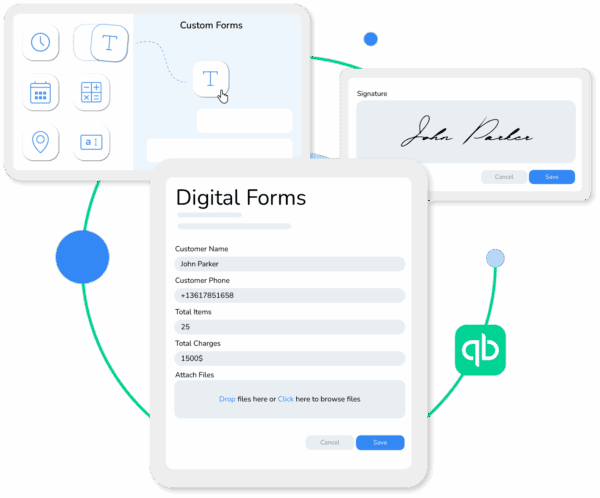
Here’s how digital documentation transforms every stage of a move:
E-Signatures
Digital signatures replace pen-and-paper contracts, allowing customers to sign Bills of Lading (BOLs), estimates, and service agreements remotely. Encrypted, timestamped, and fully compliant with FMCSA and federal standards, Arrivy’s e-signature workflows make approvals faster and legally airtight.
Digital Inventory & Condition Reports
Movers can now capture item details with photos, barcodes, and condition notes directly within the Arrivy platform. Every item is traceable from pickup to delivery, ensuring accountability and creating reliable records for claims or audits.
Mobile Checklists & Work Orders
Instead of boggling within printed sheets, moving crews access digital checklists and live work orders via mobile devices. They can log updates, mark tasks complete, and flag issues in real time, keeping field and office teams in sync while reducing manual errors.
Offline Forms for On-the-Go Operations
Connectivity shouldn’t stop productivity. With Arrivy’s offline digital forms, crews can record inspections, capture signatures, and complete BOLs even in low or no-internet zones. Once reconnected, all data automatically syncs to the cloud, ensuring nothing is lost and every record remains up to date.
GPS-Stamped Proof of Delivery
At delivery, Arrivy auto-generates digital Proof of Delivery (POD) with GPS and photo verification. Each completed move is backed by time-stamped evidence.
Integrated Invoicing & Payments
Manual billing is replaced with integrated, automated invoicing. Arrivy instantly calculates charges based on completed services and syncs payments through existing systems, reducing admin work and accelerating cash flow.
Secure Cloud Storage & Audit Trail
Every digital form, from estimates to claims, is securely stored in the cloud. In case you need a contract for review or an invoice for audit, it’s all searchable, retrievable, and compliant with regulatory standards, ensuring total peace of mind.
Going paperless is the first step towards speed, precision, and reliability. With Arrivy, movers can build smarter workflows that connect crews, customers, and compliance into one seamless ecosystem.
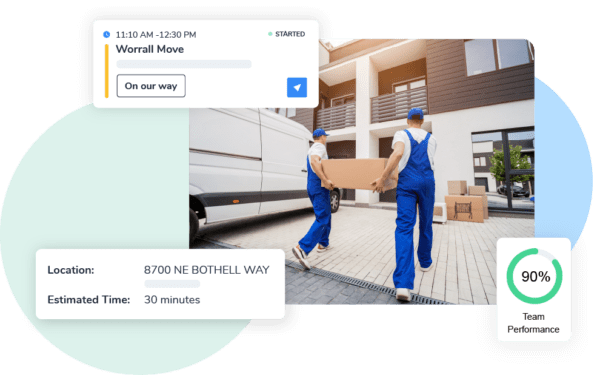
Benefits of Paperless Moving for Movers and Customers
As digital tools are replacing outdated paper systems, the advantages are going the extra mile. This shift not only makes paperless operations viable but also addresses the challenges of traditional moving workflows by unlocking swift service, robust compliance, and an enhanced experience for everyone.
Faster, More Accurate Operations
Digital forms stamp out the delays and errors common in traditional paperwork. Movers can generate initial estimates, formal contracts, and inventory sheets right away, reducing time squandered on data entry and document handling.
- Real-time updates enable crews to view schedules, manage checklists, and oversee work orders on mobile devices.
- Tasks are completed on time and with precision.
Improved Compliance (FMCSA/State Regulations)
When using paperless systems, it becomes easier to comply with regulatory requirements. Movers can regulate documents like the Bill of Lading, customer rights booklets, and valuation forms, confirming they are completed and signed properly.
- Cloud storage allows you to quickly retrieve these documents during audits or legal reviews.
- Timestamps on e-signatures serve as valuable proof of compliance.
- Helps reduce the possibility of fines, penalties, or legal disputes from missing or incomplete paperwork
Reduced Disputes and Claims
Digital documentation, like condition reports, photo-tagged inventories, and GPS-stamped delivery records, develops a comprehensive trail of the move. If any item is damaged or lost, customers and movers can refer to the document trail and settle claims justly and swiftly.
- Transparency minimizes misunderstandings between movers and customers.
- Safeguards both parties from libel, slander, or overlooked issues.
Transparency Builds Customer Trust
Customers always appreciate being kept in the loop. Arrivy allows them to view signed contracts, keep track of shipments, receive delivery confirmations, and get receipts on their mobile devices.
- Customers gain full visibility over every stage of the move.
- Ensures goods are transported safely and issues are resolved quickly.
- Builds trust through clear, accessible communication.

The Future of Paperless Moving
In recent times, the moving industry is witnessing an accelerated shift towards digital-oriented solutions, fueled by ever-changing regulations and increasing customer expectations. Regulatory bodies like the FMCSA are accepting more and more electronic documents and e-signatures to make compliance easier and more efficient.
AI is now pushing this shift even further. In platforms like Arrivy, AI enhances digital forms by automatically detecting missing fields, optimizing photo capture for clarity and proof, and validating document entries to reduce human errors. It ensures every record is accurate, verified, and audit-ready.
Simultaneously, customers also expect a streamlined, tech-powered experience, starting from online booking to digital contracts and live tracking. Movers who take up paperless systems have a greater edge over the others to have stronger compliance, lower operational costs, and enhanced customer experience. It positions them for long-lasting success in these modern, analytics-based marketplaces.
Final Thoughts
Paperless moving has overpowered the market by becoming an intelligent way to run your business operations. By substituting outmoded paperwork with digital tools, movers can improve their speed, service accuracy, and trust, while customers relish a secure, streamlined experience. The future of moving is digital, and it’s already here.