 Login
Login























The moving business has shifted dramatically in recent years. Today’s customers demand more transparency and real-time updates than ever before.
One survey found that 90% of consumers want to track their deliveries, and if they can’t, over 60% will consider switching to another provider.
This “Amazon effect” has raised the bar as customers expect precise arrival windows, online scheduling, and instant status updates. In the moving industry, the stakes are higher than simple package delivery as moves are complex, expensive, and often stressful. Yet the communication tools used are still catching up.
Instead of relying on a single call or email, modern movers are exploring digital self-service experiences where customers can log into a portal or app to see exactly where their belongings are at any time.
At the same time, the nature of moves has grown more complicated. Many relocations are now multi-day operations, long-distance hauls, or corporate moves involving multiple teams. Coordinating those moves with pen-and-paper or scattered phone calls leads to confusion.
Recommended Reads
What Stats and People Have to Say?
- A Reddit user in the moving business described this challenge: They said their office was “constantly fielding calls and texts” from customers asking “where the truck is, when we’ll arrive, or if we can move something last-minute”. This day-to-day churn of inquiries not only wears out office staff but leaves customers anxious.
- As one moving company owner lamented, even when their team tried to keep clients informed, delays still happened. In one case, a household waited three days for delivery without any accurate ETA, with broken boxes and lost trust to show for it. In short, the gap between what operations know and what customers need to know can quickly turn minor delays into major headaches.
- Industry data highlights the cost of these miscommunications. A 2025 moving-industry survey found that over 15% of customers were frustrated by poor communication, unable to reach support after booking their move.
What Is a Customer Communication Portal?
A customer communication portal is an online platform (often web-based or a mobile app) specifically designed to keep clients and moving crews in sync throughout a move. Unlike a generic CRM or email thread, a portal focuses on the details of the move itself.
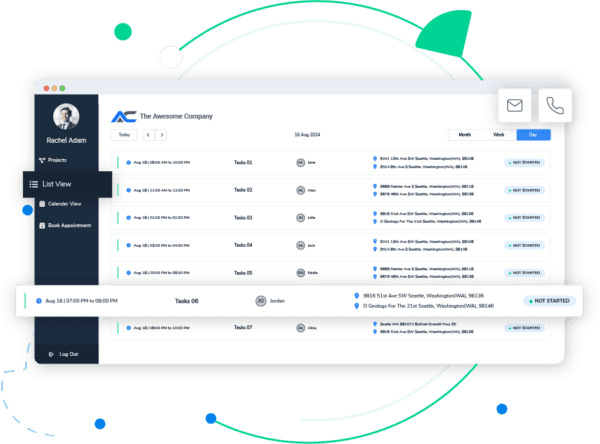
Think of it as a single shared dashboard where customers can log in at any time and see the status of their move. Core components of such a portal typically include:
- Real-time Dashboards: A central view showing upcoming appointments, crew schedules, and live GPS tracking of trucks. This gives everyone a clear picture of where the move stands at every step.
- Automated Updates & Notifications: Pre-set status alerts (e.g., “Crew en route”, “Crew arrived”, “Move completed”) sent by text or email without manual effort.
- Document & Form Sharing: Secure upload and access for contracts, inventory lists, signed cube sheets, and customer surveys, often with e-signature capability.
- Two-Way Messaging: A chat or message thread linking the customer, dispatch office, and moving team. This ensures questions or changes (like last-minute items to load) are recorded in one place.
- Scheduling and Task Lists: Integrated calendars and task checklists so crews, coordinators, and clients all know what’s next.
These portals serve a different purpose than a standard CRM. A CRM is typically internal and sales-focused, tracking leads and contact info, a moving communication portal is customer-facing and operations-focused, built around the actual move process.
Key Benefits of Customer Communication Portals for Moving Companies
Real-Time Transparency for Customers
- Provides customers with immediate visibility into truck location, crew status, and move-day progress
- Offers self-service access to ETAs, schedules, and inventory lists without relying on calls or emails
- Displays a centralized move dashboard including pickup and delivery timelines, itemized lists, and agreed services
- Builds trust and patience by keeping customers informed even when minor delays occur
- Turns uncertainty into confidence and control, improving satisfaction and reducing complaints
Streamlined Communication Between Office, Crew, and Customer
- Creates one shared platform for all messages, updates, and files
- Prevents miscommunication caused by scattered texts, emails, and calls
- Ensures real-time visibility when customers make last-minute changes, instantly updating both the office and crew
- Cuts repetitive “where/when/how” inquiries through automated status updates
- Increases efficiency by reducing support calls, minimizing manual coordination, and improving team response times
- Reduces human error and missed instructions by keeping everyone aligned on the same information
Improved Customer Experience & Brand Trust
- Demonstrates professionalism and reliability through transparent, digital-first communication
- Builds customer confidence with consistent, proactive updates throughout the move
- Reduces negative reviews since poor communication is one of the top causes of dissatisfaction
- Encourages retention and referrals by making customers feel respected, informed, and in control
- Turns communication quality into a competitive advantage in a trust-driven business
Operational Efficiency & Reduced Manual Work
- Automates routine tasks like confirmations, reminders, and progress notifications
- Reduces administrative overhead by eliminating manual follow-ups and repetitive data entry
- Consolidates all job details, documents, and communications in one centralized space to prevent lost information
- Minimizes scheduling confusion through live synchronization between teams and customers
- Improves scalability by maintaining smooth coordination even as the business expands
- Frees teams to focus on core operations instead of spending hours chasing updates or clarifications
How Communication Portals Integrate into Modern Moving Operations?
Integration with CRM & Dispatching Systems
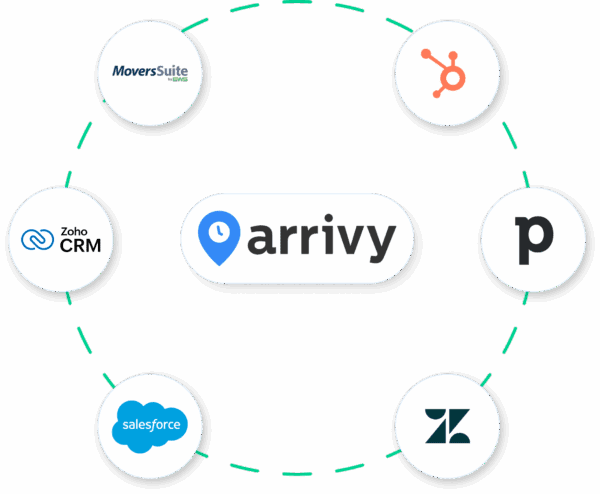
A customer communication portal delivers its full value when it’s fully connected to a company’s existing systems. Instead of operating in isolation, it should integrate seamlessly with CRMs and dispatching platforms to keep customer and operational data in sync.
For example, Arrivy integrates with platforms like HubSpot and MoversSuite, automatically creating and updating tasks when a new job is booked or scheduled. This eliminates manual data entry and ensures that sales, dispatch, and field teams stay aligned around the same customer record.
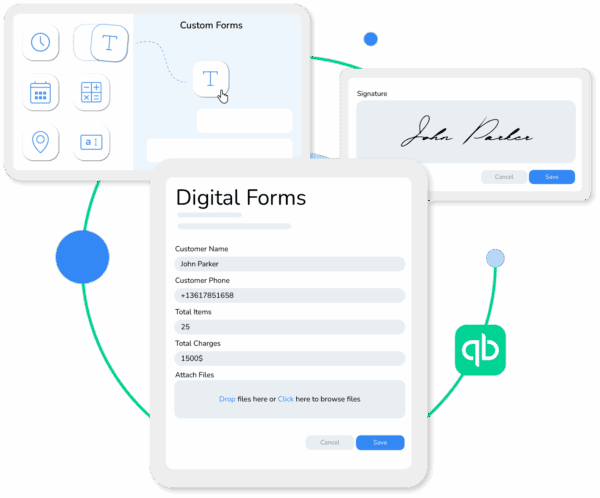
Connection with Digital Forms & e-Signatures
Modern communication portals act as centralized hubs for digital paperwork, allowing moving companies to go fully paperless. Customers can sign contracts, approve estimates, and complete surveys directly within the portal, while crews can capture cube sheets, condition reports, and delivery confirmations on-site using tablets or mobile devices. Each document is securely stored with timestamps, digital signatures, and audit trails, ensuring full transparency and compliance.
This streamlined documentation process eliminates lost paperwork and manual filing, while also presenting a more professional, modern customer experience. By digitizing forms and signatures, moving companies can accelerate pre-move and post-move workflows, reduce disputes over missing documents, and maintain a clear record of every transaction, all within a single, secure system.
Visibility for Crews, Coordinators, and Customers
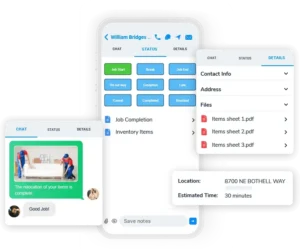
A robust communication portal provides one shared timeline for everyone involved in a move. Crews can view schedules, job notes, and customer details through their mobile app. Coordinators in the office can track multiple moves in real time using an operational dashboard, while customers see a simplified view showing live updates, appointment windows, and delivery progress.
Because everyone draws from the same data, updates appear instantly across all views. If the office adjusts a delivery time or route, the customer and crew see it immediately. This shared visibility eliminates confusion, prevents scheduling mistakes, and ensures that dispatchers, drivers, and customers remain aligned throughout the entire process. The result is a smoother, more transparent workflow that keeps every stakeholder informed and in sync.
What Happens When Portals Are Missing?
Without a central portal, miscommunication is nearly guaranteed. Common problems include:
Excessive Calls and Emails: Office staff end up in never-ending call loops answering the same questions (where is the truck? when do we arrive?). This burns time and frustrates customers who want immediate answers.
Missed Messages: Important changes sent via text or email often get lost. A crew might not see a customer’s last-minute request, or dispatch might miss a schedule change, leading to delays and errors.
Lost or Disconnected Paperwork: Physical same day inventory lists, signed contracts, or special requests can go missing between home and depot. When a crew member doesn’t have the correct inventory, it leads to damage claims or disputes.
Coordination Chaos: Without one platform, reconciling what the customer heard from sales versus what operations executes is a headache. For instance, a customer might pay for a piano move, but the moving crew won’t see that until arrival, because the info was only in an email thread.
Why Are Moving Companies Turning to Arrivy?
The industry is responding to these challenges by adopting specialized platforms. In particular, many moving companies are turning to Arrivy’s customer communication portal to solve their woes. Arrivy is designed around the moving workflow and offers features that directly address the problems above:
Live Tracking & ETA Sharing: Customers see a map or status updates (e.g., “Crew en route – arriving at 9:45 am”) so they’re never guessing when movers will show up.
Automated Status Notifications: As a crew hits milestones (“En route”, “At loading site”, “Loading completed”, “Delivered”), Arrivy automatically sends texts/emails to update the customer, with no manual work from the office.
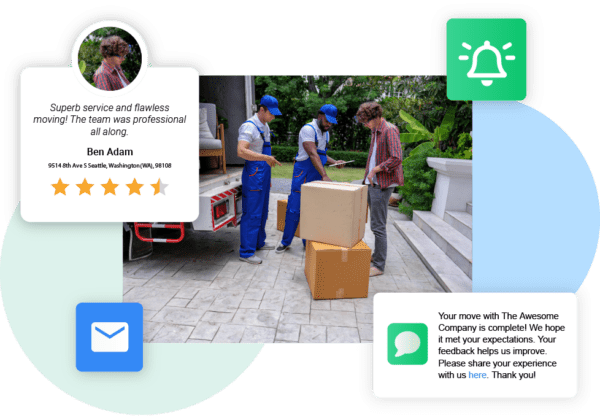
Two-Way Messaging & Feedback: Customers can chat with the team (for example, “We’re ready early, can you come now?”) and even rate the service after the move. All communication is logged.
Linked Multi-Day Tasks: For moves spanning multiple days or locations, Arrivy links the tasks together so that nothing (and no item) is overlooked. A customer always has one combined view of the entire move.
These features make Arrivy turn transparency into a competitive advantage.
How to Choose the Right Communication Portal for Your Moving Business?
With more solutions on the market, choosing the right portal requires careful consideration. Moving companies should look for:
- Integration-Ready: Can it sync with your CRM, dispatch, and accounting systems? Verify that it supports the software you already use (e.g., HubSpot, MoversSuite, QuickBooks) so data flows smoothly.
- Mobile-Friendly: Crews will use it in the field, so a native app or responsive design is crucial. Similarly, customers should be able to access the portal easily from their phones.
- Customizable Workflows: Every moving company operates differently. A good portal lets you tailor statuses, notifications, and forms to match your process (e.g., adding custom move stages or branding the interface).
- User-Friendly Interface: The portal should be intuitive for all users. If customers or staff find it hard to use, adoption will suffer. Look for software with a simple setup and clear training resources.
- Robust Security: Customer data and contracts will live in the portal, so it must be secure. Check for encryption, compliance (e.g., data protection standards), and regular updates.
- Support and Training: Make sure the vendor provides good support. You’ll want onboarding assistance and responsive help when you run into issues.
Final Thoughts
Customer communication portals are essential for modern movers. By digitizing the entire customer experience, portals modernize operations and lift the entire company brand. They turn every move into a transparent journey, building confidence and reducing friction at every step. This not only prevents service breakdowns but also actively creates delighted customers who come back year after year.
In the end, moving companies that embrace this technology are the ones that will thrive. By providing clear, digital-first communication, these companies reduce stress for everyone involved and in doing so, they turn modern expectations into powerful business results. For any mover looking to differentiate in a crowded market, a robust customer communication portal is the next step in sustainable growth.