
 Login
Login























Moving consistently ranks among the most stressful life events for customers. During this transition, they’re forming lasting impressions about your service, and these impressions determine whether they’ll recommend your company or warn others away.
Yet, many moving companies wait for public reviews to appear on Google or Yelp before understanding customer sentiment. By then, it’s too late. And in an industry where customers trust online reviews as much as personal recommendations, that’s a costly approach.
This article breaks down why post-move surveys matter, how they improve both customer experience and reviews, and how Arrivy smooths out the entire feedback process so you can focus on running your business.
Recommended Reads
The Link Between Post-Move Surveys and Customer Experience
Without asking customers, you’re running your business blind. Post-move surveys give customers a consistent channel to share their experiences while details are fresh. This feedback reveals patterns you simply can’t see from daily operations, like which communication methods actually work, where crews need training, or which service elements really matter to customers. The numbers back this up.
Companies that systematically collect and act on customer feedback see 10–15% higher retention rates.
For moving companies with tight margins, retaining even a small percentage more customers significantly boosts revenue without spending more on marketing.
But there’s another benefit that’s harder to quantify. Surveys show you care about customer opinions beyond just closing the sale. That builds trust and sets you apart in a competitive market.
Understanding the emotional journey of moving customers
Moving is an emotionally charged life transition. Your customers are trusting complete strangers with irreplaceable possessions while managing the stress of uprooting their entire lives.
The customer journey typically includes anxiety before the move, stress during packing and transit, and either relief or frustration afterward depending on how smoothly things went. Post-move surveys catch customers at that crucial moment when their emotions are authentic but haven’t yet hardened into permanent opinions.
Surveys that acknowledge this emotional context, asking ‘How did we support you during this transition?’ instead of just ‘Rate our service’, create stronger connections with customers.
How post-move feedback shapes customer perception of service quality
Interestingly, just asking for feedback influences how customers perceive your service. When you proactively seek opinions, customers see it as proof you’re committed to quality and continuous improvement.
Research on service recovery shows that customers who have complaints heard and resolved often become more loyal than customers who never had problems in the first place. Well-designed surveys create opportunities for this dynamic to work in your favor by catching issues before they blow up publicly.
Plus, when customers take time to reflect on their experience through survey questions, they often remember positive moments they overlooked during the chaos of moving day. This reflection can actually improve satisfaction scores.
Common Challenges Moving Companies Face Without Feedback
Missed opportunities to fix service issues
Without systematic feedback, you only hear about problems when they’ve already become a scathing public review. By then, the customer relationship is usually beyond repair. Silent dissatisfaction is a huge problem.
Research shows that only 1 in 26 unhappy customers actually complain directly.
The rest simply leave and tell everyone they know about their negative experience. For every complaint you receive, there are likely dozens of quietly disappointed customers you’ll never hear from again. Post-move surveys shine a light on minor frustrations before they become major problems or viral social media complaints.
Unnoticed trends that affect customer satisfaction
Without structured data, individual moves just blur together. Are customers consistently confused about pricing? Do certain crews generate more complaints than others? You can’t really answer these questions without a clean approach to collecting and analyzing customer complaints.
And you might be investing in improvements that don’t actually matter while ignoring real problem areas. Systematic surveys create datasets that reveal trends across hundreds of moves, so you can make evidence-based decisions about where to focus your resources.
Negative reviews without context or prevention
With 31 million Americans moving annually, your business survives on reputation management. A single bad review can tank your booking rates, especially if you’re a smaller company without hundreds of reviews to dilute the impact.
Without post-move surveys as an early warning system, the first you hear about customer dissatisfaction is often a public review on Google or Yelp. Here’s a real example from customer forums.
Customer Forum Excerpt:
“Someone paid nearly €10,000 for an international move and discovered a €1,800 anniversary gift was missing. The company kept asking for pictures and receipts, then pressured them to complete the post-move survey. After they submitted it, the company stopped responding entirely.”
That’s how surveys can actually damage trust when they’re not connected to real problem resolution. And that’s exactly the kind of experience that leads to brutal online reviews.
How Post-Move Surveys Help Improve Satisfaction and Reviews
Turning feedback into actionable insights
Raw feedback is useless if you don’t have systems to analyze and act on it. Effective post-move surveys transform customer opinions into concrete action items, for example, specific training needs, process improvements, equipment upgrades, or communication enhancements.
The key is asking questions with the right level of detail. Instead of “How was your move?” break it down into:
- Booking process
- Pre-move communication
- Crew professionalism
- Care of belongings
- Punctuality
- Post-move cleanup.
This specificity directs your improvement efforts exactly where they’ll have the biggest impact. The best moving companies create feedback loops where survey insights directly inform weekly team meetings, monthly performance reviews, and quarterly strategic planning. That ensures feedback actually drives improvement instead of disappearing into a spreadsheet somewhere.
Identifying top-performing crews and areas for improvement
Not all crews deliver the same experience. Post-move surveys with crew-specific attribution show you exactly which teams consistently generate high satisfaction scores and glowing comments.
This visibility gives you multiple advantages:
- You can recognize and reward excellence
- Identify mentors for new crew members
- Understand which behaviors actually drive satisfaction
- Make smart crew assignments for high-value or challenging moves.
On the flip side, surveys reveal crews or team members who consistently underperform, so you can provide targeted coaching before problems escalate. It’s a data-driven approach to performance management that removes guesswork and focuses resources where they’re actually needed.
Using surveys to proactively manage reputation (before it hits public forums)
Smart moving companies use post-move surveys as a reputation firewall. By collecting private feedback first, you create opportunities to address concerns before customers feel the need to vent publicly.
The strategy is simple. When surveys reveal dissatisfaction, reach out immediately with empathy and real solutions. A sincere apology, explanation of what went wrong, and concrete remedy (refund, discount on the next move, repair of damage) can transform someone who was about to trash you online into a customer who appreciates your responsiveness.
This works because most unhappy customers don’t actually want to destroy your reputation. They just want to be heard and treated fairly. Surveys give them that outlet in a private setting where you can actually fix the problem.
Boosting word-of-mouth and repeat business through transparency
Requesting feedback signals that you’re confident in your service quality. That openness builds trust that extends way beyond the immediate transaction.
Customers who feel heard through surveys are much more likely to choose your company for their next move or refer friends and family. The survey itself becomes a touchpoint that keeps you top-of-mind for future needs.
And when surveys consistently show high satisfaction, you can confidently ask happy customers for testimonials or online reviews. Customers are more likely to leave a review when you specifically ask them to, but you need to know they’re happy first.

How Arrivy Simplifies Post-Move Feedback Collection
Automated digital surveys linked to each completed job
Arrivy eliminates the manual work and inconsistency of traditional survey distribution. When crews mark a job complete in the Arrivy system, surveys automatically trigger to customers via their preferred channel (email or SMS).
This matters because SMS surveys get 40-50% response rates compared to just 15-25% for email. By offering multiple channels, Arrivy maximizes the chances customers will actually engage with your feedback requests.
As a result, zero customers get overlooked, and your admin staff is freed up from tedious follow-up tasks. Every move generates a feedback opportunity without anyone having to remember to send anything.
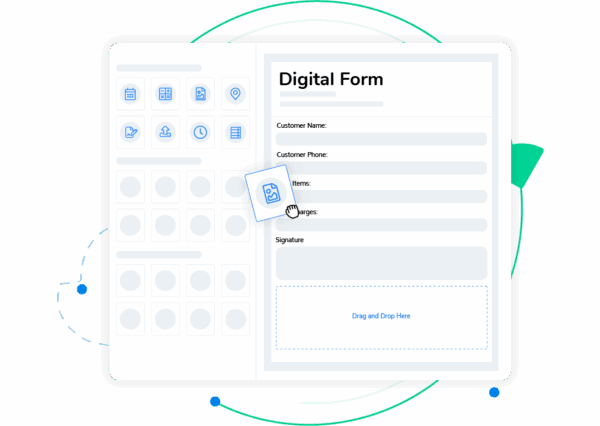
Feedback insights available directly on the Arrivy Dashboard
Arrivy consolidates all survey responses in one centralized dashboard that’s accessible to managers, operations teams, and leadership. You get real-time visibility into satisfaction scores, trend lines, and individual responses, so you can take immediate action on emerging issues.
The dashboard visualizes data in formats that actually make sense. For example, satisfaction scores by crew, trends over time, and distribution of NPS categories. These visualizations transform raw data into actionable intelligence you can understand at a glance
Integration with CRM and review platforms for reputation management
Arrivy doesn’t just collect feedback. It helps you use positive responses for reputation building. The platform can automatically route satisfied customers (those with high NPS/CSAT scores) to Google, Yelp, or industry-specific review sites with personalized review requests.
This intelligent routing maximizes positive review generation while protecting your reputation. Dissatisfied customers get internal attention and service recovery efforts instead of being asked to review you publicly.
CRM integration means survey feedback automatically enriches customer records. Future interactions benefit from historical satisfaction data, so you can personalize service and identify which customers are prime candidates for referral requests or premium service offerings.

The Benefits of Digital & Automated Post-Move Surveys
Real-time feedback collection with no manual follow-up
Manual survey distribution is a recipe for inconsistency. Even with the best intentions, operational pressures mean some customers get timely surveys while others are completely forgotten. That creates incomplete data and missed opportunities.
Digital automation ensures every single completed move triggers a survey without anyone having to remember or take action. That consistency is crucial for building useful trend data and making sure no customer feels overlooked.
Timing makes a huge difference.
Feedback collected within 2 hours after service completion scores 40% higher on actionability and achieves 32% more completions.
When customers complete surveys right away, you can respond the same day before they’ve already decided to leave a negative review somewhere else.
Clean integration with your FSM or CRM platform
Stand-alone survey tools create data silos and administrative headaches. Field service management platforms like Arrivy integrate surveys directly into your operational workflows, automatically linking feedback to specific jobs, crews, dates, and customers. For example, MoversSuite Local Services can create Arrivy tasks, map job fields, and send feedback back to MoversSuite Orders.
This integration unlocks actionable insights. Teams can analyze satisfaction scores by job type, crew, or season, and view reports like ‘Most & Least Favorable Comments’ to spot trends.
Integration also streamlines follow-up. When negative feedback comes in, your team can instantly pull up job details, crew notes, and customer communication history, everything you need to craft an informed, empathetic response.
Building trust with automated thank-you notes and review requests
Automation usually feels robotic. But well-designed automated communications feel timely and thoughtful. An automated thank-you message immediately after the move shows appreciation while everything’s still fresh.
When surveys reveal high satisfaction, an automated request for an online review gives customers a friction-free way to share their positive experience publicly. The key is timing. Automated systems ensure review requests arrive at that sweet spot after customers have reflected positively but before they’ve mentally moved on to other priorities.
Leveraging analytics to track customer satisfaction trends over time
Digital surveys become more valuable as data piles up. Month-over-month and year-over-year trends show you whether your improvement initiatives are actually working or just burning resources.
Analytics can surface insights you’d never spot otherwise, like satisfaction dips during certain seasons (pointing to seasonal hiring quality issues), specific service offerings that consistently underperform, or communication touchpoints that have an outsized influence on overall satisfaction.
According to the American Customer Satisfaction Index (ACSI), U.S. customer satisfaction fell to 76.9 in Q2 2025, down from 77.0 in Q1 2025.
Understanding how your performance stacks up against broader industry trends helps you set realistic targets and spot opportunities for competitive advantage.
What Makes an Effective Post-Move Survey
Key questions to ask in a post-move survey
Effective surveys balance being thorough with respecting people’s time. Customers will give you 2-3 minutes, but not 10-15. Focus on actionable dimensions:
- Overall satisfaction: “On a scale of 0–10, how likely are you to recommend our moving services to friends or family?” (This is your Net Promoter Score)
- Specific touchpoints: Ask them to rate booking process, pre-move communication, arrival punctuality, crew professionalism, care of belongings, and post-move cleanup on 5-point scales.
- Open feedback: “What did we do particularly well?” and “How could we improve?”
- Problem identification: “Did anything not meet your expectations?” with space for specifics.
- Outcome verification: “Were all your belongings delivered in satisfactory condition?”
Keep it simple. Avoid leading questions, industry jargon, or ambiguous terms. You want every customer interpreting the questions the same way.
Ideal timing for survey delivery (within 24 hours)
Timing dramatically impacts response rates and answer quality. The sweet spot is 6-24 hours after move completion, which is close enough that details are still fresh, but far enough that customers have unpacked at least some boxes and can actually assess whether everything survived intact.
Survey response rates have dropped by 1–2 percentage points every year since 2019 due to inbox overload, mobile friction, and privacy concerns.
Every additional day you wait cuts participation even more, potentially cutting response rates in half by day three.
If you send surveys too quickly (within a few hours), you’ll catch customers while they’re still exhausted, which can skew responses negative. The 24-hour mark hits that sweet spot where memories are accurate, emotions have stabilized, and customers feel ready to give thoughtful feedback.
Using NPS and CSAT metrics to measure performance
Two metrics have become the industry standard for measuring customer satisfaction:
Net Promoter Score (NPS) measures loyalty with the question “How likely are you to recommend us?” on a 0-10 scale. Scores of 9-10 are “promoters,” 7-8 are “passives,” and 0-6 are “detractors.” Your NPS is the percentage of promoters minus the percentage of detractors.
NPS predicts growth potential. Promoters generate referrals and repeat business. Detractors actively damage your reputation. For moving companies, an NPS above 50 is excellent. Above 70 is world-class.
Customer Satisfaction Score (CSAT) measures satisfaction with specific service aspects. You ask “How satisfied were you with [specific element]?” on a 5-point scale.
CSAT gives you tactical insights into what’s working and what needs fixing. While NPS shows overall relationship health, CSAT reveals which specific touchpoints are driving or undermining that perception.
Use both metrics together for the complete picture: NPS for strategic tracking, CSAT for operational improvements.
Conclusion
Post-move surveys are strategic assets that drive satisfaction, protect reputation, and fuel growth. With the global moving services market projected to reach $159.67 billion by 2032, companies that master customer feedback will capture disproportionate market share.
The moving companies that thrive will be the ones that treat every customer interaction as an opportunity to learn, improve, and strengthen relationships. Post-move surveys create the feedback loops that power that continuous improvement, transforming one-time transactions into lasting loyalty.
Arrivy makes this vision practical and scalable. By automating survey delivery at optimal times, enabling multi-channel engagement for higher response rates, centralizing insights in actionable dashboards, and connecting feedback to operational systems, Arrivy removes the traditional barriers to comprehensive feedback collection.