 Login







AI Summary
Recommended Reads:
Getting a roofing license is an important step for roofers who want to work independently or start their own contracting business. However, licensing requirements vary across the United States. Some states issue roofing-specific licenses, others require contractor registration, and certain jurisdictions regulate roofing through local requirements.
The process also depends on whether you handle residential or commercial projects and how your business is structured.
Whether you’re an experienced roofer becoming a contractor or an entrepreneur planning to hire qualified roofing professionals, this guide explains how to get a roofing license, what it may cost, and where to verify the requirements.
What Is a Roofing Contractor License?
A roofing contractor license is a government-issued authorization that allows an individual or business to offer roofing services within a defined scope.
Depending on the state and license classification, authorized activities may include:
➡️ Roof installation and replacement
➡️ Roof repairs and maintenance
➡️ Residential roofing projects
➡️ Commercial and industrial roofing
➡️ Waterproofing and weatherproofing work
A license may be issued to an individual, sole proprietorship, partnership, LLC, or corporation. Some states require the business to designate a qualified individual who meets specific experience, examination, or supervisory requirements.
However, not every state issues a credential specifically called a roofing contractor license. Some regulate roofing through general contractor licensing or mandatory contractor registration.
A roofing license should not be confused with a business registration, building permit, or voluntary professional certification.
Do You Need a Roofing License to Start Working?
You may not need your own roofing contractor license to work as an employee, but you may need one to operate independently or contract directly with customers.
The distinction depends on your working arrangement and the laws governing the project location.
Working as a Roofing Employee
If you work for a properly authorized roofing contractor, you generally do not need a separate contractor license solely to perform assigned roofing work.
However, applicable safety training, occupational requirements, and employer obligations still apply.
Operating as an Independent Contractor
If you plan to advertise roofing services, provide estimates, submit bids, sign contracts, or operate a roofing company, you may need a contractor license or registration before undertaking those activities.
Subcontractors must also check their own requirements. Working under a licensed general contractor does not automatically exempt every subcontractor from licensing.
Working Without a State Roofing License
Some states do not require a separate statewide roofing contractor license. That does not necessarily mean you can begin operating without further authorization.
Depending on the jurisdiction, you may still need:
- Local contractor registration or business licensing
- Building and reroofing permits
- Applicable liability insurance and workers’ compensation
- Business entity registration and tax accounts
- Additional trade licenses for work outside roofing
For example, Texas does not have a mandatory statewide roofing contractor license, but businesses still need to check applicable local permitting and registration requirements.
Before accepting roofing contracts, verify the rules with your state’s licensing authority and the local building department.
Roofing License vs Registration vs Certification
Roofing businesses may encounter several types of credentials during setup. Although the terms are sometimes used interchangeably, they serve different purposes.
- Contractor License: Government authorization to perform specified roofing work.
- Contractor Registration: Mandatory registration with a state or local authority.
- Qualifying-Person Credential: Identifies the individual responsible for meeting technical qualification requirements.
- Project Permit: Authorization for a specific roofing or construction project.
- Voluntary Certification: Demonstrates additional roofing expertise or manufacturer-specific training but does not replace licensing.
For example, a manufacturer may certify installers who complete product-specific training. While such credentials can demonstrate expertise, they do not replace a state-required roofing contractor license.
Similarly, a building permit authorizes particular project work. It does not grant a contractor the general right to offer roofing services.
How to Get a Roofing License in 7 Steps
To get a roofing license, you generally need to identify the correct authority, confirm eligibility, satisfy examination requirements, prepare business documents, obtain insurance or bonds, submit an application, and verify approval.
Follow these seven steps to organize the process.
Step 1: Identify Your Licensing Authority and Work Classification
Start by identifying the government agency responsible for roofing contractors in your state.
This may be a contractor licensing board, department of labor, professional regulation department, or another designated authority.
Next, determine the classification that matches your planned roofing services.
Common distinctions include:
- Residential roofing
- Commercial roofing
- General construction contracting
- Specialty roofing work
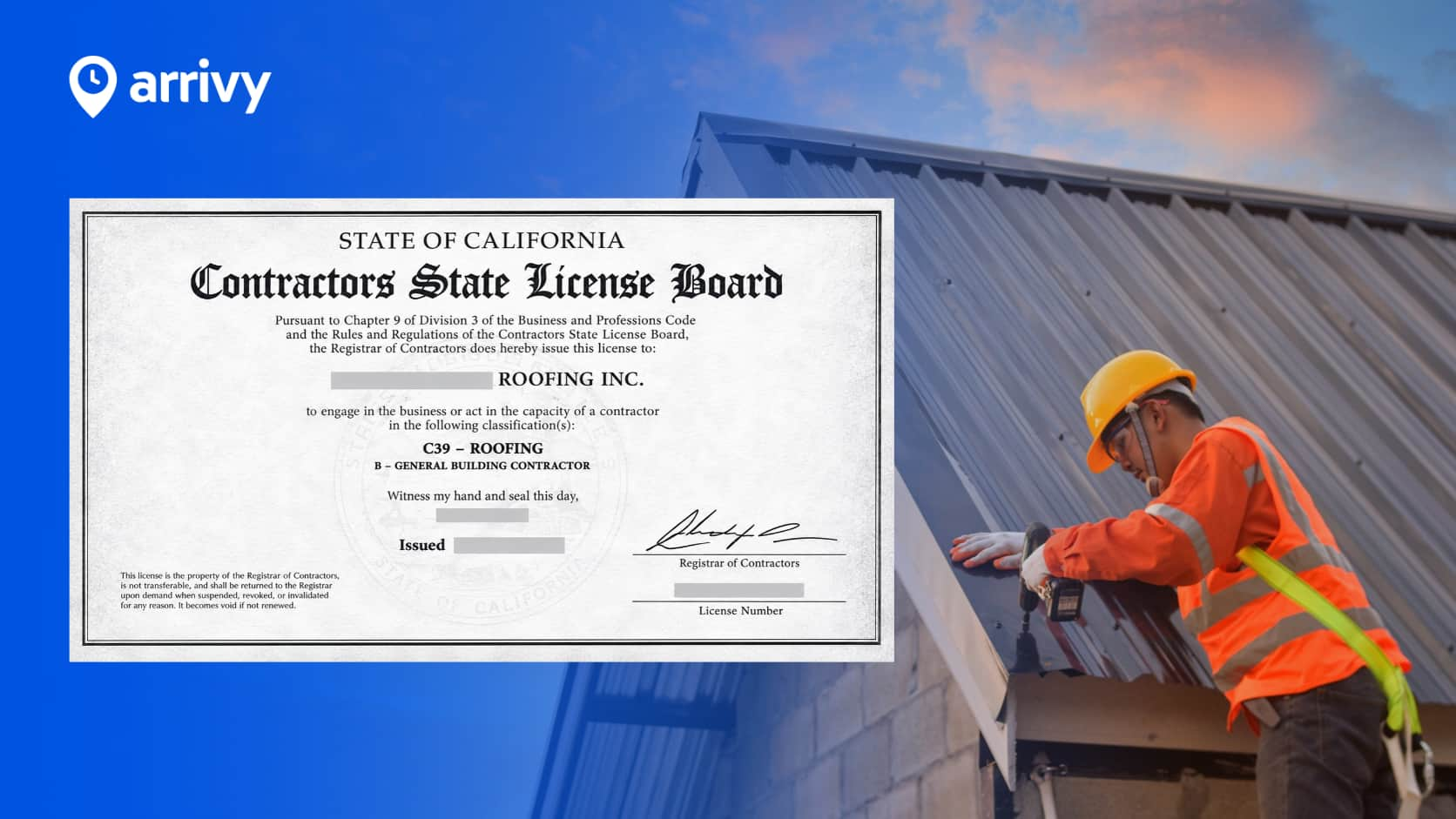
For example, California uses the C-39 Roofing Contractor classification, while Arizona provides separate residential, commercial, and dual roofing classifications.
Before applying: Confirm whether the authorization covers repairs, complete roof replacements, commercial projects, and any additional services your business plans to offer.
Step 2: Confirm Who Must Qualify and Hold the Authorization
The business owner does not always need to be the individual who satisfies the technical qualification requirements. Some states allow a roofing business to designate a qualifying person who meets the required examination, experience, and supervisory standards.
This is particularly important for entrepreneurs who plan to own a roofing company while hiring an experienced roofing professional to manage field operations.
However, employing a licensed roofer does not automatically authorize the company to undertake roofing contracts.
Verify:
- Whether the license belongs to the individual or business
- Who can serve as the qualifying person
- Whether the qualifier must be an owner, officer, or employee
- What supervisory responsibilities the qualifier must perform
- What happens when the qualifying person leaves the business
These requirements help determine how the roofing company should be legally structured.
Step 3: Document Experience and Pass Required Examinations
Some states require applicants or qualifying individuals to demonstrate construction experience, complete training, or pass contractor examinations.
Depending on the jurisdiction, requirements may include:
- Roofing or construction work experience
- Supervisory or project management experience
- Roofing trade examinations
- Contractor business and law examinations
- Approved prelicensing education
For example, Oregon generally requires a responsible managing individual to complete 16 hours of approved prelicense training and pass the Oregon contractor examination.
Minnesota, by comparison, does not impose prior experience or education requirements to take its residential roofer qualifying examination.
If experience verification is required, prepare supporting employment records, project histories, and other evidence specified by the authority.
Tip: Review the official examination bulletin before enrolling in training. An optional course should not be mistaken for a mandatory licensing requirement.
Step 4: Prepare Business, Financial, and Background Documents
Once you understand the eligibility requirements, gather the documents needed for your application.
Depending on the licensing pathway, these may include:
- Business formation or registration documents
- Legal business name and registered address
- Owner, partner, officer, or member information
- Qualifying-person details
- Experience verification records
- Financial statements or credit information
- Background disclosures or fingerprinting records
- Examination results
Check that your business name is consistent across the application, insurance certificates, and bond documents.
For instance, if the roofing company operates as an LLC, confirm that the LLC is properly registered and that the application identifies the correct business entity. Missing information or inconsistent records may delay processing.
Step 5: Arrange Required Insurance and Bonds
Many licensing authorities require proof of insurance, a surety bond, or both before issuing or activating a contractor license.
Common requirements include:
General liability insurance: Covers certain third-party injury and property damage claims, subject to policy terms.
Workers’ compensation insurance: Provides coverage for eligible work-related injuries and illnesses.
Surety bonds: Provide financial protection for certain parties if the contractor fails to meet specified legal or contractual obligations.
Required amounts depend on the state, contractor classification, and business structure.
For example, Washington requires a $15,000 bond for specialty contractor registration and general liability insurance meeting specified minimum coverage limits.
California requires active C-39 roofing contractors to maintain workers’ compensation insurance or approved self-insurance, even when they have no employees.
A bond amount is not necessarily the amount you pay. Contractors generally purchase surety bonds by paying a premium determined by the bond provider.
Obtain the exact insurance and bonding requirements from your licensing authority before purchasing coverage.
Step 6: Submit Your Roofing License Application
Once the documents, examination results, and required coverage are ready, submit your application through the licensing authority’s approved process.
Before submitting, confirm that:
- The business name and license classification are correct.
- All required forms and disclosures are completed.
- Experience verification and examination results are included where applicable.
- Insurance certificates and bonds meet the stated requirements.
- The correct application fee has been paid.
Keep a copy of your application and submission confirmation.
The licensing authority may request additional documents or corrections during review.
Important: Passing an examination or submitting an application does not automatically authorize you to begin contracting. Confirm when your license or registration becomes active.
Step 7: Verify Active Status and Plan Renewals
After approval, verify your license or registration through the issuing authority’s official lookup system.
Check that the record includes the correct business name, authorized classification, license number, status, and expiration date.
You should also track:
- License renewal deadlines
- Continuing education requirements
- Insurance and bond expiration dates
- Changes involving the qualifying person
- Required updates to business ownership or structure
Maintaining an active license is an ongoing responsibility. Expired credentials or gaps in required coverage may affect your ability to undertake regulated roofing work.
Once your licensing is in place, the next step is preparing your business to operate. Our guide on how to start a roofing business covers startup planning, equipment, staffing, pricing, marketing, and day-to-day operations.
Roofing License Requirements: Selected State Examples
Roofing licensing rules vary significantly across the United States. Some states have dedicated roofing classifications, while others regulate roofers through general contractor licensing or business registration.
The following table provides 10 selected state examples, not a complete national licensing directory.
| State | License / Registration | Key requirements | Official source |
|---|---|---|---|
|
California |
C-39 Roofing Contractor |
Experience, exams, bonds, insurance, exemptions |
|
|
Florida |
Certified / registered roofing contractor |
Experience, exams, business qualification |
|
|
Washington |
Contractor registration |
Specialty bond, liability insurance, registration |
|
|
Minnesota |
Residential roofer license |
Qualifying person, exam, insurance, renewals |
|
|
Illinois |
Limited / unlimited roofing license |
License scope, exams, insurance, bonds |
|
|
Arizona |
R-42 / C-42 / CR-42 license |
Experience, exams, bonds, exemptions |
|
|
Oregon |
CCB contractor license |
Endorsement, training, exam, bond, insurance |
|
|
North Carolina |
General contractor / S(Roofing) |
$40,000 threshold, classification, permits |
|
|
Texas |
No statewide roofing license |
Local permits, registration, business rules |
|
|
Connecticut |
Home Improvement Contractor registration |
Insurance, exemptions, renewal requirements |
These examples show why roofing contractors must verify both state and local requirements. License classifications, project thresholds, business qualifications, and exemptions vary by jurisdiction, so requirements in one state should not be assumed to apply elsewhere.
How Much Does a Roofing License Cost?
The cost of getting a roofing license depends on the state, licensing pathway, business structure, and whether examinations, insurance, or bonds are required.
There is no single nationwide roofing contractor licensing fee.
Your total licensing expense may include several separate charges.
- Application and licensing fees
- Trade or business examination fees
- Background checks and fingerprinting
- Insurance and surety bond premiums
- Training and examination preparation
- License renewal and continuing education
Official Roofing License Fee Examples
Published state fees demonstrate how much licensing expenses can differ.
| State | Published fee example |
|---|---|
| California |
$450 original single-classification application fee, plus a $200 initial license fee for sole owners or $350 for non-sole-owner entities |
| Washington |
$150.20 contractor registration fee |
| Minnesota |
$180 initial residential roofer license fee |
| Oregon |
$400 for a two-year Construction Contractors Board license |
| Connecticut |
$220 Home Improvement Contractor registration application fee |
Sources: California CSLB Fees, Washington L&I, Minnesota DLI, Oregon CCB, and Connecticut DCP.
These figures represent published application, registration, or licensing charges, not each state’s total cost of becoming authorized.
Bond premiums, examinations, insurance, business filings, and other charges may be additional. Check the official fee schedule before applying.
Licensing Costs vs Business Startup Costs
The amount required to obtain your roofing license is different from the total cost of starting a roofing company.
Your broader startup budget may include:
- Roofing tools, equipment, and safety gear
- Vehicles and transportation
- Materials and supplier deposits
- Employee or subcontractor costs
- Marketing and customer acquisition
- Business software and administration
- Working capital for projects
Separating licensing expenses from startup costs helps you estimate how much money is needed to become authorized and how much is needed to begin operations.
How Long Does It Take to Get a Roofing License?
Getting a roofing license in the United States typically takes 1 to 6 months, depending on state requirements, examinations, experience verification, and application processing times.
Here’s a general timeline:
Business Registration: A few days to several weeks for basic registration and local permits.
Experience Verification: Varies depending on the state’s required years of roofing experience.
Insurance and Bonds: Typically 1–7 days to arrange the required coverage.
Licensing Exams: Around 2–8 weeks for scheduling, preparation, and testing.
Application Approval: Approximately 2–12 weeks for agency review and processing.
Some states, such as Texas, do not require a statewide roofing license, while others have stricter licensing requirements. Always check with your state or local licensing authority for accurate timelines.
Can You Use a Roofing License in Another State?
A roofing license issued in one state generally does not automatically authorize you to perform roofing work in another state.
Each state determines whether an out-of-state contractor qualifies for authorization. However, some jurisdictions offer pathways that may simplify the application process.
Reciprocity Agreements
Reciprocity allows certain credentials or qualifications from another jurisdiction to be recognized under an agreement. Depending on the agreement, applicants may still need to submit documents, pay fees, and meet additional requirements.
Reciprocity should not be assumed to mean unrestricted permission to work.
Licensing by Endorsement
Endorsement is a pathway through which a licensing authority evaluates an existing license and the applicant’s qualifications. For example, Florida provides endorsement pathways for eligible out-of-state contractors who meet its requirements.
Approval is not automatic, and business qualification or other conditions may still apply.
Examination Waivers
Some states allow out-of-state contractors to waive certain licensing requirements. For example, Arizona may waive trade exams and experience requirements for eligible contractors with comparable licenses, but its state-specific examination generally remains mandatory.
Before working in another state, verify licensing requirements, eligibility for waivers, and any additional permits.
Learn more at the Arizona Registrar of Contractors.
Managing Roofing Jobs After Licensing
Once your roofing business is properly authorized, the next challenge is managing crews, inspections, schedules, and customer expectations.
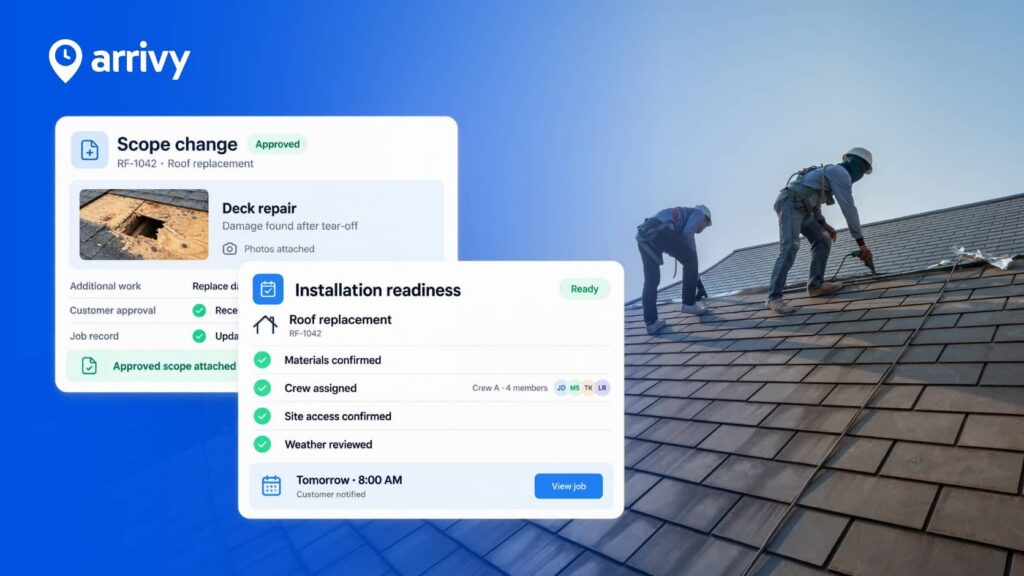
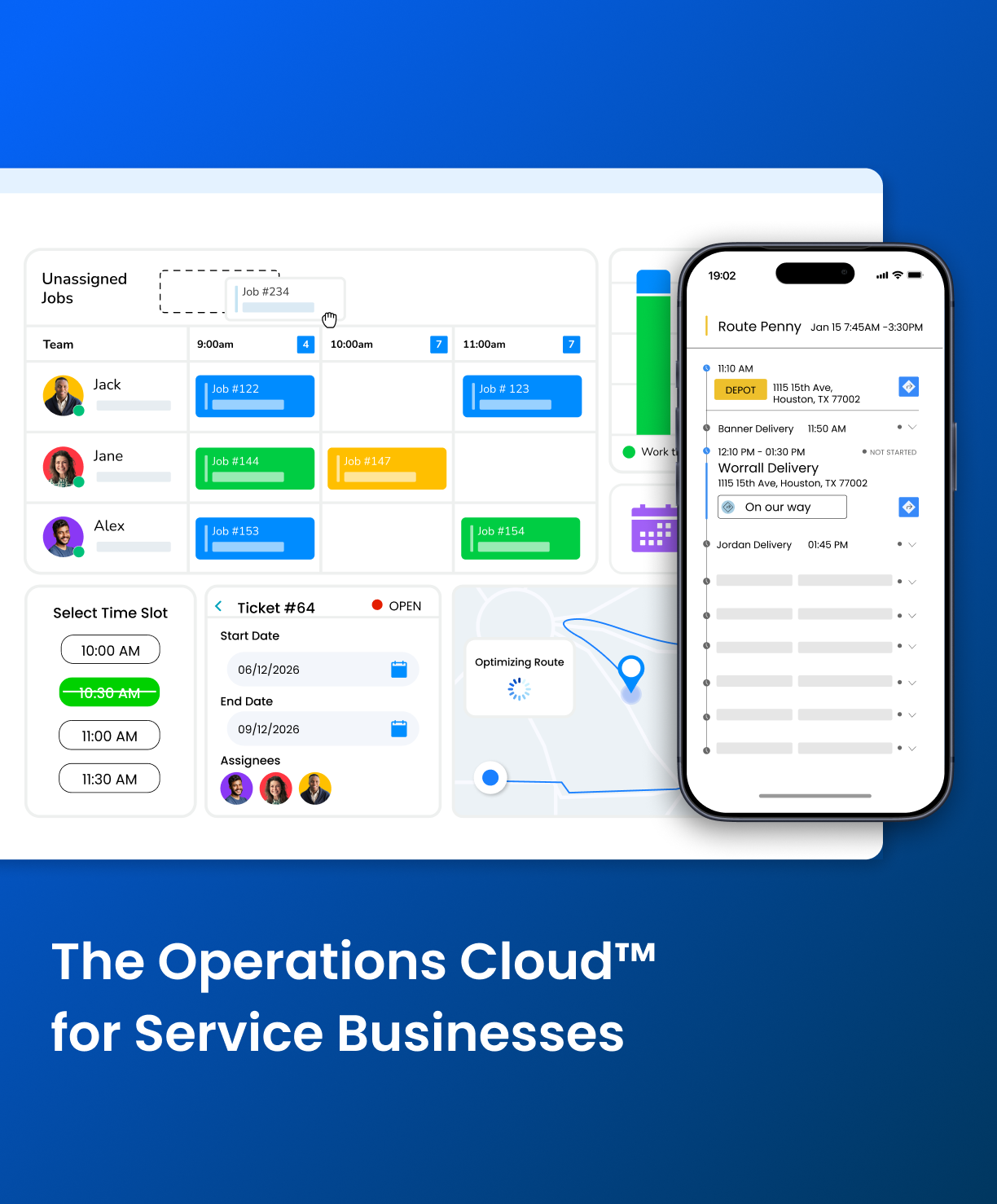
Arrivy’s roofing management software helps roofing contractors organize inspections, assign crews, track job progress, capture site photos, and communicate updates to customers.
Teams can use digital forms to document roof conditions and completion details, while scheduling and dispatch tools help coordinate installations, repairs, and follow-up visits.
For practical starting resources, try Arrivy’s free inspection checklist or estimate generator.