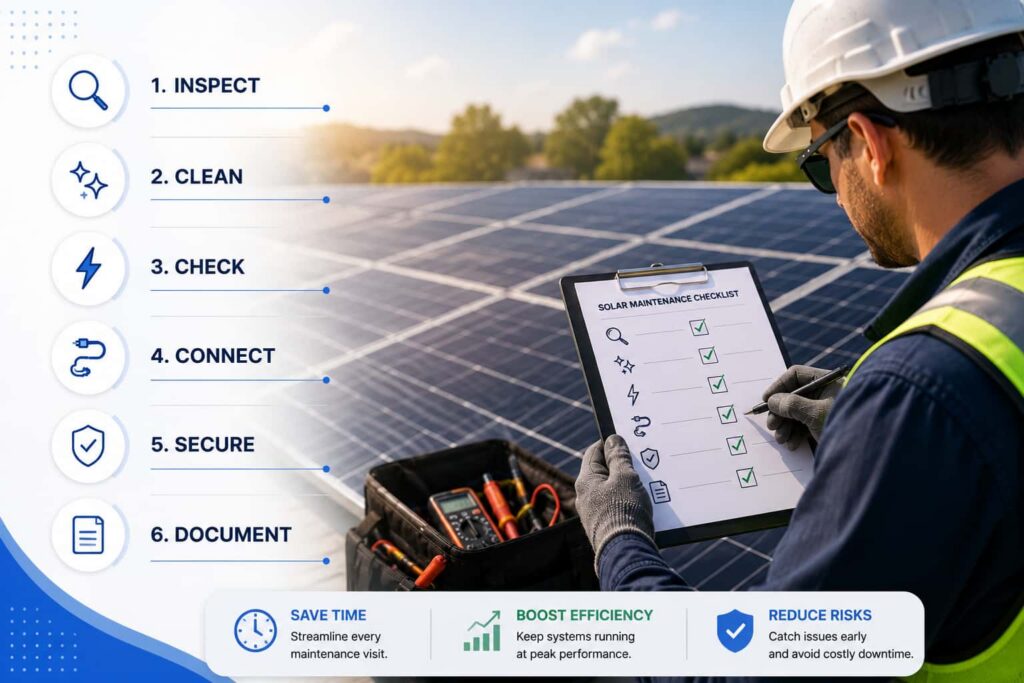






















AI Summary
Solar business management software helps solar companies manage the operational work around surveys, scheduling, installation crews, field documentation, customer communication and ongoing service.
The six platforms serve different parts of a solar operation.
- Arrivy is best for coordinating surveys, installation crews, schedules, routes, customer updates and field records across connected stages of work.
- Payaca has the strongest UK solar-specific capability in this comparison, including MCS documentation, ENA Connect and G98/G99 workflows.
- Simpro is better suited to contractors that need detailed job costing, purchasing, stock control and project management.
- Klipboard combines solar job management software with customer assets, field forms and planned maintenance.
- Tradify provides simpler quote-to-invoice job management for smaller solar and electrical contractors.
- EzManagement is strongest where engineers need offline field access, asset history and recurring maintenance workflows.
Recommended Reads
At any point, a solar company can have surveys waiting to be booked, installations already in progress, crews moving between jobs, and older systems coming back up for service or maintenance. Solar business management software helps keep all of that work in one place instead of spreading it across calendars, spreadsheets and messages.
For UK contractors comparing solar field service management software, the main differences usually come down to how well each system handles scheduling, crews, mobile work, site records, customer updates and ongoing maintenance. Some tools are better for straightforward solar job management, while others go deeper into field operations, assets, costing or UK-specific solar processes.
This guide compares Arrivy, Payaca, Simpro, Klipboard, Tradify and EzManagement to see where each one fits.
What Is Solar Business Management Software?
Solar business management software helps installation and service companies organise the operational work around a solar project.
Depending on the product, that may include surveys, scheduling, crew assignments, project stages, job forms, photographs, signatures, customer communication, quotations, job costing, invoicing, installed assets and maintenance.
The category overlaps with solar job management software, solar installation management software and broader field service management software used to coordinate mobile teams.
Solar design platforms such as OpenSolar and EasyPV address a different part of the process. They help specify and design the system. Field-service and business-management platforms control how approved work reaches the site and what happens afterwards.
Disclosure
Arrivy publishes this comparison and is one of the products included. Each platform has been assessed using the same operational criteria and current public product information. Pricing and product details were checked on 4 September 2026.
What Should Solar Field-Service Businesses Evaluate?
When comparing solar business management software, focus on how well each platform handles the parts of the workflow that affect field teams.
Survey and Installation Scheduling
Check whether surveys, installations, inspections and follow-up visits can stay connected to the same project, with easy rescheduling when plans change.
Crew and Skills Management
Look for multi-person crew assignment, availability tracking and the ability to match engineers or installers to the skills required for each job.
Mobile and Offline Working
A mobile app does not always mean offline access. Confirm whether teams can still view jobs, complete forms, add photos and capture signatures without a connection.
Digital Forms and Site Evidence
The system should support structured surveys, checklists, photographs, equipment details, signatures and other proof of completed work.
Customer Communication
Look for automated confirmations, reminders, status updates and ETA communication linked to actual field activity.
Installed Assets and Maintenance
If you provide aftercare, check whether installed equipment, service history, recurring visits and maintenance records can be kept against the customer or site.
Integrations and Completed-Job Data
Confirm what actually moves between your CRM, solar design platform, field-service software and accounting system rather than relying on an integrations logo.
UK Compliance and Data Considerations
Check how the platform supports MCS documentation, DNO processes, G98/G99 workflows and UK GDPR requirements. Distinguish between native functionality, integrations and configurable forms.
Solar Business Management Software Comparison at a Glance
For buyers comparing solar field service software in the UK, the most useful differences are usually scheduling depth, field documentation, offline capability, maintenance functionality and support for UK-specific solar processes.
| Platform | Best for | Public pricing | Offline field work | UK solar-specific functionality |
|---|---|---|---|---|
| Arrivy | Connected solar field execution | $25/user Standard; $50/user Premium | Offline digital forms | Configurable solar workflows from initial sale to final invoice and continued maintenance |
| Payaca | UK clean-tech workflows | Growth £1,199/month or £999/month annually; qualifying Accelerator £299/month | Yes | MCS documentation, ENA Connect and G98/G99 workflows |
| Simpro | Job costing, inventory and complex projects | Custom quote | Yes | Solar project and asset workflows |
| Klipboard | Jobs, assets and planned maintenance | From £25/user/month; contract terms apply | Yes | Solar job forms and configurable workflows |
| Tradify | Small solar and electrical contractors | From £34/user/month | No | Solar PV certificates and electrical forms |
| EzManagement | Offline service and maintenance | From €34/user/month annually | Yes | Renewable-energy field-service workflows |
How We Evaluated Solar Business Management Software
Each product was assessed against the operational requirements most likely to affect a UK solar field-service team:
Features were also separated into native functionality, integration-based functionality, configurable workflows and capabilities that are not publicly confirmed.
6 Best Solar Business Management Software Platforms
1. Arrivy – Best for Connected Solar Field Execution
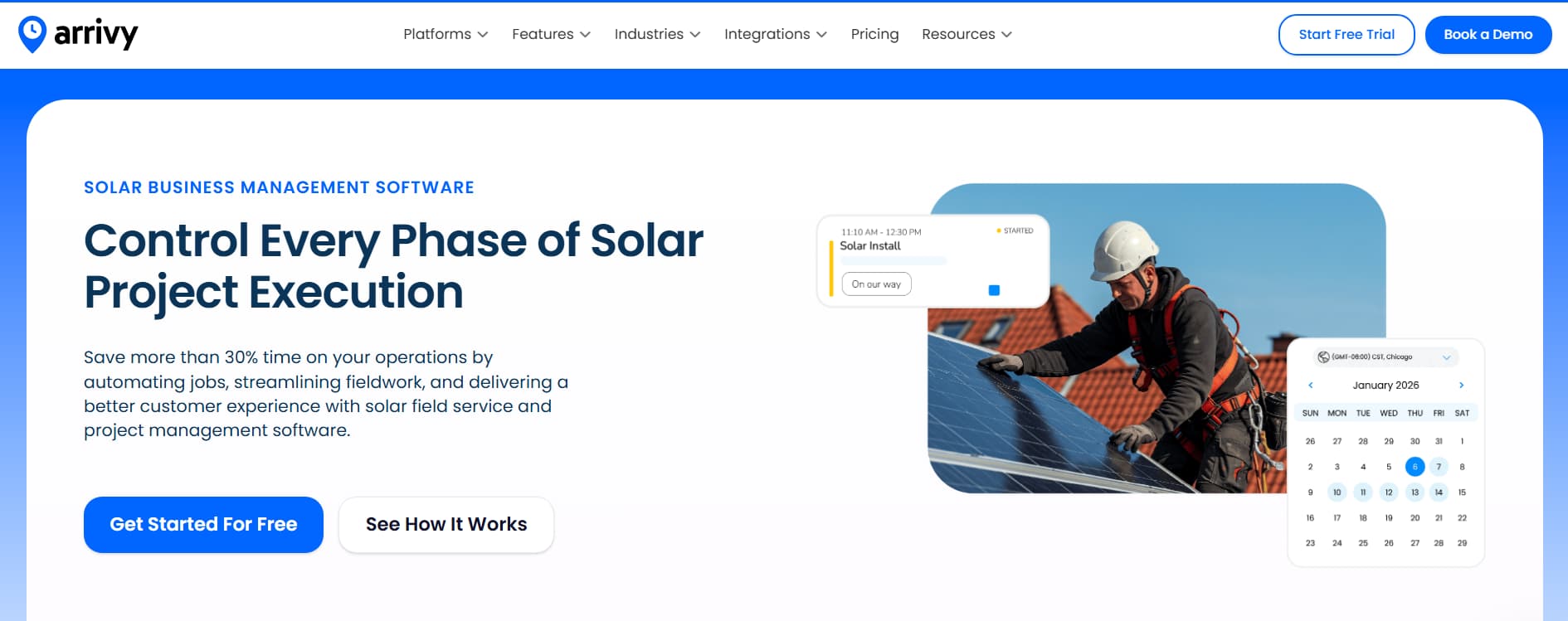
Arrivy is a field operations platform for solar businesses that need to coordinate work once projects move into surveys, scheduling and field execution. It connects appointments, crew assignments, routes, job progress, site records and customer communication, making it particularly relevant as solar engineer scheduling software for businesses managing several surveyors, technicians or installation crews.
Why we included it: Arrivy is strongest around the execution stage of solar work. Its scheduling and dispatch software and crew management software help manage the handoff from approved project to completed field work, while digital forms and customer experience tools keep site records and customer communication connected to the job.
Pros
- Flexible for digital paperwork, project management and field workflows.
- Strong integrations with existing CRM and business systems.
- Customer communication stays connected to day-of-service activity.
- Straightforward for office teams and field workers to learn.
- Responsive support for workflow and integration requirements.
Cons
- Some complex CRM integrations may require custom configuration.
- Advanced features may require a higher-tier plan.
- Solar design and system modelling require a separate platform.
- Native MCS and DNO workflow automation is not currently a core capability.
Pricing
- Standard: $25 per full-access user/month; 3-user minimum.
- Premium: $50 per full-access user/month.
- Enterprise: Custom pricing.
- Trial: 14 days, no credit card required.
See the current Arrivy pricing and plan comparison for the latest plan details.
Best For
Growing solar businesses that already have systems for sales, design or finance but need stronger coordination between approved work, field crews, customers and completed-job records.
If your sales process already sits in a CRM, you may want to know how to connect that system with field execution rather than replace it. See Arrivy’s guide to integrating a solar CRM with scheduling software.
Connect Solar Work From Schedule to Completion
See how Arrivy works for solar teams
2. Payaca – Best for UK Clean-Tech Workflows
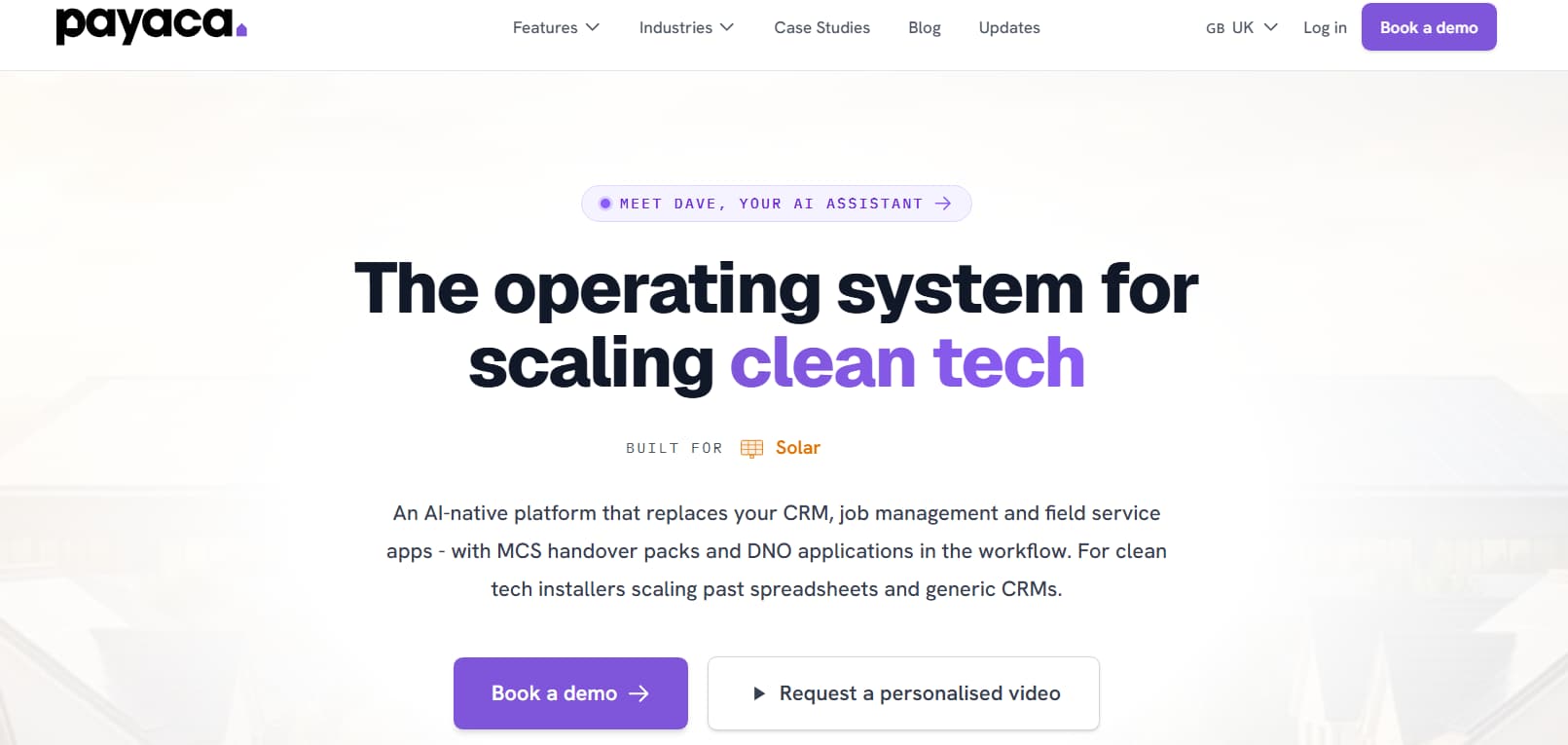
Payaca is business management software built specifically for solar, heat-pump, battery and EV installers. It combines CRM, proposals, projects, scheduling, field work and finance with processes that are more specific to UK clean-tech businesses than those found in general FSM software.
Why we included it: Payaca has one of the strongest UK-specific propositions in this comparison. It connects day-to-day installation management with MCS-related documentation, DNO processes and specialist clean-tech workflows, making it particularly relevant for businesses looking for solar field service software in the UK rather than a generic field-service platform.
Pros
- Quoting and customer-facing workflows are straightforward to use.
- Automation reduces repeated customer and project administration.
- Customer support is a consistent strength.
- Flexible enough for different installation workflows.
- Strong fit for renewable-energy contractors.
Cons
- Contact handling can be restrictive on projects involving several stakeholders.
- Some quotation and document options have limited flexibility.
- Accounting mappings can require additional attention.
- Larger implementations need proper workflow planning.
- Standard Growth pricing is high for very small installers.
Pricing
- Growth: £1,199/month, or £999/month billed annually; includes 25 users.
- Additional users: £30/user up to 50 users.
- Onboarding: £1,500 one-off.
- Accelerator: From £299/month for qualifying newer installers.
- Trial: No free trial; personalised demo available.
Best For
UK solar and clean-tech installers that want customer management, project delivery, field operations and UK-specific grid-connection processes closely connected.
3. Simpro – Best for Job Costing, Inventory and Complex Solar Projects
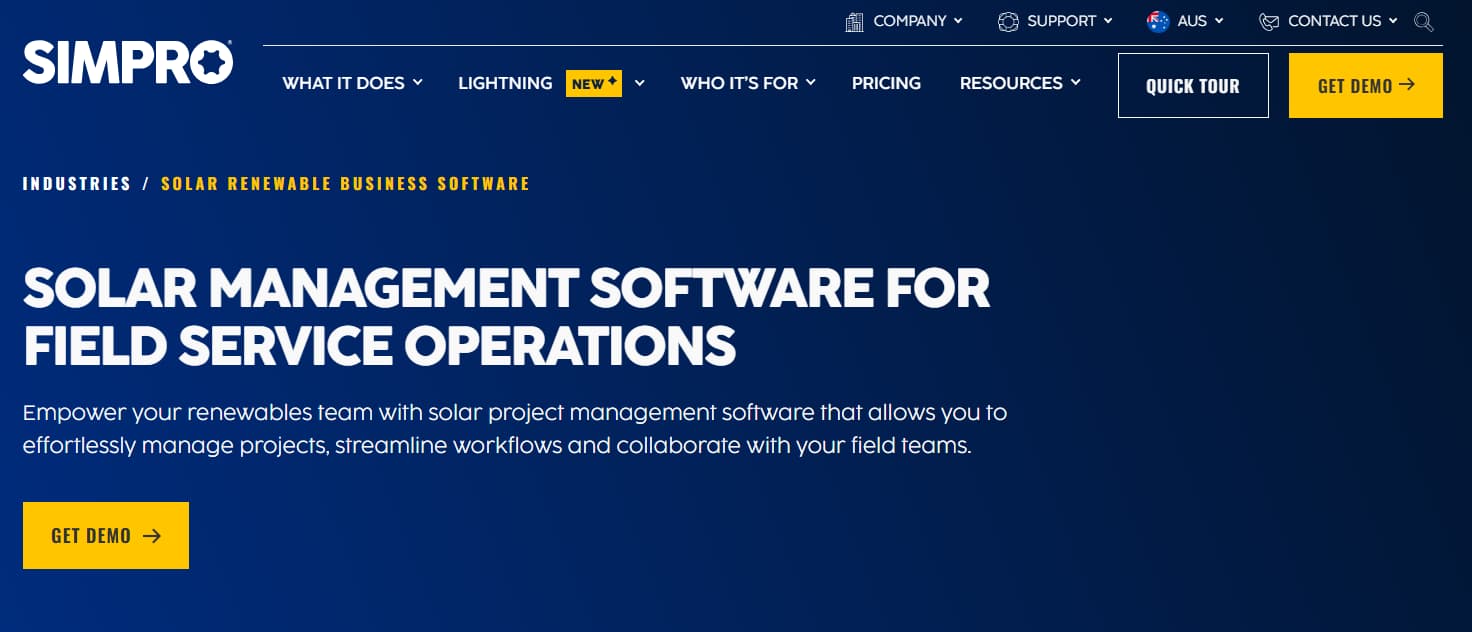
Simpro is field service and project management software built for trade businesses with more complex operational and financial requirements. For solar contractors, it connects scheduling and field work with estimating, purchasing, inventory, asset management, invoicing and reporting.
Why we included it: Simpro goes deeper into the commercial side of installation work than most products in this comparison. As solar installation management software, its value is strongest where project performance depends on controlling materials, purchase orders, labour and job margins rather than simply assigning engineers to appointments.
Pros
- Strong connection between quotes, jobs, purchasing and invoicing.
- Detailed visibility into labour, materials and project profitability.
- Handles projects, service work and recurring maintenance in one system.
- Strong asset and inventory functionality.
- Suitable for larger and more complex contracting businesses.
Cons
- Initial configuration can require significant time and planning.
- The broad feature set creates a steeper learning curve.
- Simple workflows can feel heavier than in smaller FSM products.
- Training matters when several departments use the system differently.
- Add-ons increase both implementation scope and overall cost.
Pricing
- Base pricing: Custom quote.
- Setup: Onboarding, training and data migration fees may apply.
- Add-ons: Some features, including Digital Forms and Maintenance Planner, are priced separately.
- Trial: No free trial. Free personalised demo available.
Best For
Established solar, electrical and renewable-energy contractors where inventory, purchasing, labour cost and project profitability are as important as scheduling field teams.
4. Klipboard – Best for Solar Jobs, Assets and Planned Maintenance

Klipboard is field service management software that combines scheduling and dispatch with mobile field work, forms, customer records, financial workflows and asset management. Its structure makes it suitable for businesses managing both new jobs and work against equipment already installed at customer sites.
Why we included it: Klipboard sits between conventional solar job management software and solar maintenance management software. Its stronger plans add asset registers, QR tagging, planned maintenance, service reminders, multi-person scheduling and custom forms, which makes it useful for solar companies that continue supporting systems after installation.
Pros
- Core job-management screens are relatively easy to navigate.
- Mobile workflows are straightforward for engineers.
- Job reports bring useful field information back to the office.
- Accounting integrations reduce duplicate administration.
- Flexible forms support different field-service processes.
Cons
- Initial configuration can take longer than expected.
- Advanced workflow setup requires time to learn.
- Accounting synchronisation can occasionally need troubleshooting.
Pricing
- Starter: From £25/user/month.
- Higher tiers: Innovator and Professional pricing varies by contract and user requirements.
- Best fit for solar: Professional is more relevant for asset management, planned maintenance, custom forms and team assignment.
- Trial: 14-day free trial available.
Best For
Solar installation and service businesses that want field jobs, installed equipment, service history and planned maintenance managed within the same platform.
5. Tradify – Best for Small Solar and Electrical Contractors
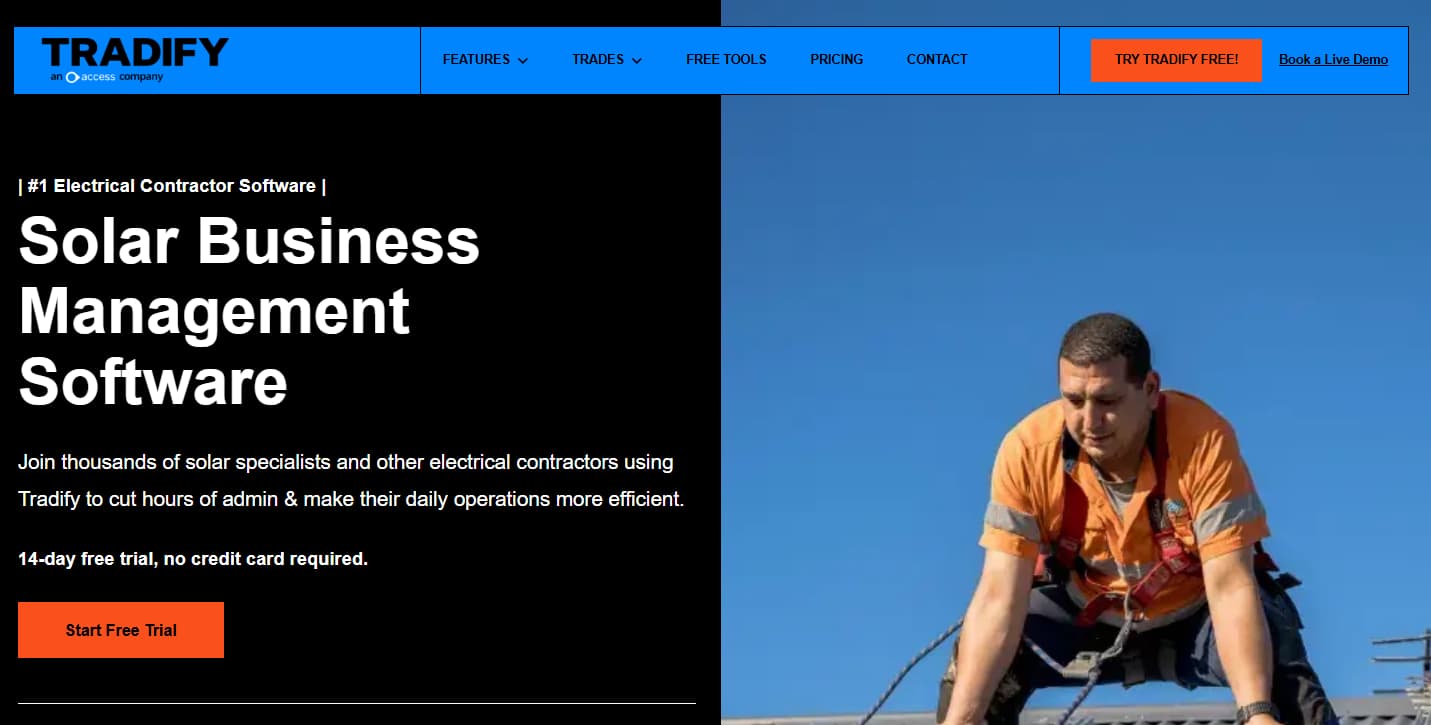
Tradify is job management software aimed primarily at smaller trade businesses. It connects enquiries, jobs, scheduling, quotations, job records, invoices and accounting in a simpler workflow than the more operationally complex FSM platforms in this comparison.
Why we included it: Tradify is one of the more accessible solar installer software UK options for small electrical and solar contractors. Its UK solar product supports the everyday flow from enquiry and quotation through scheduling, job tracking and invoicing, while keeping the interface relatively straightforward for small office and field teams.
Pros
- Straightforward for smaller trade businesses to learn.
- Quoting, scheduling and invoicing work closely together.
- Field staff can adopt the mobile workflow quickly.
- Strong integration with common accounting systems.
- Customer support and usability are consistent strengths.
Cons
- Field teams cannot complete normal workflows without an internet connection.
- Less suited to complex multi-stage installations.
- Reporting and document flexibility are lighter than deeper FSM platforms.
- Crew and dispatch functionality is relatively simple.
- Growing contractors may eventually need more operational depth.
Pricing
- Lite: £34/user/month.
- Pro: £37/user/month.
- Plus: £44/user/month.
- Trial: 14 days, no credit card required.
Best For
Small solar and electrical contractors that mainly need a straightforward system for enquiries, jobs, schedules, quotations, costs and invoices.
6. EzManagement – Best for Offline Solar Service and Maintenance
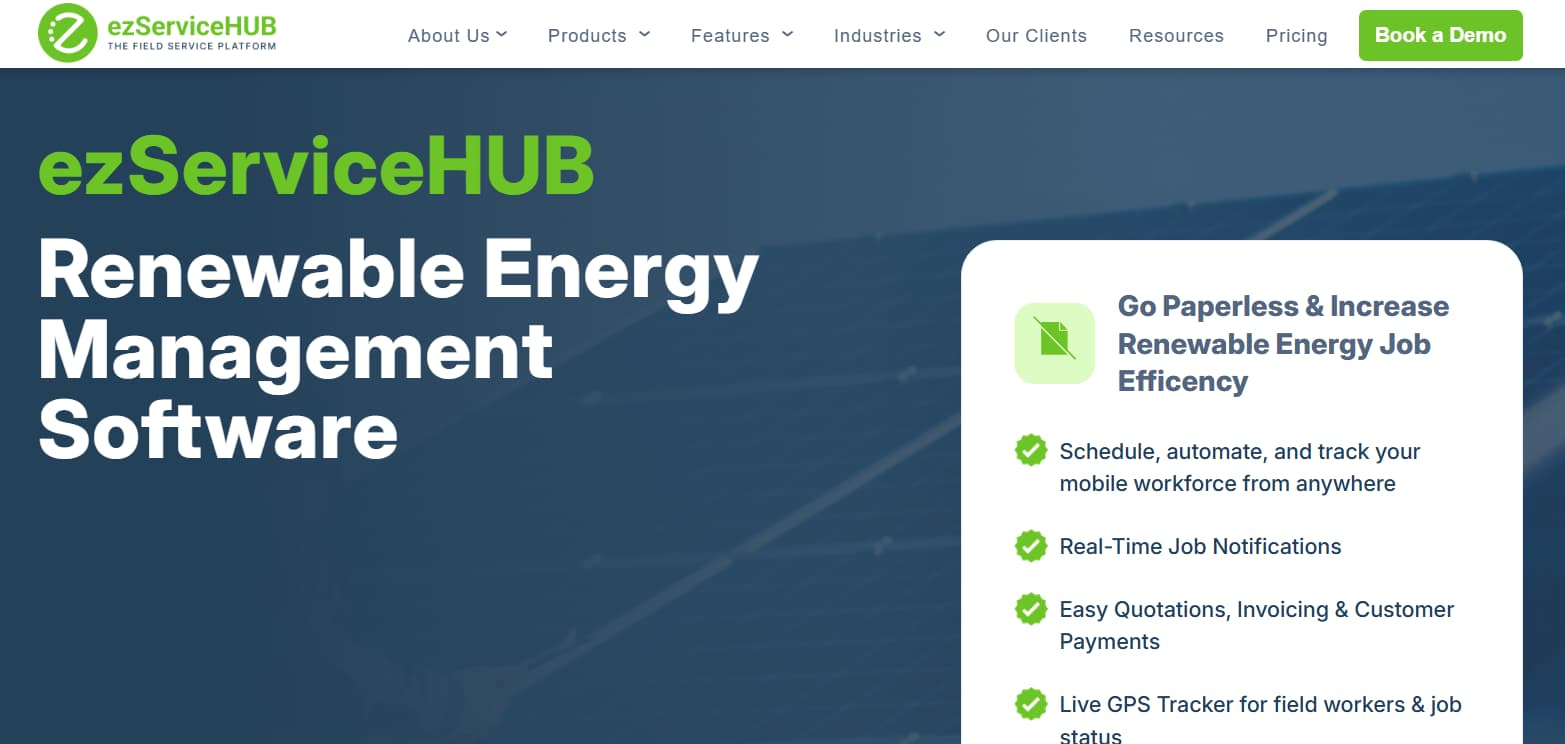
EzManagement is field service management software focused on service, maintenance and engineer workflows. Its renewable-energy use case combines job scheduling, field access, asset records, planned maintenance and digital documentation, with quotations and invoicing available through ezPRO.
Why we included it: EzManagement is a useful solar field service software option when the workload continues well beyond the initial installation. Its combination of asset history, planned maintenance and offline engineer access makes it particularly relevant as solar maintenance management software for teams carrying out inspections, repairs and recurring service visits.
Pros
- Field workflows are relatively easy for engineers to learn.
- Customer and historical job information is easy to retrieve.
- Asset and service records suit maintenance-heavy businesses.
- Xero and Stripe integrations reduce repeated administration.
- Customer support is a consistent strength.
Cons
- Quotation functionality requires the higher ezPRO package.
- Some accounting and stock functionality can involve additional costs.
- Moving from an established system can require significant migration work.
- Completed documents have some editing limitations.
- Independent feedback is much stronger in general service industries than in solar specifically.
Pricing
- ezLITE: From €34/user/month billed annually.
- ezPRO: From €43/user/month billed annually.
- Minimum: 3 users.
- Other costs: Setup and some additional functionality may cost extra.
- Trial: No free trial publicly listed; free 30-minute demo available.
Best For
Renewable-energy businesses focused on offline engineer work, installed assets, recurring maintenance and service history rather than primarily sales administration.
Which Solar Business Management Software Should You Choose?
The shortlist becomes easier to narrow when your decision starts with the operational problem rather than the number of features.
| If your priority is… | Choose | Why |
|---|---|---|
| Coordinating surveys, crews, routes and installation progress | Arrivy | Strong connection between scheduling, field execution, customer communication and job records |
| UK grid-connection and clean-tech processes | Payaca | ENA Connect, G98/G99 and specialist installer workflows |
| Materials, purchasing and job margins | Simpro | Deeper inventory, procurement and job-cost controls |
| Installed assets and planned maintenance | Klipboard | Jobs remain connected with assets and future service work |
| Straightforward small-business administration | Tradify | Simpler quotation, scheduling and invoicing workflow |
| Offline service and recurring maintenance | EzManagement | Offline engineer access and maintenance-oriented functionality |
If you are comparing Arrivy with the broader UK market rather than only solar-focused platforms, see the full UK field service software comparison.
Why Arrivy Is Our Top Recommendation for Solar Teams
For solar businesses, what’s more difficult than winning the job is keeping the job moving when surveys change, installation dates shift, crews need to be reassigned, site information is incomplete or customers are waiting for an update.
That is where Arrivy is particularly strong. A solar project can move through survey, quote, installation, inspection and follow-up work without losing the connection between the schedule, crew, field records and customer. Survey data can be captured through digital forms, approved work can move into installation scheduling, crews can be assigned around availability and travel time, and photos, signatures and job updates come back into the same project record.
Arrivy also handles the handoffs around the field work well. Won CRM deals can become surveys or installation jobs, customers can receive live updates and ETAs, and completed stages can trigger invoicing through systems such as QuickBooks or Xero.
For UK solar companies managing several installers, surveyors and projects at once, Arrivy is our strongest overall recommendation because it gives the business one operational workflow from the first site visit through installation and completion.
Conclusion
For businesses comparing FSM software in the UK, the final decision should be based on a real project rather than a generic feature demonstration.
Test a workflow that includes a survey, a changed installation date, several crew members, required photographs, a customer update and a follow-up visit. That will show whether the software can handle the work your team actually performs.
Connect Solar Work From Survey to Completion