 Login
Login






















Quick Answers:
Starting an HVAC business in 2026 requires technical training, licensing, field experience, insurance, equipment, pricing systems, and operational software for scheduling and dispatch.
The typical process includes:
- Complete HVAC training and EPA Section 608 certification
- Gain field experience under a licensed contractor
- Register your business and obtain contractor licenses
- Purchase HVAC tools, equipment, and a work vehicle
- Set pricing and secure insurance coverage
- Implement a field service management system
- Market your business through referrals, local SEO, and Google Business Profile
Successful HVAC businesses focus not only on technical work but also on operational efficiency, customer communication, and recurring maintenance contracts.
What Does HVAC Field Service Software Do?
HVAC field service management software helps businesses manage scheduling, dispatching, technician tracking, customer communication, and job progress from a centralized system.
Starting an HVAC business is not only about fixing an air conditioner. You need licenses, capital, and a system to manage jobs before the work gets too complex to handle manually.
Most startups get the technical side right but struggle with operations. Scheduling falls apart. Customer communication is sacrificed. Jobs get missed.
This guide covers everything you need to start an HVAC business the right way: licensing, costs, equipment, operations, and how to get your first customers.
Recommended Reads
What Is an HVAC Business?
An HVAC business installs, repairs, and maintains heating, ventilation, air conditioning, and refrigeration (HVAC/R) systems for residential and commercial clients. These businesses operate as contractors, delivering services like furnace installation, AC repair, duct cleaning, and indoor air quality solutions.
Three main business types in the HVAC industry are:
Why Start an HVAC Business?
According to the U.S. Bureau of Labor Statistics, HVAC technician jobs are projected to grow 8% between 2024 and 2034. That is faster than the average across all occupations. Rising demand for HVAC services creates strong opportunities for new business owners. Here are a few reasons why starting an HVAC business is a good idea:

How Much Does It Cost to Start an HVAC Business?
| Startup Item | Estimated Cost |
|---|---|
| Licensing and registration | $500–$2,500 |
| EPA certification and exams | $100–$500 |
| Tools and equipment | $5,000–$20,000 |
| Work truck or van | $10,000–$50,000 |
| Insurance and bonding | $1,500–$7,000/year |
| Website and local marketing | $1,000–$5,000 |
| Software and admin tools | $50–$300/month |
| Initial working capital | $5,000–$25,000 |
Step-by-Step: How to Start an HVAC Business
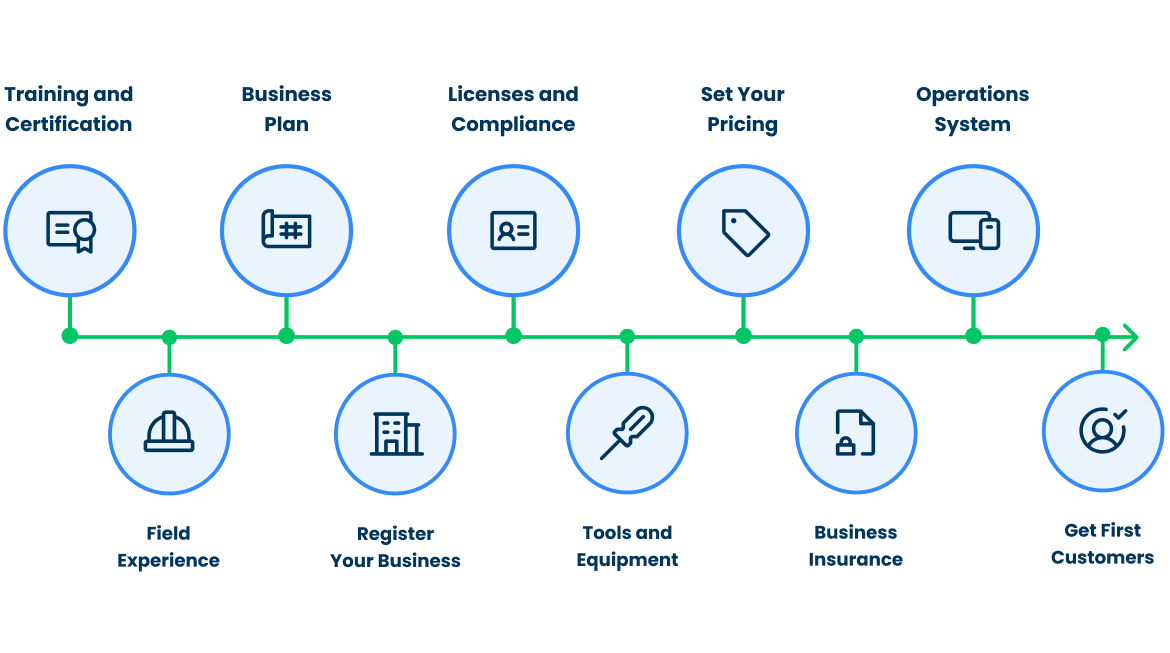
Follow these 10 steps to start a successful HVAC business:
Step 1: Get HVAC Training and Certification
Start by completing HVAC training through either a trade school or an apprenticeship. Trade schools usually take 6 to 12 months and teach refrigeration, electrical systems, and installation basics. Apprenticeships take 3 to 5 years and provide paid hands-on experience under a licensed contractor.
Next, earn your Environmental Protection Agency (EPA) Section 608 certification, which is required in the US for anyone handling refrigerants. You can also pursue NATE certification to strengthen your credibility and attract larger clients.
To stay up to date on industry standards and best practices, use resources from organizations such as ACCA and ASHRAE.
Step 2: Gain Field Experience
After completing your training, start working under a licensed HVAC contractor to gain hands-on experience. Most states require 2 to 5 years of documented fieldwork before you can apply for an HVAC contractor license. Some states, like Texas, may also require technician registration before you begin logging supervised hours.
During this time, focus on learning:
Job scheduling and dispatch operations
Local building codes and inspection requirements
Pricing, quoting, and job estimation basics
Step 3: Write Your Business Plan
Before launching your HVAC business, create a clear business plan. Define the services you will offer, such as installation, repair, or maintenance, along with your target customers and service area.
You should also decide how you will price jobs, estimate your startup costs, and research competitor pricing in your area. Your financial projections do not need to be exact at first. Start with estimated expenses and revenue goals, then refine them as your business grows.
A solid business plan can also help you secure funding from lenders or investors later on.
Step 4: Register Your Business
Once your business plan is ready, register your HVAC business legally and set up the basics needed to operate professionally.
| Task | What to Do |
|---|---|
| Business name | Check if your business name is available in your state registry and as a domain name |
| Business structure | Choose a structure such as a sole proprietorship or LLC. An LLC offers liability protection, while a sole proprietorship is simpler and easier to start |
| State registration | File your business formation documents through your state business office |
| Employer Identification Number (EIN) | Apply for an EIN through the IRS website for taxes and hiring employees |
| Business bank account | Open a separate business bank account to keep personal and business finances separate |
Pro tip: Some banks offer free business checking accounts for LLCs in their first year. Ask specifically about small business starter accounts.
Step 5: Get Licensed and Insured
Before taking on HVAC jobs, make sure your business meets all licensing and insurance requirements. HVAC licensing requirements vary by state, so check your local regulations before starting operations.
As mentioned in Step 1, the EPA Section 608 certification is required nationwide. In addition, most states require an HVAC contractor license. Some states offer:
Class A licenses: Allow work on HVAC systems of any size
Class B licenses: Limited to smaller residential systems
To get licensed, you may need to pass a trade exam and provide proof of field experience. Some cities and counties also require additional local permits, so check with your local licensing office before starting work.
Many states also require a surety bond. It protects customers if work is not completed properly or up to code. Annual bond costs typically range from 1% to 10% of the bond value.
You should also secure the following insurance coverage:
Step 6: Buy Equipment and Tools
Start with essential HVAC tools and equipment, then upgrade as your HVAC business grows. Buying too much too early can quickly drain your startup budget.
Your basic hand tools should include:
Metal and tubing cutters
A drill with charged batteries
Caulking and staple guns
A refrigerant leak detector
A vacuum pump and nitrogen regulator
Thermal imaging tools
A psychrometer
Do not forget safety gear, including gloves, goggles, masks, steel-toed boots, and ear protection.
You should also invest in at least one reliable work truck or van. Depending on the vehicle’s age and condition, costs typically range from $10,000 to $50,000. Initial HVAC tools and equipment can cost between $5,000 and $20,000.
Step 7: Set Your Pricing
Setting the right pricing is essential for maintaining profit margins and staying competitive. Pricing too low can hurt your profits, while pricing too high may cause you to lose customers.
Common HVAC pricing models include:
| Pricing Model | How It Works | Best For |
|---|---|---|
| Hourly rate | Charge based on labor time plus materials | Jobs with unpredictable scope |
| Flat rate | Fixed price for a specific service | Standard HVAC repairs and maintenance |
| Labor and materials | Charge separately for labor and parts | Installations and larger projects |
Before setting your HVAC service rates, research competitor pricing in your area. The pricing model is only one part of the estimate: during customer consultations, an AI note taker can capture the requested work and site constraints so you can price the job accurately. Then calculate your actual business costs, including labor, fuel, insurance, tools, and overhead expenses. Once you know your costs, add a profit margin that keeps your HVAC business sustainable and profitable.
Step 8: Get Business Insurance
Business insurance is required in most states and protects your HVAC business from financial risk.
If your state requires a surety bond, include it in your startup insurance and licensing budget.
Before choosing coverage, compare quotes from multiple insurance providers.
Step 9: Set Up Your Operations System
As your HVAC business grows, managing daily operations becomes just as important as winning new customers. Without the right systems in place, scheduling issues, missed appointments, and communication gaps can quickly affect customer satisfaction and profitability.
Your operations system should help you manage:
Many HVAC businesses use HVAC field service management software to organize these tasks in one place.
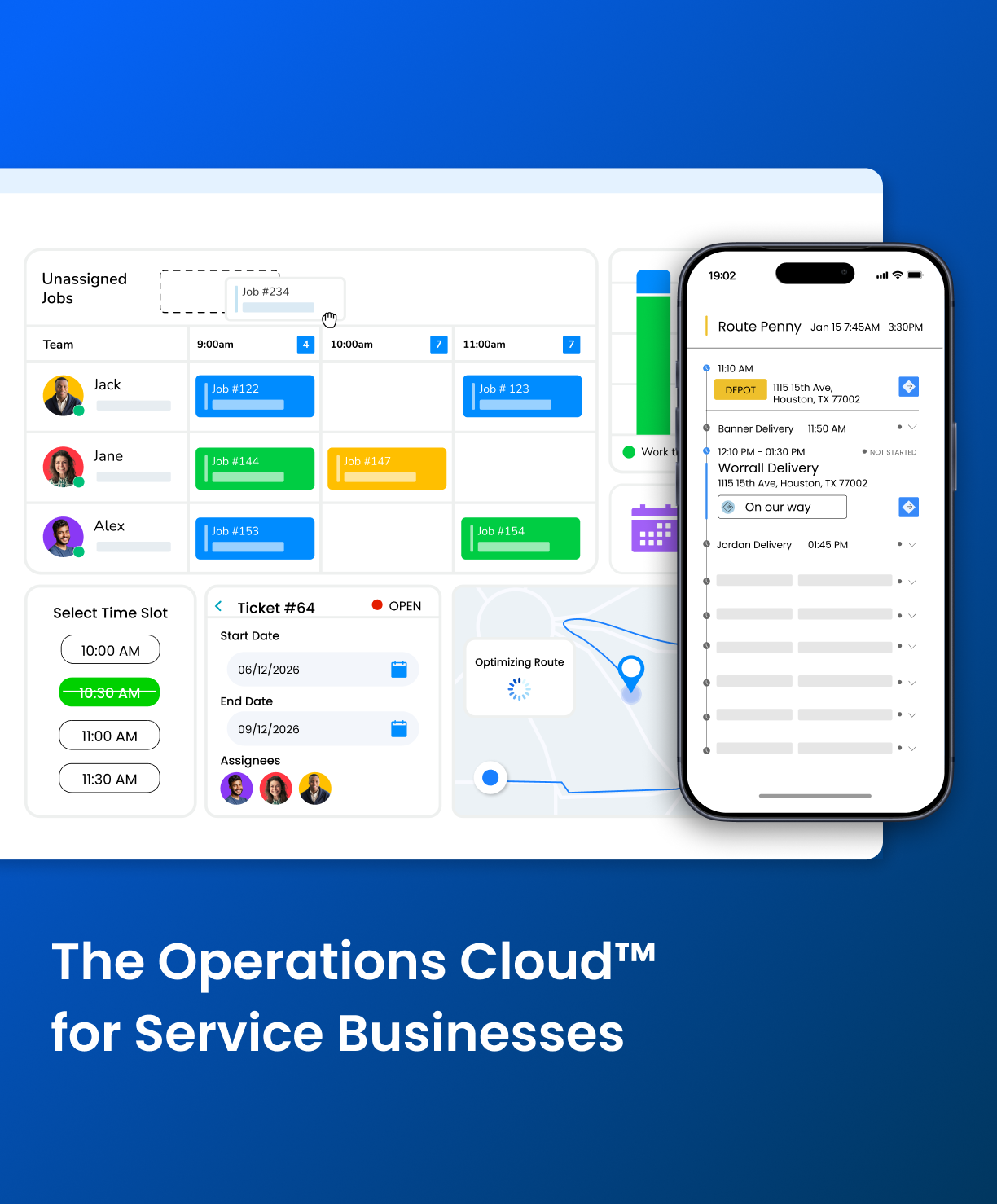
This is where Arrivy helps. Arrivy is a field service management (FSM) platform designed for businesses managing technicians across multiple job sites. It combines scheduling, dispatching, job tracking, and customer communication into a single system.
With Arrivy, dispatchers can manage technicians and appointments from one dashboard, while technicians receive schedules and job details through a mobile app. Customers also receive automatic SMS or email updates when a technician is on the way, helping reduce missed appointments and improving the overall service experience.
Step 10: Get Your First Customers
Marketing your HVAC business should begin as soon as your business is ready to take jobs. Your first customers will often come from referrals, local networking, and online visibility.
Start by reaching out to family, friends, former coworkers, and local contacts. You can also offer first-time discounts within your target service area.
Build your online presence and local SEO by:
Listing your business on Yelp, Angi, and HomeAdvisor
Creating a simple website with your services, service area, and contact details
Running Google Local Services Ads to generate qualified local leads
How to Run an HVAC Business Efficiently?
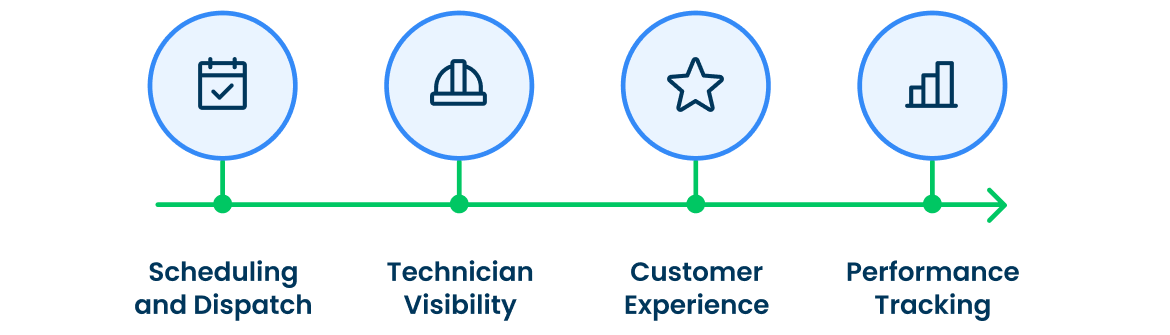
Running a successful HVAC business requires more than technical skills. Efficient operations help reduce delays, improve customer satisfaction, and increase profitability over time.
1. Scheduling and Dispatch
Efficient scheduling and dispatching help reduce travel time, avoid appointment conflicts, and improve technician productivity. Well-planned routes also help lower labor and fuel costs.
2. Technician Visibility
Real-time technician tracking helps you monitor job progress and respond quickly to schedule changes or delays. It also improves communication between dispatchers, technicians, and customers.
3. Customer Experience
Customer experience plays a major role in repeat business and online reviews. Sending arrival updates, service notifications, and follow-ups helps improve customer satisfaction.
4. Performance Tracking
Track key HVAC business metrics such as job completion rate, average job duration, and revenue per job. Monitoring these numbers regularly helps you identify operational issues and improve profitability.
How Arrivy Supports HVAC Operations?
Arrivy helps HVAC businesses manage scheduling, dispatching, technician tracking, and customer communication from one platform.
Dispatchers can view the full job schedule in real time, while technicians receive job details and updates directly through the mobile app. Customers also receive automatic SMS or email notifications, reducing manual follow-ups and improving the service experience.
As your HVAC business grows, Arrivy integrates with your existing business tools using API integrations, helping you scale operations without disrupting your workflow.
What Changes When You Add an Operations System?
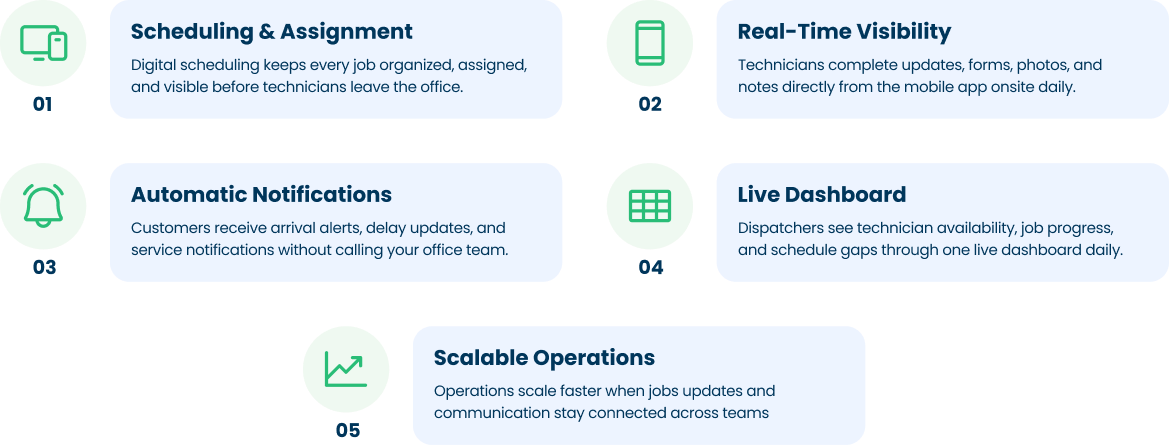
The difference between manual operations and a field service management system becomes clear as your HVAC business starts handling more jobs and technicians.
| Without HVAC FSM Software | With HVAC FSM Software |
|---|---|
| Jobs are tracked through spreadsheets and phone calls | Jobs are scheduled and assigned digitally |
| Technicians manually handle updates and paperwork | Technicians complete job updates and digital forms in real time through a mobile app |
| Customers receive limited communication about delays | Customers get automatic arrival and service notifications |
| Scheduling conflicts and missed appointments are common | Dispatchers manage schedules through a live dashboard |
| Owners spend hours tracking jobs manually | Operations become faster, more organized, and easier to scale |
The HVAC work stays the same, but the right operations system improves efficiency, reduces missed appointments, and delivers a stronger return on investment as your business grows.
Best Practices for HVAC Startups
The right systems and business practices can help your HVAC business grow faster and avoid costly mistakes early on.
Common Mistakes New HVAC Businesses Make
Many HVAC startups struggle in their first year because of avoidable operational and financial mistakes.
Ready to Run Your HVAC Business?
Licensing, tools, and pricing help you establish an HVAC business, while efficient operations help you grow it.
The HVAC businesses that scale successfully are the ones that stay organized, communicate consistently with customers, and build operational systems before workload becomes difficult to manage.
Arrivy helps HVAC businesses manage scheduling, dispatching, job tracking, digital forms, and automated customer updates from one platform. As your workload grows, Arrivy helps keep your operations organized, efficient, and scalable.