 Login
Login






















Quick Answer:
There is no single nationwide HVAC license in the United States.
HVAC contractor and technician requirements are established by states, counties and municipalities. Some states issue a dedicated HVAC contractor license. Others regulate mechanical contractors, refrigeration technicians, fuel-system specialists or construction businesses. Several states leave most HVAC licensing to cities and counties.
To get an HVAC license, you will generally need to:
- Identify the license required in your location.
- Complete relevant HVAC education or training.
- Gain documented experience under qualified supervision.
- Earn EPA Section 608 certification if you will perform regulated refrigerant work.
- Pass any required trade, business or law examinations.
- Submit an application with the required documentation, fees and insurance information.
- Renew the license according to state or local rules.
The exact process depends on where you work and whether you plan to work as an employee, a licensed technician or an independent HVAC contractor.
HVAC is one of the strongest trades to enter right now. According to the U.S. Bureau of Labor Statistics, over 40,000 job openings are projected every year, the median salary sits around $59,000. HVAC remains a strong hands-on trade because installation, maintenance, diagnostics, and repair still require skilled field work, even as businesses adopt more scheduling, dispatch, and diagnostic technology. If you’ve been thinking about it, this is a good time to commit.
The HVAC licensing process has more steps than most people expect, and the requirements change depending on which state you’re in, whether you’re working as a technician or a contractor, and what type of systems you plan to work on.
To get an HVAC license, you typically need to complete formal training, gain hands-on field experience, earn EPA Section 608 certification, pass a licensing exam, and apply through your state’s licensing board. The exact path varies by state, but the framework is consistent.
This guide breaks down each step with the actual details on what’s required, in what order, how long it takes, and what it costs.
What Is an HVAC License?
An HVAC license is a credential issued by a state or local government that authorizes a person or business to perform specified heating, ventilation, air-conditioning or refrigeration work.
The license may control:
- The type of systems you may install or service
- The size or capacity of equipment you may work on
- Whether you may work independently
- Whether you may advertise and contract directly with customers
- Whether you may obtain permits
- Whether you may supervise employees or apprentices
- Whether your business must carry liability insurance or a surety bond
Some jurisdictions license individual technicians. Others regulate only contractors or businesses. Certain states use classifications based on equipment type, project scope or system capacity.
HVAC License vs. Certification: What’s the Difference?
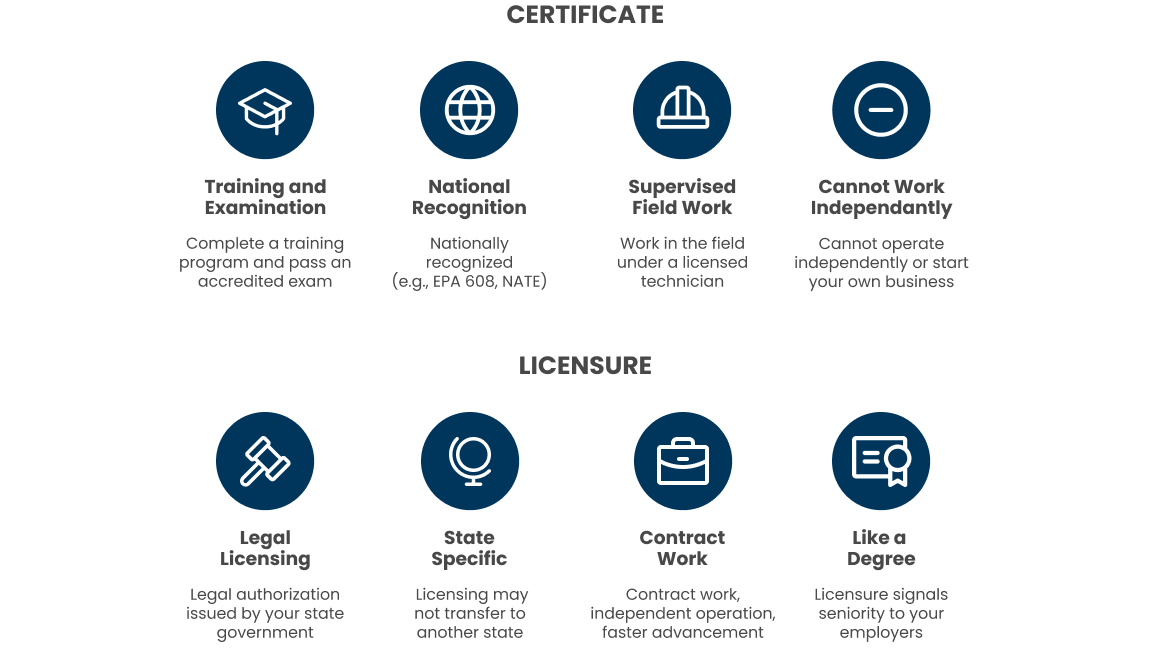
An HVAC license and an HVAC certification are not the same thing.
HVAC license
A license is a legal authorization issued by a government agency. It may be required before you can contract directly with customers, operate an HVAC company, obtain permits or perform particular types of work.
Licenses are commonly limited to a particular state, county or municipality.
HVAC certification
A certification shows that you passed an examination or met the standards of a certifying organization.
Some certifications are legally required for specific activities. Others are voluntary professional credentials.
For example, EPA Section 608 certification is federally required for technicians who maintain, service, repair or dispose of equipment in a way that could release regulated refrigerants. Section 608 certification is not a substitute for a state or local HVAC contractor license.
The practical difference
You may need both:
- EPA certification for regulated refrigerant work
- A state or local license for contracting, independent work or permit-related activities
A voluntary certification may help demonstrate technical knowledge, but it does not automatically give you legal authority to perform licensed work.
Types of HVAC Licenses
Most states organize licenses into levels based on how much experience you have and what you’re legally allowed to do:
Journeyman License: You’ve put in the hours and passed an exam. You can work independently under a licensed contractor.
Specialty Licenses: Some states issue these for specific work like commercial refrigeration, solar HVAC, or industrial systems.
Do You Need an HVAC License to Start Working?
Not necessarily.
In many jurisdictions, an entry-level employee can work under the supervision of a properly licensed contractor without holding an independent contractor license. However, the employee may still need to register as a technician, trainee or apprentice.
The requirements usually become stricter when you want to:
- Work without supervision
- Advertise HVAC services
- Sign contracts directly with customers
- Bid on projects
- Pull mechanical permits
- Supervise other technicians
- Start an HVAC business
You must check both state and local rules. A state that does not issue a dedicated HVAC license may allow cities or counties to impose their own mechanical-contractor or technician requirements.
How to Get an HVAC License Step by Step

Step 1 – Get HVAC Training
There is no universal degree requirement for becoming an HVAC technician. Common entry paths include:
- Trade or vocational school: Programs run 6 to 12 months and cost between $1,200 and $15,000. This is the most direct path to being hireable fast.
- Community college: An associate degree takes about two years and costs $15,000 to $35,000. More theory, more rounded education, and a better foundation if you eventually want to run your own business.
- Online programs: Cheaper and flexible, but they can’t give you the hands-on time that real HVAC work requires. Good as a supplement, not a replacement.
The U.S. Bureau of Labor Statistics reports that HVAC technicians typically need a postsecondary nondegree award, although some enter the occupation with less formal education. HVAC programs commonly last from six months to two years, followed by substantial on-the-job training.
Training commonly covers:
- Refrigeration principles
- Electrical systems
- Airflow and ductwork
- Heating systems
- Load calculations
- Controls and thermostats
- Equipment installation
- Troubleshooting
- Workplace safety
- Building and mechanical codes
Choose a program that provides hands-on laboratory work and aligns with the licensing requirements in the state where you intend to work.
Pro Tip:
There’s a long debate in the trade about whether to go to school first or just apply somewhere as a helper. Both work. If you can land a helper job right away, take it. You’ll get paid while you learn, and plenty of good companies will cover your certifications. If you can’t get hired yet, six months of trade school makes you hireable. Many techs even do both simultaneously. Before starting either, spend a few weeks on YouTube learning basics like electrical theory and “superheat”. Walking into an interview able to talk the language puts you ahead of almost every other beginner.
Step 2 – Gain and Document Field Experience
This is the part that takes the longest, and there’s no shortcut. Most states require between 4,000 and 8,000 hours of supervised, hands-on field experience before they’ll let you sit the licensing exam, which is roughly one to five years of actual work.
The most common way to get those hours is an apprenticeship. In those first months, you’ll be loading vans, hauling equipment, handing tools to the senior tech, and watching carefully. The techs who move up fastest are the ones who pay attention to everything, ask questions constantly, and don’t wait to be told what to do next.
Documentation can be just as important as the experience itself.
Keep records of:
- Employer names and addresses
- Supervisors and their license numbers
- Employment dates
- Hours worked
- Job descriptions
- Equipment and systems serviced
- Apprenticeship records
- Tax or payroll documents
- Certificates and transcripts
Can education count toward experience?
Sometimes.
A state may allow technical education, an apprenticeship, military training or an engineering degree to replace part of the practical-experience requirement. The amount of credit varies by jurisdiction.
California, for example, generally requires four years of qualifying experience for a contractor examination, but the Contractors State License Board may award up to three years of credit for qualifying education or apprenticeship training.
Pro Tip:
A faster way to get an apprenticeship is to show up in person to local HVAC companies and tell them directly why you want in. A lot of small shops hire through that kind of conversation. Many never post jobs. Smaller, local companies are also better starting points than big national brands. Small shops need you useful fast, so they’ll throw you into real work sooner. Big companies often keep new hires on grunt installs for a year before you touch anything diagnostic.
Step 3 – Earn EPA Section 608 Certification When Required
EPA Section 608 certification applies to technicians who maintain, service, repair or dispose of equipment in a manner that could release regulated refrigerants.
To become certified, a technician must pass an examination administered by an EPA-approved certifying organization. EPA Section 608 credentials do not expire.
The EPA recognizes four certification types:
| Type | What It Covers |
|---|---|
| Type I | Small appliances with less than ≤ 5 lbs of refrigerant |
| Type II | High-pressure systems – most home and commercial AC units |
| Type III | Low-pressure systems like chillers |
| Universal | All of the above – this is what most technicians get |
Go for Universal. It covers everything, it costs around $100 for the full exam, and it never expires. You take it once and you’re done. Free study guides are easy to find online, and you can take the test at most local HVAC supply houses.
Pro Tip:
Apps like SkillCat have free EPA 608 prep and can proctor the exam for you affordably. It’s one of the most recommended starting points in the trade community, even before you’ve enrolled in school yet. Do this first. It costs almost nothing, it never expires, and it immediately makes you more hireable.
Step 4 – Study for Your State Licensing Exam
Once you’ve got your hours and your EPA 608, you’ll need to pass your state’s licensing exam.
Depending on the jurisdiction, the examination may cover:
- HVAC installation
- Refrigeration
- Heating systems
- Ventilation and airflow
- Electrical theory
- Equipment sizing
- Troubleshooting
- Fuel-gas systems
- Safety procedures
- Mechanical and energy codes
- Business management
- Contract law
- Lien law
- Workers’ compensation
- Licensing rules
Some states require separate trade and business examinations. Others divide HVAC licenses into classifications or endorsements.
Passing scores typically range from 70% to 75%, depending on the state and exam provider. Most exams are multiple-choice. They’re not impossible, but they do test specifics that don’t always come up in everyday work, which is why people who only rely on field experience sometimes struggle. Study resources include exam prep books, your state licensing board’s published practice tests, and platforms like SkillCat.
Step 5 – Apply to Your State Licensing Board
When you’ve met the training and experience requirements and passed the exam, it’s time to file your application. Expect processing to take 6 to 10 weeks in most states.
The application process varies, but commonly requested documents include:
- A completed application
- Proof of age or identity
- Education records
- Experience-verification forms
- Examination results
- EPA certification information, when relevant
- Background-check or fingerprint information
- Business-entity documents
- Financial-responsibility documents
- Liability-insurance information
- Workers’ compensation documentation
- Surety-bond information
- An application or licensing fee
Check names and dates carefully. Inconsistent employment dates, incomplete signatures and unverifiable experience can delay an application.
Do not purchase a bond or insurance policy based on a general online estimate. Use the coverage limits and policy language specified by your licensing authority.
Step 6 – Pass the Exam and Keep Your License Active
Once you’re licensed, that’s not the end of it. Most states require you to renew periodically and complete continuing education, typically around 8 to 9 hours per renewal cycle. This keeps you current on things like updated refrigerant regulations and new building codes.
Depending on your jurisdiction, renewal may require:
- A renewal application
- A renewal fee
- Continuing education
- Current liability insurance
- An active surety bond
- Workers’ compensation coverage or an exemption
- Updated business records
- Timely reporting of address, ownership or qualifier changes
Create a renewal calendar as soon as the license is issued. Track the expiration dates of the license, insurance policies, bonds, business registrations and employee credentials separately.
Operating with an expired license can affect contracts, permits, insurance coverage and your ability to collect payment.
HVAC License Requirements by State: Top 10 States to Work In
Here are the 10 best states for HVAC technicians based on average salary, job availability, and market demand.
| State | Avg. Annual Salary | Salary Range |
|---|---|---|
| Connecticut | $77,369 | $48K – $122K |
| Washington | $76,503 | $49K – $117K |
| Alaska | $76,272 | $66K – $87K |
| New Jersey | $74,883 | $46K – $120K |
| Massachusetts | $74,848 | $47K – $117K |
| Maryland | $74,064 | $45K – $120K |
| Delaware | $65,916 | $40K – $106K |
| Oregon | $65,739 | $42K – $101K |
| Nevada | $59,097 | $37K – $93K |
| Maine | $55,625 | $36K – $84K |
Disclaimer: Data reflects 2026 estimates. Verify with current local sources before making decisions.
How Long Does It Take to Become an HVAC Technician?
The timeline depends primarily on the license’s experience requirement.
An entry-level HVAC training program may take approximately six months to two years. Becoming eligible for a contractor-level license can take longer because applicants may need several years of documented field experience.
| Type | What It Covers |
|---|---|
| Training / Education | 6 months – 2 years |
| Apprenticeship / field hours | 2 – 5 years |
| Exam prep and application | 2 – 4 months |
| Total (typical path) | 3 – 6 years |
Fast-track options exist. A 9-month certificate program plus a good apprenticeship can get you to a journeyman license faster than the traditional route.
Pro Tip:
You can be employed and earning within a few weeks by landing a helper role. But becoming a fully competent, independent technician takes time no matter how smart or motivated you are. Experienced techs across the industry say the 5–7 year mark is when things really click. Go in knowing that, and the early months won’t feel like a surprise.
How Much Does It Cost to Become HVAC Certified?
There is no reliable nationwide total.
Your cost will depend on your training route, the state or local application process and whether you are applying as a technician or contractor.
Potential expenses include:
- Trade-school or community-college tuition
- Books and laboratory fees
- Tools and personal protective equipment
- EPA Section 608 examination fees
- State trade and business examinations
- Application fees
- Fingerprinting or background checks
- Business-registration fees
- Liability insurance
- Workers’ compensation coverage
- Surety bonds
- Continuing education
- Renewal fees
Request current fee schedules directly from the licensing board before budgeting. However, here’s your rough estimate:
| Type | What It Covers |
|---|---|
| Trade school / certificate program | $1,200 – $15,000 (short courses); $15,000 – $20,000 (standard 9–12 month programs) |
| Associate degree | $15,000 – $35,000 |
| EPA 608 exam | $20 – $150 (varies by provider and format) |
| NATE or other certifications | $60 – $500 |
| State exam + application fees | $100 – $500 |
| Tools and supplies | $500 – $3,000 |
The typical path costs $3,000 to $20,000, which is a fraction of a four-year degree, and the return on that investment comes much faster. A paid apprenticeship or employer-sponsored training program can reduce your education expenses significatly. Contractor licensing normally costs more than employee registration because contractors may need insurance, bonding and business documentation.
Pro Tip:
If you get a choice early on, lean toward commercial work. The pay ceiling is higher, the hours are more predictable, and you won’t be taking calls from homeowners at 10pm because their AC went out. A lot of residential techs wish they’d made that call earlier.
Can an HVAC License Transfer to Another State?
Not automatically.
State and local HVAC licenses are issued under the laws of the licensing jurisdiction. Moving to another state may require:
- A new application
- Verification of your existing license
- Proof of experience
- A state law or business examination
- A trade examination
- Insurance or bonding
- Fingerprints or a background check
Some states have reciprocity or examination-waiver arrangements for particular license classifications. Reciprocity does not always mean that a license is transferred without an application.
EPA Section 608 certification is federal and does not expire, so a properly earned credential remains valid when a technician moves to another state.
Common HVAC Licensing Mistakes
Confusing EPA certification with a contractor license
EPA Section 608 certification authorizes covered refrigerant-related activities. It does not authorize someone to operate an HVAC contracting business where a state or local contractor license is required.
Checking only state rules
A city or county may impose licensing or registration requirements even when the state does not issue a dedicated HVAC license.
Failing to document experience
Experience that cannot be verified may not be accepted. Maintain employment and project records throughout your career.
Using outdated examination materials
Verify the current code editions and reference books in the official examination bulletin.
Assuming reciprocity is automatic
Even when a reciprocity agreement exists, you normally must apply and satisfy the receiving state’s administrative requirements.
Letting insurance or a bond expire
A contractor license may become inactive or noncompliant when required coverage lapses.
Is HVAC a Good Career in 2026?
The U.S. Bureau of Labor Statistics reported a median annual wage of $59,810 for heating, air-conditioning and refrigeration mechanics and installers in May 2024.
Employment in the occupation is projected to grow 8% from 2024 through 2034, with approximately 40,100 openings projected per year on average over that period. Actual pay varies by location, specialization, experience, employer, overtime and type of work.
Licensing can expand the types of work you may legally perform, but it does not guarantee a particular salary or business income.
HVAC Career Paths: Jobs, Specializations, and Salary Potential
Getting your HVAC license is just the first step. Once you’re certified, your career can go in several different directions depending on how much you want to earn and what kind of work you enjoy.
Here is a simplified breakdown of your options:
The Starting Points
High-Paying Specializations
Tech & Design Paths
Sales & Ownership
Pro Tip:
The biggest salary jump in HVAC comes from moving into commercial and industrial work, specifically large-tonnage chillers, data center cooling, and industrial refrigeration. Technicians who specialize in these systems routinely earn $90,000+ in markets like New York, Chicago, and California. If you have flexibility in where you start, lean toward commercial from the beginning.
Tools HVAC Professionals Use to Grow Faster
Once you’re licensed and building a client base, operational efficiency matters just as much as technical skill. Licensing establishes your legal eligibility to perform covered work. But running an efficient HVAC operation requires a separate set of systems.
Growing HVAC businesses must coordinate:
- Customer appointments
- Technician availability
- Emergency calls
- Dispatch changes
- Routes
- Work orders
- Job documentation
- Estimates and customer approvals
- Arrival notifications
- Follow-up communication
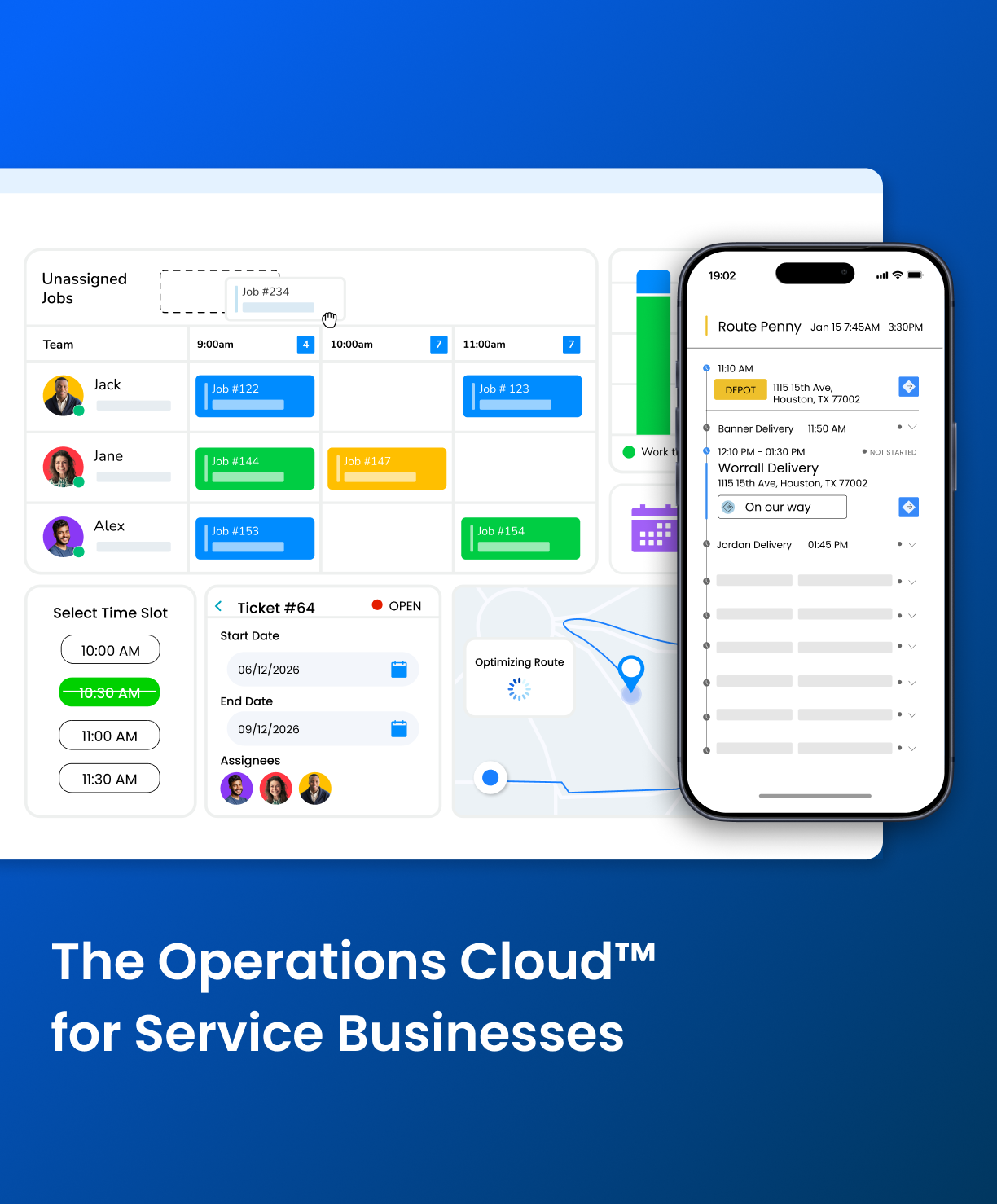
Many growing HVAC teams use Arrivy to handle job scheduling, field dispatch, and real-time customer communication, all from one platform. It reduces back-and-forth, keeps technicians and office staff on the same page, and makes scaling the business a lot less chaotic.