 Login








AI Summary
Businesses servicing stationary refrigeration, air-conditioning and heat-pump equipment containing F-gas may need company certification, while individuals working with F-gas also need the appropriate qualifications. HVAC businesses carrying out regulated gas work must also use appropriately Gas Safe-registered engineers. Field service software can support records and job administration, but it does not replace those legal requirements.
Recommended Reads:
What happens when an HVAC engineer runs late, an urgent breakdown comes in, and the next job needs someone with a specific skill set?
For many HVAC businesses, this is a normal day. Planned maintenance, reactive repairs, installations, and recurring service visits all compete for the same engineers, vehicles, and time. As the team grows, it becomes harder for the office to see who is available, which technician is best suited to each job, what equipment is being serviced, and whether the customer has been kept informed.
That is where HVAC field service management software becomes useful. It brings scheduling, engineer assignments, customer information, asset history, and field activity into one system, reducing reliance on spreadsheets, phone calls, paper records, and disconnected tools.
This guide compares five HVAC field service management platforms available to UK businesses: Arrivy, Joblogic, Commusoft, Simpro, and ServiceM8.
What Is HVAC Field Service Management Software?
HVAC field service management software helps heating, ventilation, air-conditioning and refrigeration businesses coordinate office and field operations from one system.
Depending on the platform, this can include:
- Engineer scheduling and dispatch
- Reactive callouts
- Planned preventative maintenance
- HVAC asset histories
- Mobile job information
- Digital service forms
- Refrigerant records
- Route planning
- Customer notifications
- Quotes and invoices
- Job costing
- Stock management
- Reporting
For a small HVAC company, the priority may simply be keeping appointments, engineers and invoices organised. Larger commercial contractors may need PPM contracts, SLA tracking, multi-site assets, stock control and more detailed compliance records.
The best platform is therefore the one that matches the type of HVAC work the business actually performs.
Features and pricing reviewed in October 2026. Vendors may change plans, prices and product functionality
HVAC Field Service Management Software Compared at a Glance
| Company | Best for | Rating | Free Trial |
|---|---|---|---|
| Arrivy | Connected HVAC field operations | 4.8/5 | 14-day free trial |
| Joblogic | UK HVAC compliance and planned maintenance | 4.8/5 | Demo available |
| Commusoft | Commercial HVAC contracts and assets | 4.7/5 | Demo/trial available |
| Simpro | Complex service, maintenance and installation work | 4.7/5 | Demo available |
| ServiceM8 | Small HVAC and trade businesses | 4.6/5 | 14-day free trial |
Editorial ratings are our assessment of each platform for UK HVAC field service management and are not customer-review scores.
How We Selected the Best HVAC Field Service Management Software
We compared each platform based on:
- Availability for UK HVAC businesses
- Scheduling and dispatch
- Engineer skill and availability management
- Reactive callout handling
- Planned preventative maintenance
- Recurring service scheduling
- Asset and equipment history
- F-Gas and refrigerant record support
- Digital forms and service reports
- Mobile engineer access
- Offline functionality
- Route planning
- Customer ETA communication
- Quotes and invoicing
- Job costing
- Parts and stock management
- Accounting integrations
- Reporting
- Suitability for growing HVAC teams
- Pricing transparency
Arrivy publishes this comparison. Each platform has been considered against the same operational criteria, including areas where specialist UK HVAC platforms provide deeper compliance or asset-management functionality.
The comparison uses publicly available vendor documentation and current pricing information, rather than undisclosed hands-on testing.
5 Best HVAC Field Service Management Software Platforms in the UK
1
Arrivy — Best for Connected HVAC Field Operations
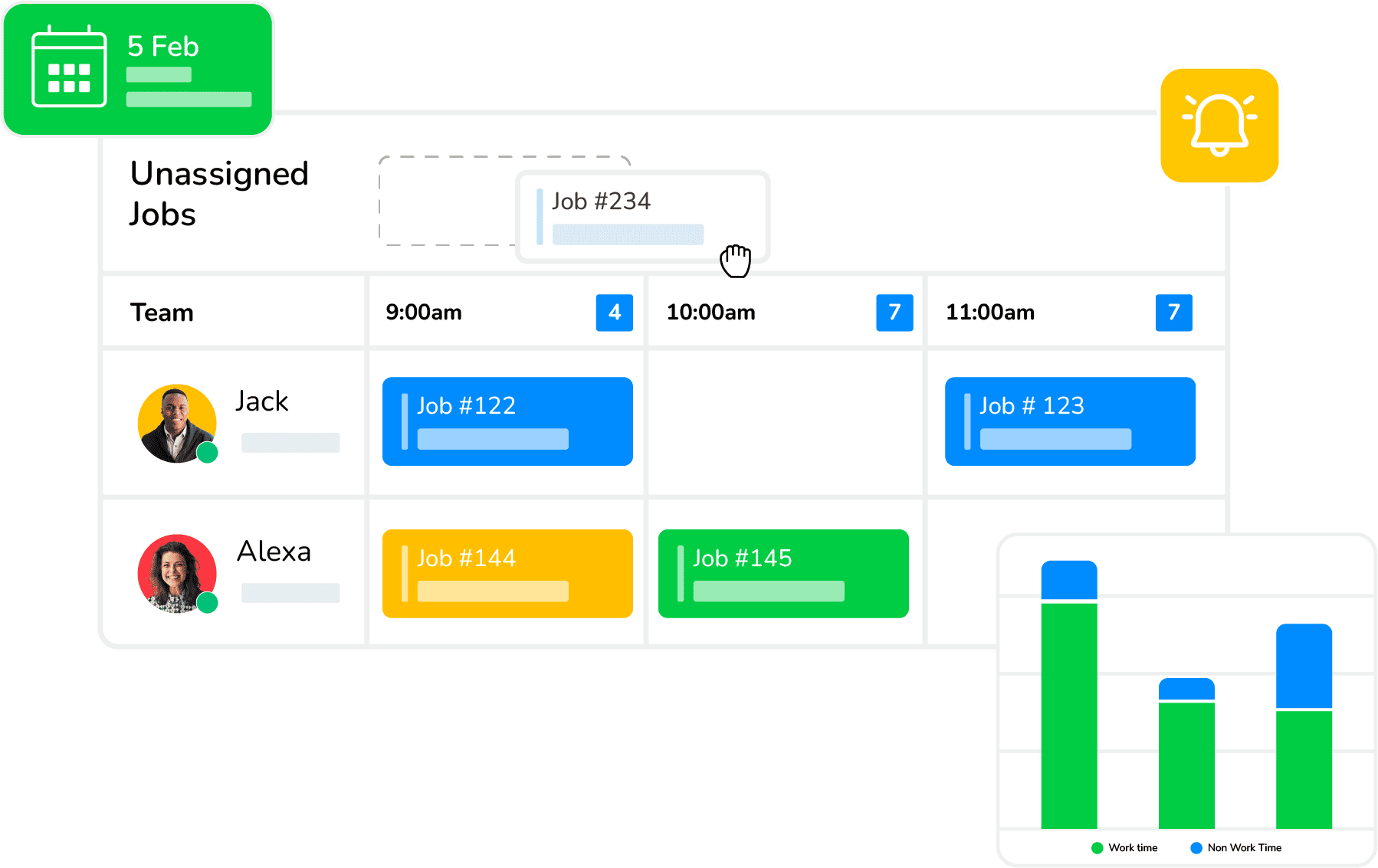
Arrivy is designed for HVAC businesses that need to keep scheduling, engineers, routes, customers and field activity connected throughout the working day. Its HVAC field service software supports bookings, technician assignments, dispatch, recurring maintenance visits, route optimisation and real-time job visibility. Engineers can access job details through the mobile app, while office teams can respond to urgent callouts and changing schedules without relying on repeated phone calls. Customers can also receive ETA and service-status updates as the job progresses.
Arrivy is designed for HVAC businesses that need to keep scheduling, engineers, routes, customers and field activity connected throughout the working day. Its HVAC field service software supports bookings, technician assignments, dispatch, recurring maintenance visits, route optimisation and real-time job visibility. Engineers can access job details through the mobile app, while office teams can respond to urgent callouts and changing schedules without relying on repeated phone calls. Customers can also receive ETA and service-status updates as the job progresses.
Key Features:
Pros:
-
Strong scheduling and dispatch functionality
-
Useful for reactive and planned HVAC work
-
Skill, location and availability can support technician assignment
-
Strong route planning for multi-job days
-
Real-time visibility across active field work
-
Customer ETA and status communication
-
Digital field documentation remains connected to jobs
-
Supports recurring maintenance visits
-
Integrates with existing CRM and accounting systems
Cons:
-
Businesses needing specialised native UK F-Gas compliance workflows may need to configure forms or use supporting systems
-
Very small HVAC businesses needing only basic scheduling and invoicing may not require the broader operational feature set
-
Some advanced capabilities are included on higher plans
Pricing:
Best for:
Arrivy is best suited to growing HVAC businesses managing several technicians, reactive service calls, recurring maintenance visits and changing schedules across multiple locations
2
Joblogic — Best for UK HVAC Compliance and Planned Maintenance
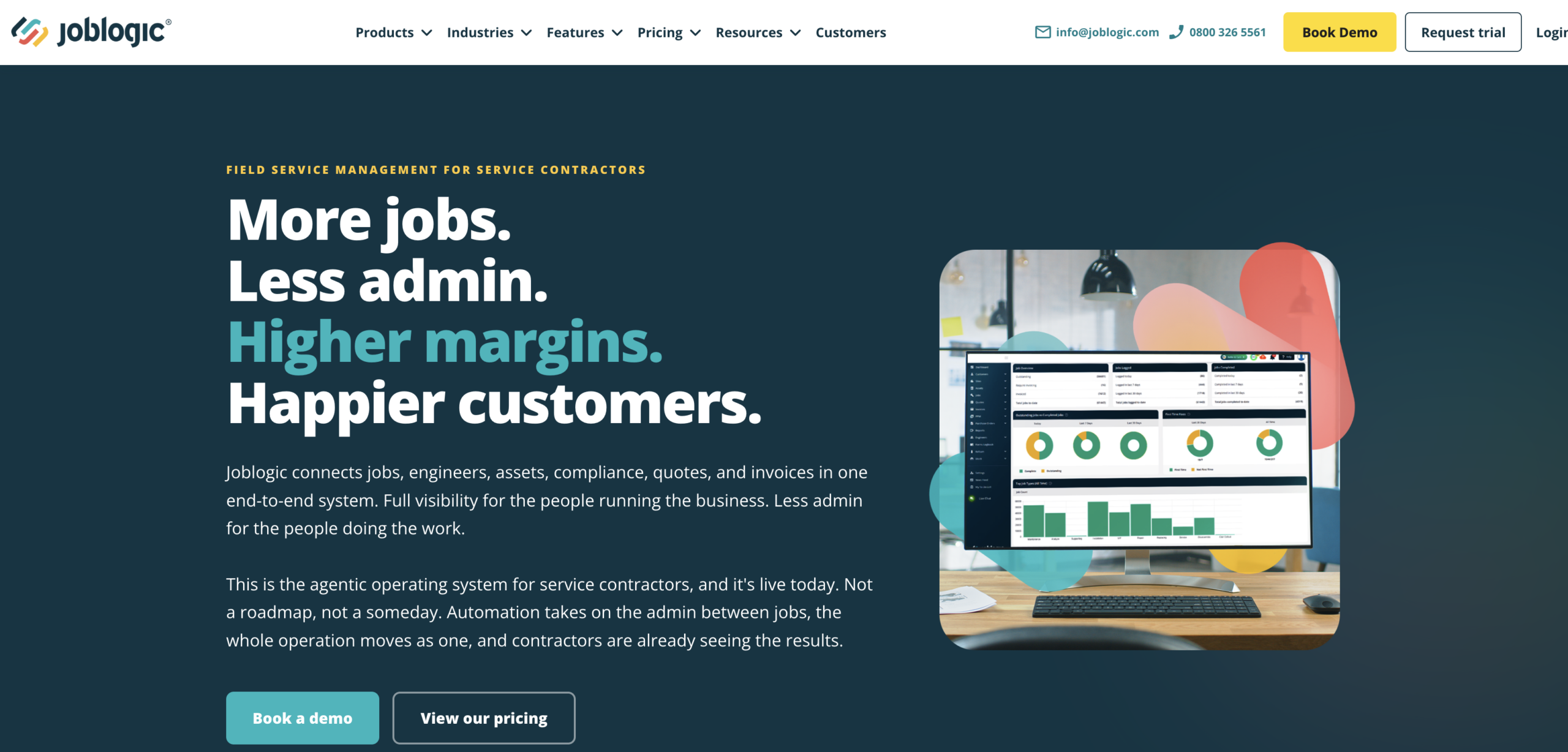
Joblogic is a UK-built field service management platform with dedicated HVAC functionality. It combines job scheduling, engineer management, asset records, recurring maintenance, job costing and mobile field access with functionality designed around UK building-services requirements. A particular strength is its F-Gas functionality, developed with REFCOM, which can record refrigerant transactions, leak checks, cylinders and HVAC assets. This makes Joblogic particularly relevant to refrigeration and air-conditioning contractors where auditable refrigerant records sit alongside daily job management.
Joblogic is a UK-built field service management platform with dedicated HVAC functionality. It combines job scheduling, engineer management, asset records, recurring maintenance, job costing and mobile field access with functionality designed around UK building-services requirements. A particular strength is its F-Gas functionality, developed with REFCOM, which can record refrigerant transactions, leak checks, cylinders and HVAC assets. This makes Joblogic particularly relevant to refrigeration and air-conditioning contractors where auditable refrigerant records sit alongside daily job management.
Key Features:
Pros:
-
Built specifically for UK service contractors
-
Strong F-Gas functionality
-
Developed with REFCOM for refrigerant tracking
-
Good HVAC asset-management capabilities
-
Supports planned and reactive work
-
Mobile engineers can access site and service history
-
Strong job and contract costing
-
Customer portal available
-
GBP pricing
Cons:
-
May provide more functionality than a very small domestic HVAC business needs
-
More advanced PPM, routing and engineer-tracking capabilities sit on higher tiers Pricing increases per user as teams grow
-
Implementation can require more setup than lightweight job apps
Pricing:
Joblogic’s Standard plan starts from £45 per user per month when billed annually. Premium and Enterprise pricing depends on the functionality and implementation required. It includes customer and site management, asset management, job costing, quotes, invoices, the mobile engineer app, electronic forms and recurring jobs. Premium and Enterprise pricing depends on the business requirements and selected functionality.
Best for:
Joblogic is best suited to UK HVAC, refrigeration and building-services contractors that need job management closely connected with F-Gas records, equipment history and planned maintenance.
3
Commusoft — Best for Commercial HVAC Contracts and Assets
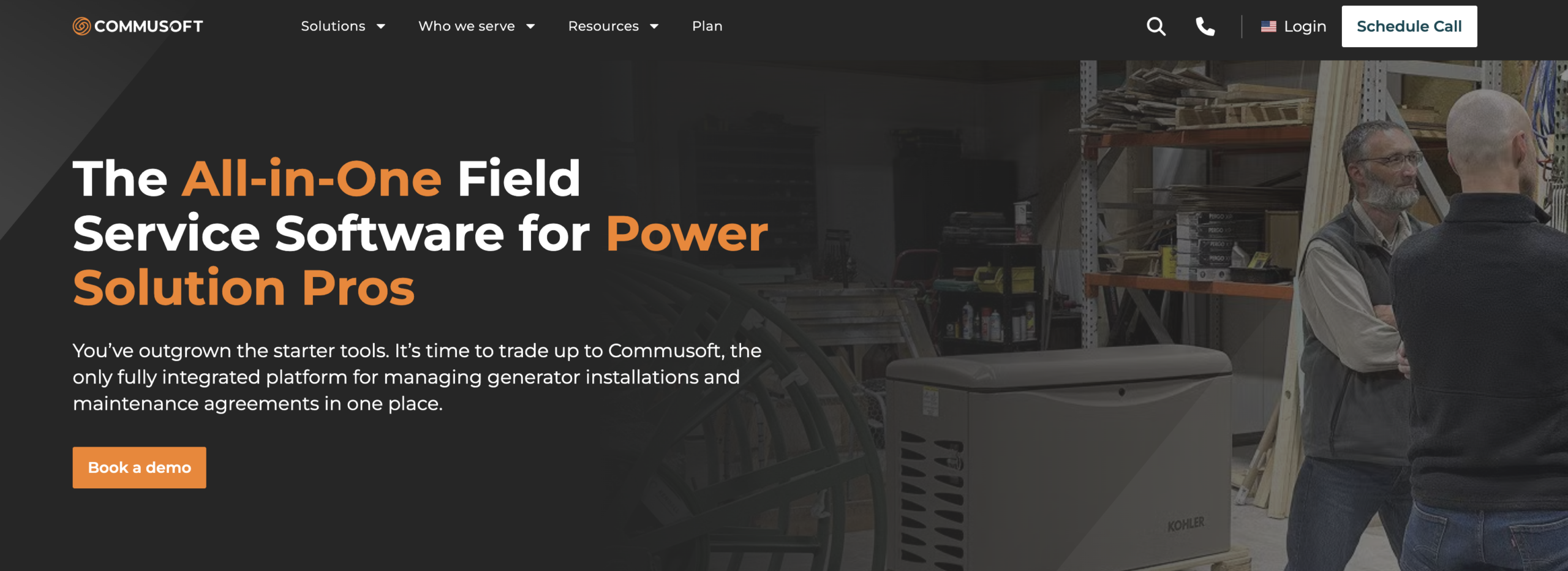
Commusoft has dedicated HVAC software aimed particularly at commercial service businesses. It combines scheduling, field mobility, customer management, HVAC assets, service contracts, stock, job costing and recurring PPM work. Asset records can hold service history and refrigerant information, while service contracts can automate recurring maintenance visits and invoicing. Its multi-site customer structure also makes it relevant to HVAC contractors servicing several buildings or large commercial estates.
Commusoft has dedicated HVAC software aimed particularly at commercial service businesses. It combines scheduling, field mobility, customer management, HVAC assets, service contracts, stock, job costing and recurring PPM work. Asset records can hold service history and refrigerant information, while service contracts can automate recurring maintenance visits and invoicing. Its multi-site customer structure also makes it relevant to HVAC contractors servicing several buildings or large commercial estates.
Key Features:
Pros:
-
Strong commercial HVAC focus
-
Useful for multi-site customers
-
Detailed asset histories
-
Refrigerant tracking available
-
Strong PPM and service-contract management
-
Offline mobile functionality
-
Stock and van inventory capabilities
-
Job-level profitability reporting
-
Flexible licence options for permanent and temporary users
Cons:
-
Can be more comprehensive than smaller reactive HVAC teams require
-
Public pricing is not clearly displayed
-
Some functionality is provided through additional modules
-
More detailed configuration may require a longer setup period than simpler trade apps
Pricing:
Best for:
Commusoft is best suited to commercial HVAC businesses managing service agreements, PPM schedules, multiple sites, HVAC assets and larger engineer teams.
4
Simpro — Best for Complex HVAC Service and Installation Work
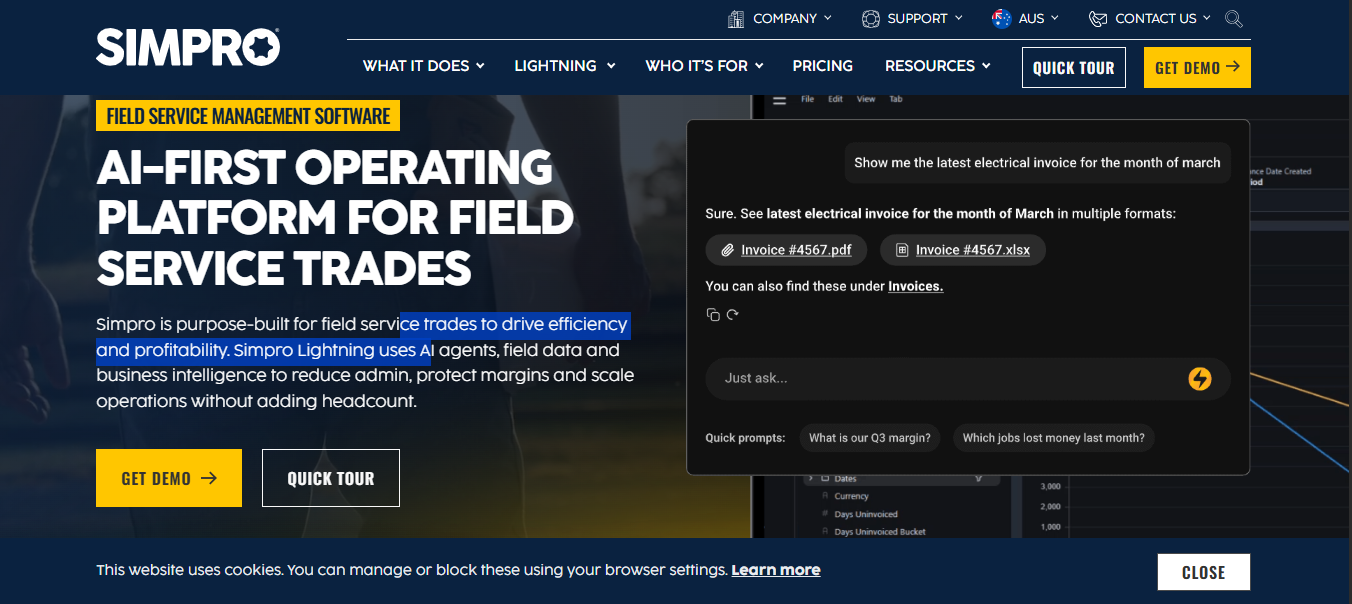
Simpro is a broader trade and field service platform with dedicated HVAC functionality for service calls, installations, preventive maintenance and complex projects. Its strengths include detailed estimating, scheduling, job costing, inventory, asset management and financial reporting. This makes it particularly relevant to HVAC businesses that manage both day-to-day service work and larger installations or multi-stage commercial projects. Simpro has also expanded its AI functionality in 2026, including tools for technician job preparation, field notes and operational reporting.
Simpro is a broader trade and field service platform with dedicated HVAC functionality for service calls, installations, preventive maintenance and complex projects. Its strengths include detailed estimating, scheduling, job costing, inventory, asset management and financial reporting. This makes it particularly relevant to HVAC businesses that manage both day-to-day service work and larger installations or multi-stage commercial projects. Simpro has also expanded its AI functionality in 2026, including tools for technician job preparation, field notes and operational reporting.
Key Features:
Pros:
-
Strong fit for complex commercial HVAC work
-
Combines service and project management
-
Detailed job costing
-
Strong estimating functionality
-
Inventory and purchasing included
-
Useful asset-management capabilities
-
Good support for multi-stage installations
-
Offline mobile functionality
-
Advanced reporting and AI tools
Cons:
-
More system than many small HVAC businesses require
-
Subscription pricing is not publicly listed
-
Initial setup fees apply
-
Some functionality is available through separately priced add-ons
-
Businesses should confirm exactly how their required UK compliance records will be configured
Pricing:
Best for:
Simpro is best suited to larger HVAC contractors managing a mixture of reactive service, planned maintenance, complex installations, inventory and financially detailed projects.
5
ServiceM8 — Best for Small HVAC and Trade Businesses
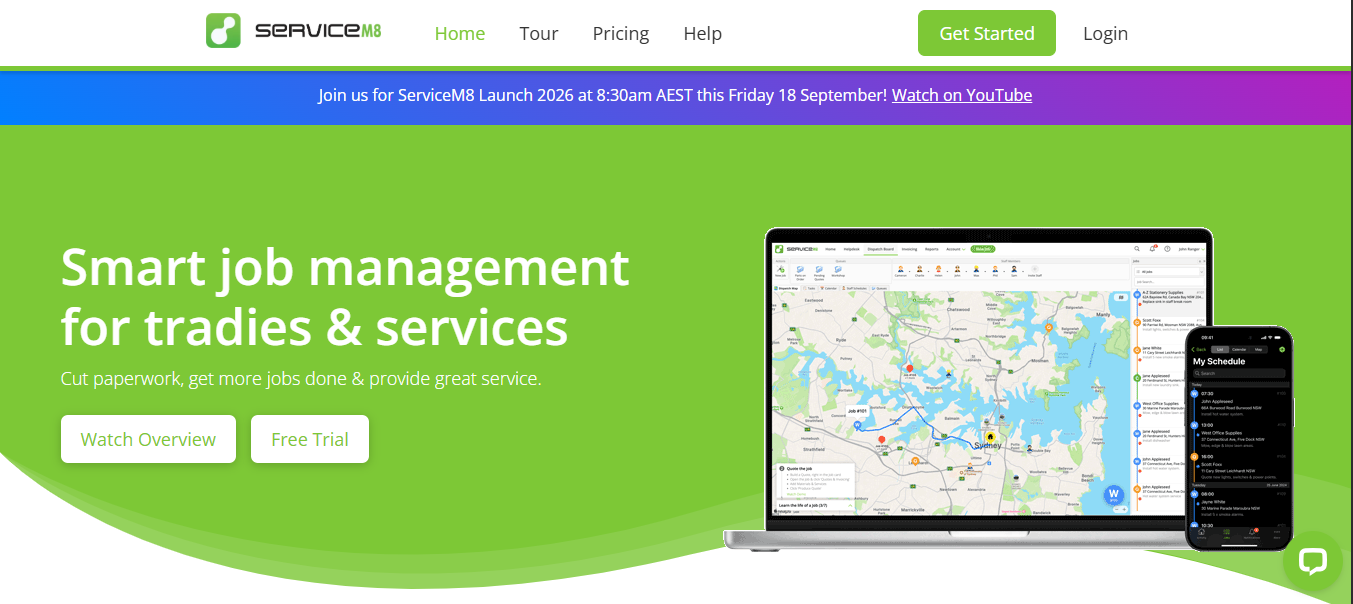
ServiceM8 provides a lighter job-management option for smaller UK HVAC and trade businesses. It combines scheduling, field job cards, customer records, quoting, invoicing, forms, recurring jobs and mobile access. HVAC businesses can use digital forms and checklists to standardise field work, while accounting integrations connect completed jobs with financial systems. Its paid plans include unlimited users and are priced according to the number of new jobs created each month, which differs from the per-user model used by many competitors.
ServiceM8 provides a lighter job-management option for smaller UK HVAC and trade businesses. It combines scheduling, field job cards, customer records, quoting, invoicing, forms, recurring jobs and mobile access. HVAC businesses can use digital forms and checklists to standardise field work, while accounting integrations connect completed jobs with financial systems. Its paid plans include unlimited users and are priced according to the number of new jobs created each month, which differs from the per-user model used by many competitors.
Key Features:
Pros:
-
Straightforward for smaller service teams
-
Free plan available
-
Paid plans include unlimited users
-
GBP pricing
-
14-day free trial
-
Digital HVAC forms and reports
-
Recurring jobs
-
Useful accounting integrations
-
Simple mobile job management
Cons:
-
Pricing depends on monthly job volume
-
Growing job volumes may require moving to higher plans
-
Commercial HVAC contract management is lighter than more specialised platforms
-
Businesses with detailed UK F-Gas requirements should confirm what additional forms or integrations they need
Pricing:
ServiceM8 offers a free plan for one user and up to 30 new jobs per month. Starter costs £25 per month for up to 50 new jobs and unlimited users, while Growing costs £59 per month for up to 150 jobs. Premium plans support higher job volumes and additional functionality. A 14-day free trial is available.
Best for:
ServiceM8 is best suited to sole traders and smaller HVAC businesses that want straightforward scheduling, field job management, recurring work, forms and invoicing without paying separately for every employee
What Features Should UK HVAC Businesses Compare?
Choosing HVAC field service software should start with the type of work your company actually performs. A small domestic air-conditioning installer has very different operational requirements from a commercial HVAC contractor maintaining hundreds of assets across multiple buildings.
Engineer Scheduling and Skill Matching
Not every HVAC engineer can take every job.
Different technicians may have different refrigerant qualifications, gas competencies, equipment experience or customer-site requirements. Scheduling software should make it easy to see availability and assign the right engineer rather than simply the nearest one.
For businesses managing urgent breakdowns, also test how easily an existing schedule can be changed after the day has started.
Planned Preventative Maintenance
Commercial HVAC work often depends on recurring maintenance contracts rather than one-off service calls. Look for software that can schedule recurring visits, connect them to specific HVAC assets and preserve the service history from one visit to the next. For larger contracts, SLA tracking and automatic PPM scheduling can become particularly important.
HVAC Asset and Equipment History
A technician arriving at a site should ideally know what equipment they are dealing with before opening the unit.
Useful asset records can include:
- Equipment type
- Manufacturer and model
- Serial number
- Service history
- Previous faults
- Refrigerant information
- Photographs
- Installed parts
- Previous technician notes
Better equipment history can reduce repeated diagnosis and make recurring maintenance easier to manage.
F-Gas and Refrigerant Records
For refrigeration, air-conditioning and heat-pump contractors, F-Gas is one of the most important UK-specific considerations.
UK guidance requires appropriate qualifications for individuals carrying out relevant work on equipment containing F-gas. Businesses servicing stationary F-gas equipment operated by others may also require company certification.
Where applicable, software should make it easier to retain information about refrigerant use, leak checks, equipment, engineers and service activity.
A software feature labelled “compliance” does not itself make the business compliant. Confirm that the system captures the records your company actually needs.
Gas Safe Requirements
HVAC businesses that also work on gas boilers, heating systems or other regulated gas installations need to consider Gas Safe requirements separately. Gas work in the UK must be performed by appropriately registered and competent Gas Safe engineers. Software can help store engineer details, certificates, appointments and job records, but it cannot replace the underlying professional registration.
Mobile and Offline Access
HVAC engineers often work in plant rooms, basements, roof spaces and other locations where mobile connectivity is unreliable.
Check whether engineers can still access:
- Job information
- Site instructions
- Equipment history
- Forms
- Checklists
- Photos
- Service notes
when connectivity drops.
The data should then sync when the device reconnects.
Route Planning and Live Dispatch
Travel can take a significant portion of an engineer’s working day, particularly when several reactive jobs are spread across a city or service territory.
Route planning can help reduce unnecessary travel, while live dispatching allows the office to respond when an urgent repair or cancellation changes the day’s plan.
Customer ETA notifications can also reduce calls asking when the engineer will arrive.
Job Costing and Invoicing
HVAC jobs can involve labour, travel, replacement parts, refrigerant, subcontractors and equipment.
The software should make it possible to compare these costs with what was quoted or invoiced.
For installation businesses, also check whether the system supports larger estimates, staged work and progress billing rather than only simple service invoices.
Parts and Stock Management
An engineer arriving without the required part can turn one visit into two.
Larger HVAC contractors should compare van stock, warehouse stock, purchasing and inventory controls, particularly when technicians carry filters, compressors, valves and other replacement components.
Smaller businesses may not need this depth.
Reporting and Operational Visibility
Useful HVAC reporting should answer practical questions such as:
- How many jobs are completed each day?
- Which technicians have the highest first-time completion rate?
- How much time is spent travelling?
- Which contracts are profitable?
- Which assets repeatedly require repair?
- Which maintenance visits are coming due?
- How many jobs are running late?
- Which customers require follow-up?
The point of reporting is not simply to produce dashboards. It should help managers make better operational decisions.
Why Choose Arrivy for HVAC Field Service Management Software in the UK?
Arrivy is particularly relevant when an HVAC company’s main challenge is coordinating technicians, appointments, routes and customers as work changes throughout the day.
A dispatcher may begin with a full schedule and then receive an urgent breakdown. The business needs to identify an appropriate technician, consider their location and availability, adjust the day’s route and communicate the change without losing visibility into the other jobs already underway.
Arrivy’s HVAC field service software connects scheduling and dispatch with technician availability, route optimisation, recurring service work, mobile job information and customer communication. Its intelligent scheduling can also consider factors such as crew skills, location and availability when organising work.
Customers can receive automated arrival and status updates, while office teams can monitor active jobs without repeatedly contacting technicians. Field teams can also capture job information through forms, photos, signatures and work records.
This positioning differs from platforms focused primarily on native UK compliance management. Joblogic, for example, provides deeper dedicated F-Gas tracking, while Commusoft puts substantial emphasis on HVAC asset and commercial contract management.
Arrivy is a stronger fit when the priority is keeping scheduling, routes, engineers, field execution and the customer experience connected in one operational system, while integrating with other specialised systems the company may already use.
Conclusion
The best HVAC field service management software in the UK depends on the type and complexity of the work being managed.
Joblogic is particularly strong for UK HVAC and refrigeration businesses that prioritise F-Gas records, assets and planned maintenance. Commusoft is well suited to commercial HVAC contractors managing service contracts and multi-site customers. Simpro provides deeper project, costing and inventory functionality for businesses combining service work with larger installations. ServiceM8 offers a simpler option for small HVAC and trade businesses, especially where unlimited-user pricing and relatively low monthly job volumes are attractive.
Arrivy is particularly relevant to HVAC companies that need stronger coordination across scheduling, dispatch, technicians, routes, recurring appointments and customer communication. Before choosing a platform, test it with a realistic working day. Add a planned service, an urgent breakdown, two engineers with different skills and a customer asking for an updated arrival time. The way the software handles those changes is often more important than the length of its feature list.