




















Free Electrical Load Calculator
Electrical Load Calculator
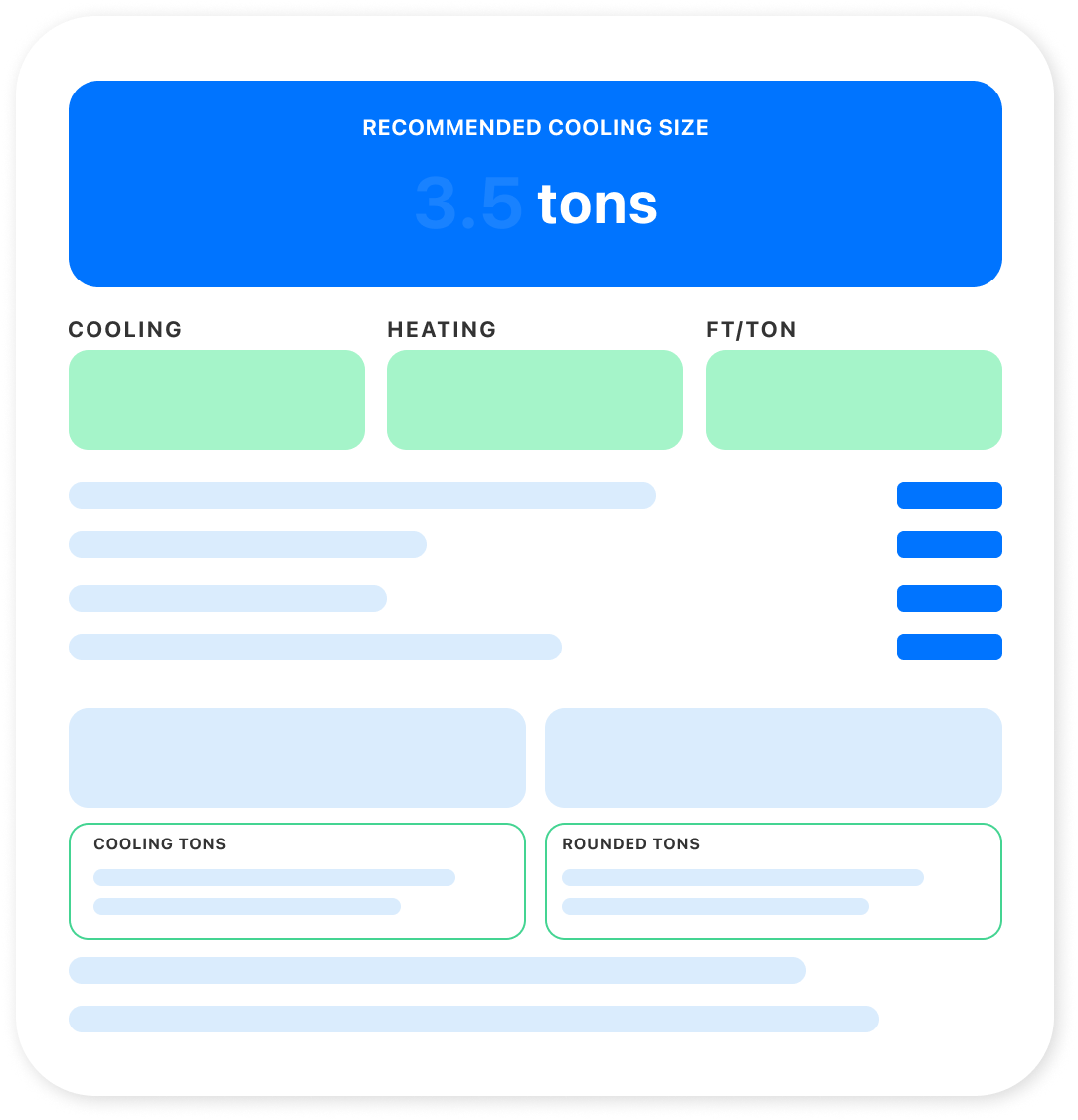
Calculate Your Electrical Service Load with Arrivy
Enter the dwelling's living area, appliance loads, and heating and cooling information. The calculator updates the estimated load and service-size estimate as you work.
Get New Free Tools in Your Inbox
Arrivy regularly adds new calculators, templates, and other free resources. Get notified when new resources are available.
How the NEC 220.82 Optional Method Works
The NEC 220.82 optional method provides a simplified approach for calculating the service load of a dwelling. The calculator follows this basic sequence:
- 1. Calculate the general loads. Apply 3 VA per square foot for general lighting and general-use receptacles, add the required small-appliance and laundry loads, and include applicable appliances and motors at their required ratings
- 2. Apply the demand factor. The first 10,000 VA of the applicable general load is calculated at 100%, with the portion above 10,000 VA calculated at 40%.
- 3. Add the larger heating or cooling load Heating and air-conditioning loads are not added together. The larger applicable load is used.
- 4. Convert the calculated VA to amps. The calculated volt-amp load is converted to amperes using the applicable service voltage.
- 5. Compare with a service size. The calculated load is compared with available standard service sizes to identify a service size that can accommodate the estimated demand.
How to Count as the Load
This section lists the key electrical loads—including lighting, circuits, appliances, HVAC, and future expansions—used to size a residential service. It breaks down how each component factors into determining overall power capacity.
General lighting and general-use receptacles
3 VA per square foot of applicable dwelling area.
Small-appliance & laundry circuits
1,500 VA each, with a minimum of two small-appliance circuits plus one laundry circuit.
Fixed appliances
Range, water heater, dryer, dishwasher, disposal, and similar loads at their applicable nameplate ratings.
Large added loads
EV chargers especially; they can push an existing service over its available capacity.
Heating or cooling
The larger of the two, rather than both, is included in the calculation.
Future loads
Consider known or planned future loads when evaluating service capacity. The appropriate service size depends on the calculated demand, available service sizes, and applicable requirements.
Frequently Asked Questions
Know Your True Loadr Cost
Get new free tools and templates from Arrivy in your inbox, including calculators and resources for pricing, scheduling, and field operations.
More Free Load Calculator Tools
Everything else a load calculator operation needs — same engine, load calculator-tuned:
HVAC Load Calculator
An HVAC load size calculation determines heating and cooling needs using area, climate, insulation, window exposure, occupants, and height.
LABOR COST CALCULATORElectrical Labor Cost Calculator
Free electrician labor cost calculator. Calculate your billable hourly rate by adding wage, burden and profit for electrical service and T&M work. No signup.
DUCT CALCULATORFree HVAC CFM Calculator
Free HVAC duct size calculator. Enter CFM and target velocity to get round duct diameter, friction rate, and a rectangular equivalent. No signup.


