




















Free Load Calculator
Load Calculator
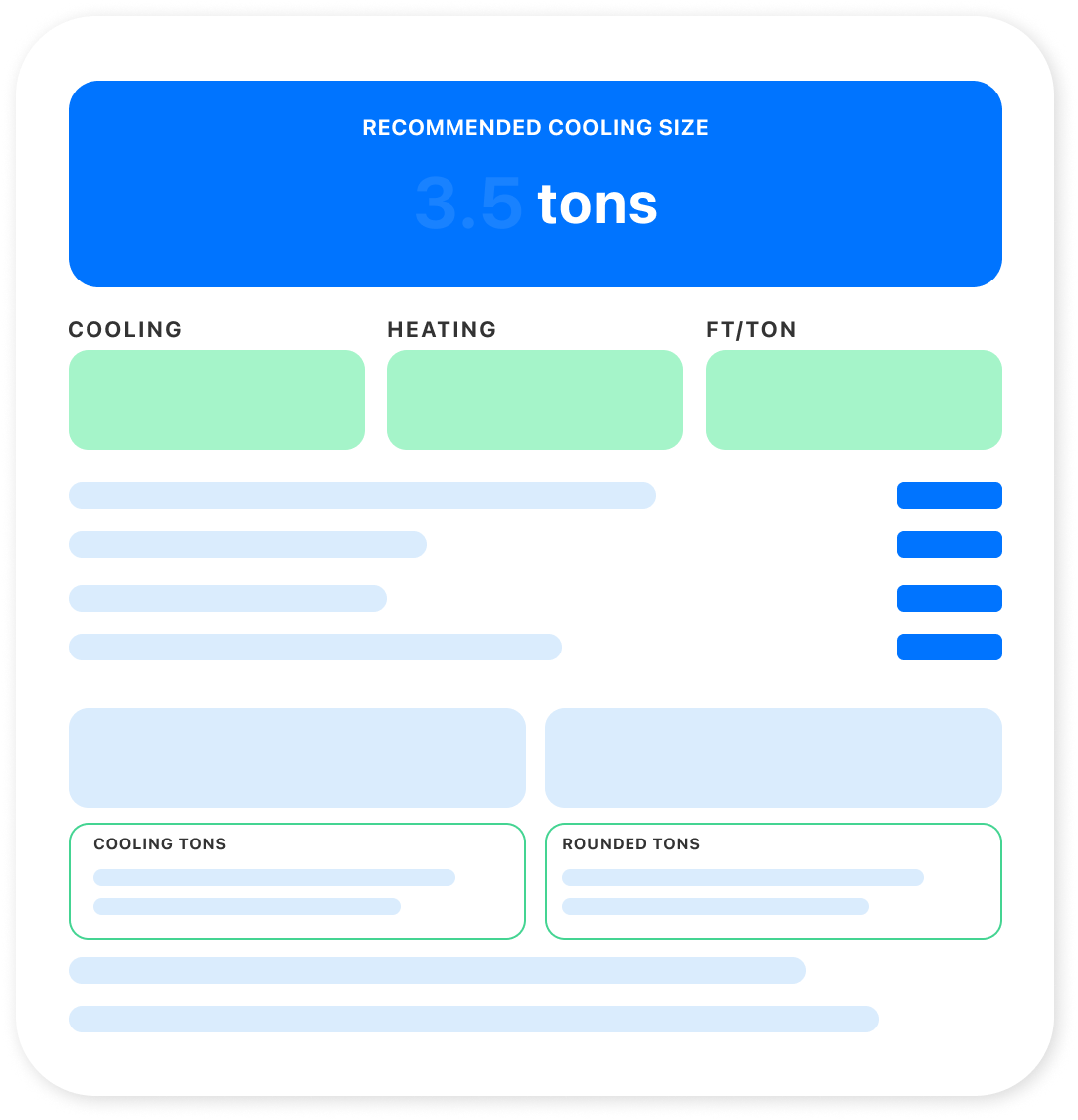
Calculate Your Load With Arrivy
Enter the required information for the electrical or HVAC load calculation. Your estimated load updates in real time as you go. Review the results and adjust the inputs as needed.
Get New Free Tools in Your Inbox
Arrivy regularly adds new calculators, templates, and other free resources. Get notified when new resources are available.
The Number Behind Every Load Decision
Electrical load calculations estimate service demand, while HVAC load calculations estimate heating and cooling requirements. Understanding the applicable load helps you plan service capacity, evaluate equipment sizing, and make better decisions about the work.
Try Arrivy Free for Load Planning
Load calculations are only one part of running field work. Arrivy helps trade and service businesses connect estimates and calculations with scheduling, job execution, customer communication, and overall operational performance.
See how Arrivy fits into your service workflow. Book a demo.
Explore Arrivy Operations Cloud™ Capabilities in Full
Arrivy empowers diverse industries with streamlined workflows, real-time coordination, and customer engagement tools that boost productivity, reduce errors, and drive growth.

Scheduling Software
Empower customers to book appointments online at their convenience, without back-and-forth calls.

Digital Forms
Capture field data with customizable, offline-ready forms that sync across workflows.

Route Planning
Plan the fastest, most efficient routes to reduce travel time, fuel costs, and scheduling delays.

Work Order Management
Create, assign, and manage work orders with complete visibility across every job and team.

Dispatch Dashboard
Manage daily dispatch from a unified dashboard. Track jobs, update crews in real time, and keep work on schedule with full team visibility.

All Features
Explore all our features in detail to see what fits your needs
How to Calculate a Load
Use the appropriate load calculator above or follow these basic steps. Electrical and HVAC load calculations use different inputs and methods, so start with the type of load you need to estimate.
- 1. Choose the calculation. Select the electrical calculator for residential service demand or the HVAC calculator for heating and cooling requirements.
- 2. Enter the required inputs. Provide the applicable building area, electrical loads, climate, or building-envelope details depending on the calculator you use.
- 3. Apply the appropriate method. The electrical calculator uses the NEC 220.82 optional method. The HVAC calculator uses a simplified approach based on Manual J concepts.
- 4. Review the estimated load. Review the electrical demand in amps or the HVAC heating and cooling loads in BTU/hr and estimated tonnage.
- 5. Use the result as a planning reference. Treat the estimate as a starting point for service or equipment sizing. Have a qualified professional verify calculations required for permitted work.
Common Elements of a Load Calculation
A load calculation typically includes:
Building area
Living or conditioned area used in the applicable calculation.
Electrical loads
General lighting, appliances, and other applicable loads used to estimate residential service demand.
HVAC building details
Climate zone, insulation, windows, doors, sun exposure, and other building-envelope details used in the HVAC estimate.
Heating and cooling demand
Estimated heating and cooling loads expressed in BTU/hr, with approximate tonnage for preliminary sizing.
Electrical service demand
Estimated service demand expressed in amps and used as a preliminary reference for service sizing.
Calculation method
The applicable method used to estimate the load, such as the NEC 220.82 optional method for electrical service or a simplified approach based on Manual J concepts for HVAC.
Frequently Asked Questions
Know Your True Load Cost
Get new free tools and templates from Arrivy in your inbox, including calculators and resources for pricing, scheduling, and field operations.
More Free Tools
Explore more free tools built to streamline your business operations:
Electrical Load Calculator
Free Electrical load calculator. Get your fully burdened cost per hour and per billable hour. No signup. Download editable PDF Format.
LOAD CALCULATORHVAC Load Calculator
An HVAC load size calculation determines heating and cooling needs using area, climate, insulation, window exposure, occupants, and height.
TOOLCFM Calculator
Free CFM calculator. Enter room dimensions and target air changes per hour (ACH) to size required airflow room by room.


