
 Login
Login



















Free Garage Door Inspection Checklist
Garage Door Inspection Checklist
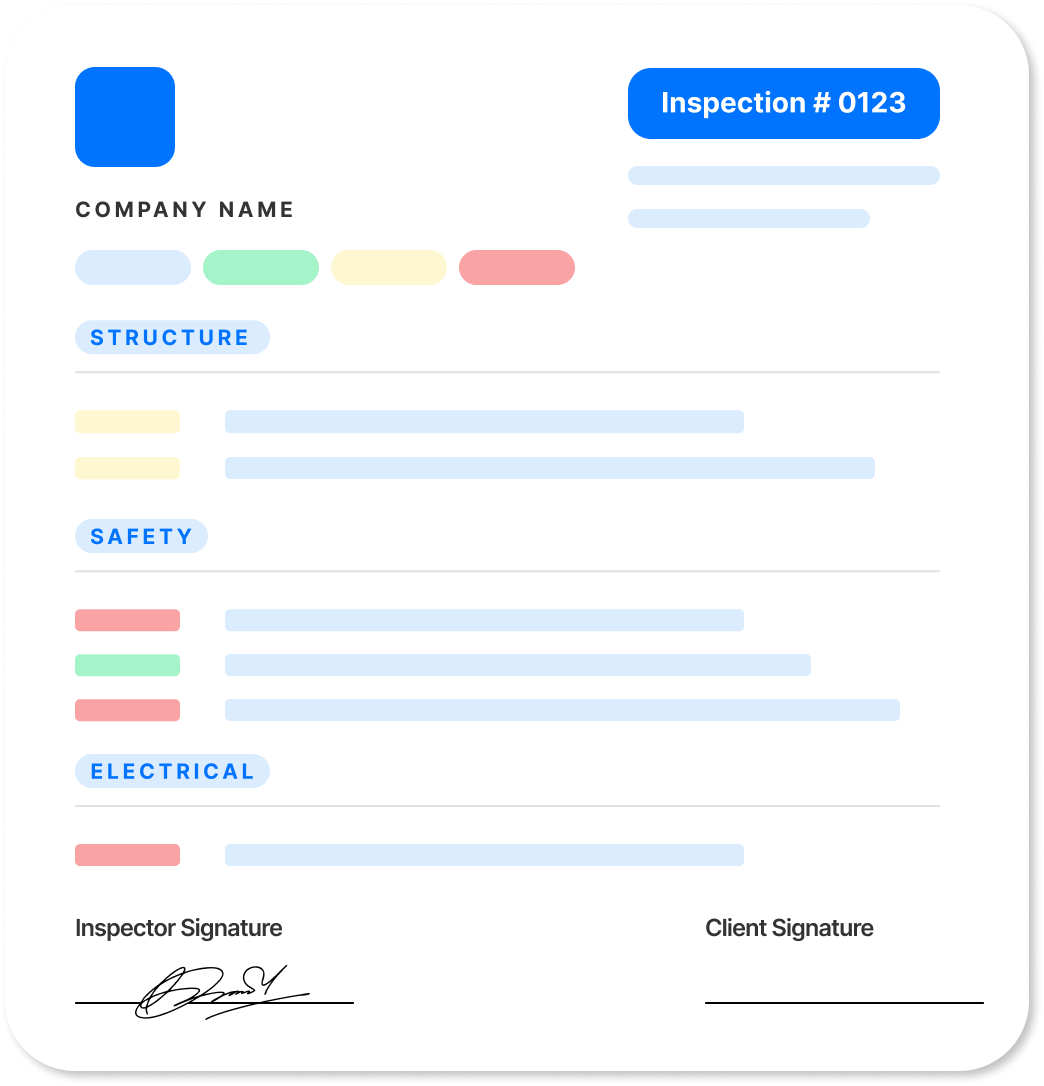
Create Your Garage Door Inspection Report with Arrivy
Work through each inspection point, mark it Pass, Flag, Fail, or N/A, and add notes where needed. Review the report and download it when you're ready.
Get new free templates straight in your inbox.
Arrivy keeps releasing new helpful templates and tools every week. We’ll send you updates every week. No spam
Save Your Custom Garage Door Inspection Checklist
Download your completed inspection as a dated PDF to share with the customer or keep with the service history. Add your logo, business details, standard inspection points, and recurring notes, then reuse the same checklist for future tune-ups and safety checks.
A consistent checklist helps technicians review the same components on every visit, document wear or deficiencies clearly, and give customers a useful record of the system’s condition.
Try Arrivy Free for Garage Door Inspections
With Arrivy, inspections can become part of your broader service workflow. Keep inspection details connected with customer information, scheduling, work orders, and follow-up service so your team can move from identifying an issue to addressing it.
See how Arrivy fits into your garage door workflow. Book a demo.
Explore Arrivy Operations Cloud™ Capabilities in Full
Arrivy empowers diverse industries with streamlined workflows, real-time coordination, and customer engagement tools that boost productivity, reduce errors, and drive growth.

Scheduling Software
Empower customers to book appointments online at their convenience, without back-and-forth calls.

Digital Forms
Capture field data with customizable, offline-ready forms that sync across workflows.

Route Planning
Plan the fastest, most efficient routes to reduce travel time, fuel costs, and scheduling delays.

Work Order Management
Create, assign, and manage work orders with complete visibility across every job and team.

Dispatch Dashboard
Manage daily dispatch from a unified dashboard. Track jobs, update crews in real time, and keep work on schedule with full team visibility.

All Features
Explore all our features in detail to see what fits your needs
How to Run a Garage Door Inspection Checklist
Use the garage door inspection checklist above or build your own. A professional inspection should follow a consistent process, document the condition of each major component, and clearly identify items that need attention or further evaluation.
- 1. Inspect the door and panels. Check the door's overall condition, alignment, movement, panels, hinges, and visible damage that could affect safe operation.
- 2. Inspect springs and cables carefully. Look for visible wear, fraying, corrosion, damage, or other signs that the springs or cables require attention. These components can store significant energy, so repairs or adjustments should be handled by appropriately trained professionals.
- 3. Check rollers, tracks, and hardware. Review rollers, tracks, hinges, brackets, fasteners, and other moving hardware for wear, alignment, secure mounting, and condition.
- 4. Test the opener and operation. Check the opener's operation, travel limits, drive system, and other applicable settings. Note unusual noise, movement, or operating behavior.
- 5. Verify the safety features. Test the photo-eye sensors and auto-reverse function according to the manufacturer's instructions and applicable requirements. Check the manual release and document any safety feature that does not operate as expected.
- 6. Check balance and weather sealing. Where appropriate and safe, assess the door's balance and check the bottom seal and weatherstripping for damage, gaps, or deterioration. Record any condition that requires adjustment or replacement.
Common Elements of an Garage Door Inspection
A complete garage door inspection checklist typically covers:
Door and panels
Door condition, alignment, panels, hinges, and visible damage that may affect operation.
Springs and cables
Visible wear, fraying, corrosion, damage, and other conditions requiring attention or further evaluation.
Rollers, tracks, and hardware
Rollers, tracks, hinges, brackets, fasteners, alignment, and general hardware condition.
Opener and operation
Opener function, drive system, travel limits, operating behavior, and unusual noise or movement.
Safety features
Photo-eye sensors, auto-reverse, manual release, and other applicable safety features.
Balance and weather sealing
Door balance where appropriate, bottom seal, weatherstripping, gaps, and visible deterioration.
Frequently Asked Questions
Win more jobs, and get paid faster.
Arrivy keeps releasing new helpful templates and tools every week. We’ll send you updates every week. No spam
More Free Inspection Checklist Templates
Everything else an inspection checklist operation needs — same engine, inspection checklist-tuned:
Construction Inspection Checklist
Free construction inspection checklist. Mark pass/flag/fail and download a report. No signup, no email required.
INSPECTION CHECKLISTElectrical Inspection Checklist
Create free electrical inspection reports with Arrivy. Review panels, wiring & safety, note findings, and download PDF reports.
INSPECTION CHECKLISTHVAC Inspection Checklist
Simplify HVAC maintenance with Arrivy’s free inspection checklist. Inspect airflow, coils, electrical, and controls, then download reports.


