
 Login
Login



















Free Electrical Inspection Checklist
Electrical Inspection Checklist
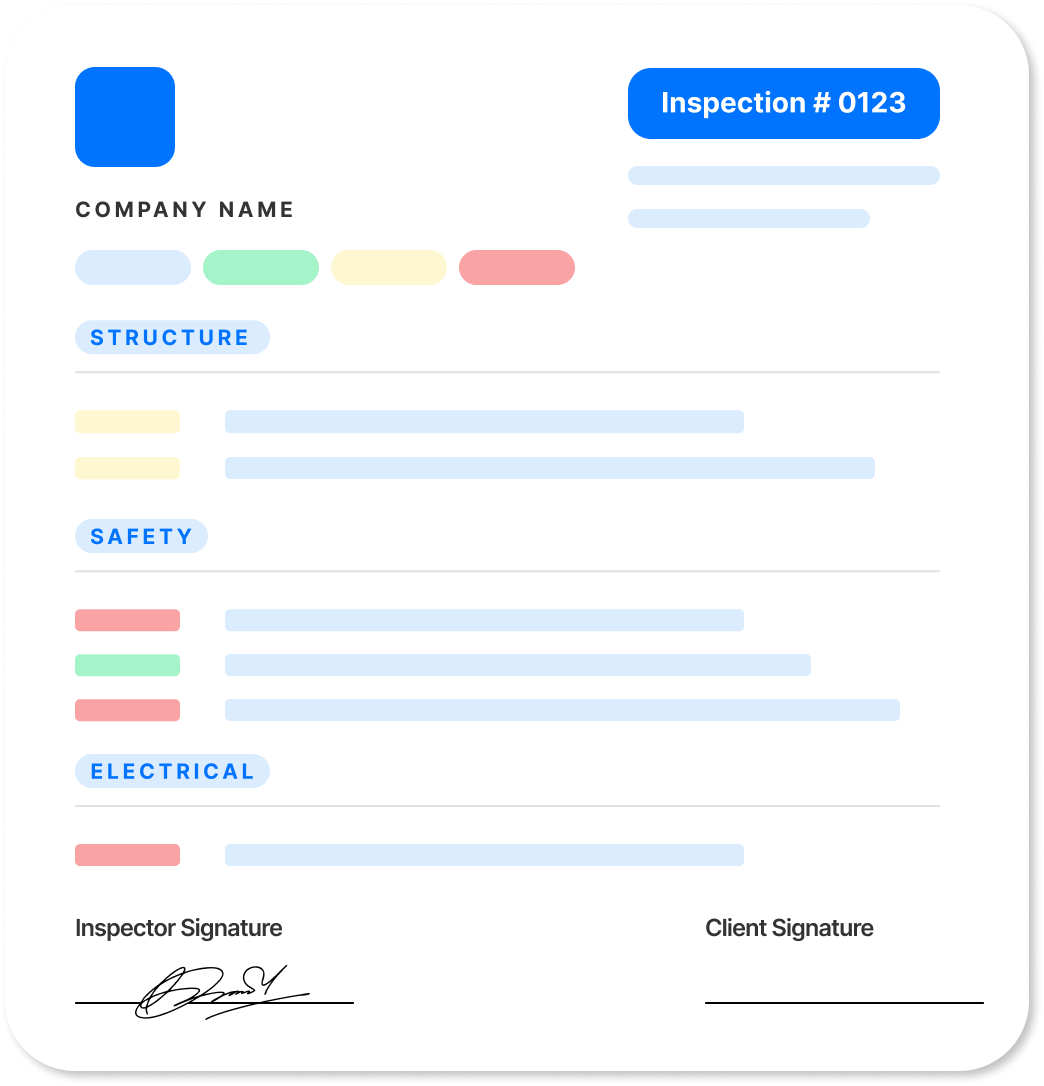
Create Your Electrical Inspection Report with Arrivy
Work through the inspection points, mark each item Pass, Flag, Fail, or N/A, and add notes for anything that needs attention. Review the report and download it when you're ready.
Get new free templates straight in your inbox.
Arrivy keeps releasing new helpful templates and tools every week. We’ll send you updates every week. No spam
Save Your Custom Electrical Inspection Checklist
Download your completed inspection as a PDF to share with the client or keep with your records. Add your logo, business details, license information, and standard inspection points, then reuse the same checklist for future inspections.
A consistent checklist helps you review the same key areas on every job, document deficiencies clearly, and give the client a structured record of your findings.
Try Arrivy Free for Electrical Inspections
With Arrivy, inspections can become part of your broader service workflow. Keep inspection details connected with customer information, scheduling, work orders, and follow-up service so your team can move from finding an issue to addressing it.
See how Arrivy fits into your electrical workflow. Book a demo.
Explore Arrivy Operations Cloud™ Capabilities in Full
Arrivy empowers diverse industries with streamlined workflows, real-time coordination, and customer engagement tools that boost productivity, reduce errors, and drive growth.

Scheduling Software
Empower customers to book appointments online at their convenience, without back-and-forth calls.

Digital Forms
Capture field data with customizable, offline-ready forms that sync across workflows.

Route Planning
Plan the fastest, most efficient routes to reduce travel time, fuel costs, and scheduling delays.

Work Order Management
Create, assign, and manage work orders with complete visibility across every job and team.

Dispatch Dashboard
Manage daily dispatch from a unified dashboard. Track jobs, update crews in real time, and keep work on schedule with full team visibility.

All Features
Explore all our features in detail to see what fits your needs
How to Run an Electrical Inspection
Use the electrical inspection checklist above or build your own inspection list. A professional electrical inspection should follow a consistent process, document findings clearly, and distinguish items that need immediate attention from those that require monitoring or further evaluation.
- 1. Record the scope and inspection details. Identify what you're inspecting, such as a whole property, panel, circuit, or specific electrical system. Record the property information, inspection date, and applicable electrician or business details.
- 2. Start with the service and panel. Review the service equipment, disconnects, panel condition, breakers, labeling, connections, and available clearances. Note any visible damage, overheating, or other conditions that require further evaluation.
- 3. Check grounding, bonding, and protective devices. Review applicable grounding and bonding components, then check relevant protective devices, including GFCI and AFCI protection, based on the property and inspection scope.
- 4. Document deficiencies clearly. Record the location and condition of each finding rather than using broad descriptions. Where appropriate, include measurements, test results, photos, or other supporting documentation.
- 5. Summarize findings and recommendations. Record the overall inspection result, prioritize findings by urgency, provide recommended next steps, and complete the report with the applicable date and signatures.
Common Elements of an Electrical Inspection
A complete electrical inspection checklist typically covers:
Service and panel
Service equipment, disconnects, panels, breakers, labeling, connections, and available clearances.
Grounding and bonding
Grounding and bonding components, plus applicable GFCI and AFCI protection.
Wiring and connections
Visible wiring condition, connections, junction boxes, conductor concerns, and other conditions that warrant attention.
Devices and fixtures
Outlets, switches, fixtures, cover plates, and applicable device testing.
Safety
Visible hazards, protective devices, labeling, smoke and carbon monoxide detectors where included in the inspection scope, and other safety observations.
Recommendations and sign-off
Recommended next steps, along with the inspector's name, signature, and date when needed.
Frequently Asked Questions
Win more jobs, and get paid faster.
Arrivy keeps releasing new helpful templates and tools every week. We’ll send you updates every week. No spam
More Free Inspection Checklist Templates
Everything else an inspection checklist operation needs — same engine, inspection checklist-tuned:
Construction Inspection Checklist
Free construction inspection checklist. Mark pass/flag/fail and download a report. No signup, no email required.
INSPECTION CHECKLISTGarage Door Inspection Checklist
Free garage door inspection checklist. Cover panels, springs, cables, rollers, opener, and the safety features and download a report.
INSPECTION CHECKLISTHVAC Inspection Checklist
Simplify HVAC maintenance with Arrivy’s free inspection checklist. Inspect airflow, coils, electrical, and controls, then download reports.


