 Login
Login






















In Florida, as in many states, roofers are required to be licensed to ensure quality work and protect homeowners. Florida has one of the largest roofing workforces in the country. According to the Bureau of Labor Statistics (BLS), the state employs over 25,000 roofers, and demand is expected to grow faster than the national average over the next decade.
The state’s Construction Industry Licensing Board (CILB) under the Florida Department of Business & Professional Regulation (DBPR) oversees roofing licenses. Roofing contractors must be either “certified” (statewide license) or “registered” (local license). In short, certified roofers can work anywhere in Florida, while registered roofers are limited to the city/counties that issued their credential.
This guide breaks down everything you need to know to become a certified or registered roofing contractor in Florida, including eligibility, costs, steps, and common pitfalls, with up-to-date 2025 information.
Recommended Reads
Understanding Roofing License Types in Florida
Florida offers two roofing licenses: Certified Roofing Contractor (CCC) and Registered Roofing Contractor (CCC-R). They differ mainly in scope and requirements:
Certified Roofing Contractor (CCC License): A certified license allows statewide privileges, meaning you can work anywhere in Florida. It requires passing two state exams and meeting more stringent experience and financial criteria. Certified contractors often command more business because they can bid on any project in Florida.
Registered Roofing Contractor (CCC-R License): A registered license is valid only in specific local jurisdictions (a county or city). You must obtain a local “certificate of competency” or local exam instead of the state exam. The process is generally quicker and costs less, but you cannot work outside the approved area.
Certified vs. Registered (At-a-Glance)
| License Type | Scope | Experience Requirement | Exam Required | Ideal For |
|---|---|---|---|---|
| Certified (CCC) | Statewide | 4 years roofing | 2 state exams (B&F, Trade) | Professional contractors who want full state access |
| Registered (CCC-R) | Local jurisdiction | Varies by locality (often less) | Local competency test | Roofers serving a specific area only |
Both license types require age 18+, a background check, financial stability, and insurance (see below). Choosing between them depends on your business goals. Go ‘certified’ for maximum flexibility, or ‘registered’ for a faster, local-only path.
Florida Roofing License Requirements (Eligibility Checklist)
Before you apply, make sure you meet all eligibility criteria. In Florida, roofing applicants must have:
Age: At least 18 years old.
Financial Stability: A good credit history. By rule, you need a FICO credit score of 660 or higher. If below 660, you must either post a financial stability bond/letter of credit or complete a 14-hour financial responsibility course. There must be no unsatisfied liens or judgments against you or your business.
Experience/Education: At least 4 years of experience in roofing (supervisory or hands-on) or a combination of experience and college credit. For example, a college degree in construction may count for some years. You must show substantial experience across roofing tasks – such as installing shingles, metal, tile or single-ply systems, underlayment, flashings, etc.
Background Check: A fingerprint-based criminal background check is required. You submit electronic fingerprints at a state-registered Livescan vendor after applying.
Insurance: Proof of insurance is required at application time. Florida sets different minimum liability amounts depending on the contractor category. Roofing contractors fall under the “all other categories” group, which means you must carry at least $100,000 public liability and $25,000 property damage. You must also obtain workers’ compensation insurance if you have employees, or file an exemption (sole proprietors can often exempt for ~$50/year). Always confirm the latest DBPR rules, as local jurisdictions may impose additional requirements.
Meeting these requirements upfront avoids delays. DBPR will verify them before approving your license.
Step-by-Step: How to Get a Roofing License in Florida
Follow these steps to navigate the licensing process smoothly:
Step 1: Meet Experience & Education Requirements
Make sure you have the required work history. You’ll need 4 years of roofing experience (or credit) to qualify. Document your employment history on DBPR forms. List employers, dates, your role (worker or foreman), and detail tasks performed. You should cover at least three roofing systems (shingles, metal, tile, etc.) and key components (single-ply systems, underlayment, insulation, roof penetrations, parapet walls, flashings, sheathing repairs). If you lack full experience, a Florida roofing training school or college coursework can substitute for part of it.
If you’re starting a roofing business, keep in mind the qualifying agent rules. A qualifying agent is a licensed contractor who legally “qualifies” (represents) the company. The agent must meet all licensure requirements individually. (Florida law requires any contracting business to have a licensed qualifier in the trade.)
Step 2: Prepare Required Documents
Gather all paperwork before applying. Typically, you’ll need:
| ✔ | Document / Requirement |
|---|---|
| ☐ | Experience affidavits/employment forms: Documenting your roofing work (as above). Provide transcripts or certificates if using education credits. |
| ☐ | Financial documentation: A recent credit report (FICO score) for yourself (and your business, if you’re qualifying a company) from a Board-approved agency. Also be prepared to show proof that any liens/judgments/bankruptcies are resolved. |
| ☐ | Bank statements or tax returns: Sometimes requested to back up financial stability. |
| ☐ | Resume or reference letters: Detailing your roofing roles may help verify experience. |
| ☐ | Identification: Valid ID (driver’s license, passport) for exam registration. |
| ☐ | Signed affidavits: You will attest to having insurance (and workers’ comp or exemption). |
Review the DBPR application checklist carefully because incomplete documentation is a common cause of delays.
Step 3: Appear for the Florida Roofing Contractor Exam
For a Certified license, you must pass the state exams. Division II (roofing) contractors take two computer-based tests:
| Exam | Format & Duration | Coverage |
|---|---|---|
| Business & Finance (B&F) | 120 questions, 6.5 hours | Covers business law, accounting, contracts, project management, etc. |
| Trade Knowledge (Roofing) | 80 questions, 5 hours | Focuses on roofing systems, installation methods, materials, safety, and Florida building code. |
You need at least 70% on each exam to pass. (DBPR scores aren’t rounded.) Exam fees currently total about $295 (a $135 registration fee plus $80 per exam part). You register and pay through Professional Testing (now administered via Pearson VUE). After registering, schedule your exam date and location.
Exam Prep Tips:
Use the official reference list for each exam (Florida law, business management, building code, plus a roofing trade book). Many candidates take review courses or practice exams. Plan to spend 4–6 weeks studying for both parts. On exam day, bring two IDs; use approved reference books (both exams are open-book). Pace yourself and answer every question (you can mark for review before finishing). If you fail a section, you must wait 21 days to retest.
Step 4: Apply for Your Roofing License via DBPR
Once you’ve met the requirements and passed your exams, submit your license application to DBPR:
Double-check your packet. Missing items (like insurance or credit reports) are the top reasons for application delays.
Step 5: Submit Fingerprints & Background Screening
Florida requires a state fingerprint background check. After you submit your application, schedule a Livescan fingerprinting session with any FDLE-approved provider. (DBPR recommends doing this at least 5 days before applying so results arrive quickly.) You’ll pay the fingerprinting fee ($57 – $87). DBPR only starts final processing once your fingerprints are received.
Step 6: Provide Required Insurance Proof
Before DBPR issues your license, you must attest that you have the required insurance. By rule, a roofing contractor must carry general liability insurance of at least $100,000 per person / $25,000 per occurrence. You must also maintain workers’ compensation coverage if you have employees (or file a no-coverage exemption if you have none). Keep a valid Certificate of Insurance for audit purposes. DBPR audits licensees randomly to confirm continuous coverage.
Step 7: Receive Approval & Activate Your License
Once your file is complete, DBPR will review and approve it. This typically takes 4–8 weeks if everything is in order. (Applications have been averaging about 30–60 days for approval.) You can check your status online on MyFloridaLicense. After approval, your license certificate is issued. At that point you’re an active licensed roofer – be sure to post your license number on contracts and permits as required by law.
Want to Bring Structure to Your Roofing Operations?
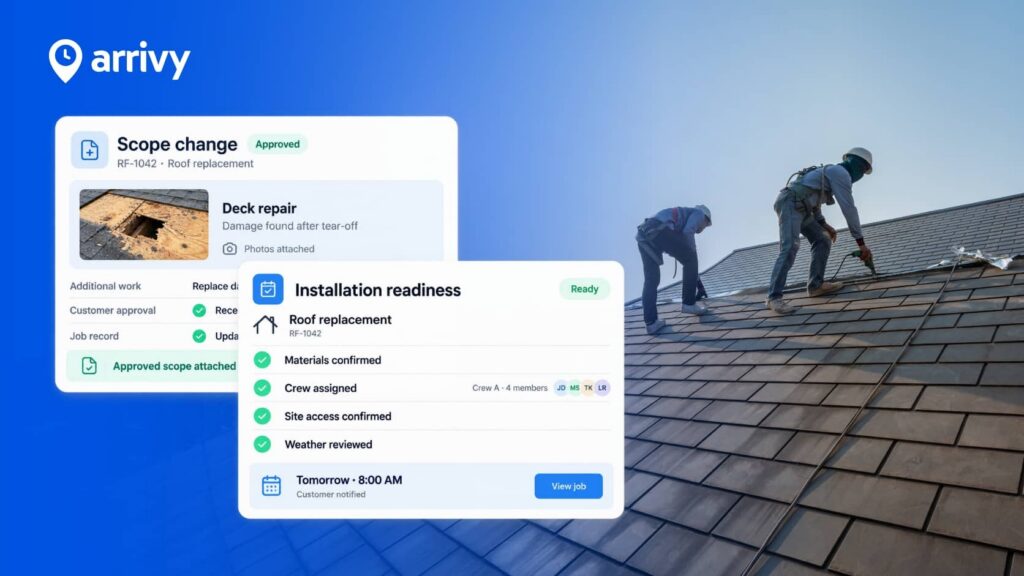
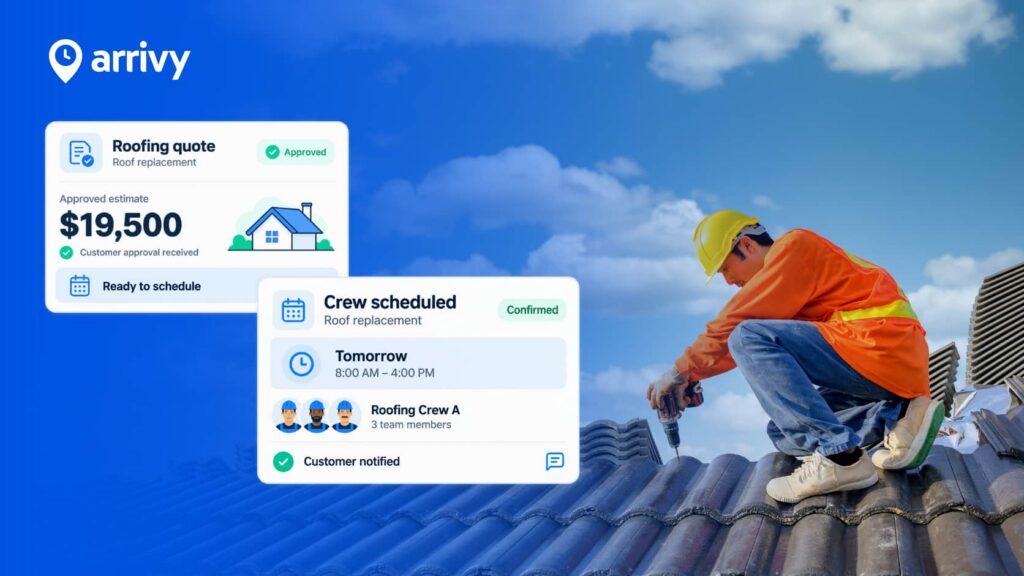
Roofing software helps manage scheduling, crews, jobs, and customer communication in one place.
Florida Roofing License Cost Breakdown
Obtaining a Florida roofing license involves various fees. Below are typical costs:
| Item | Approximate Cost (2025) | Notes |
|---|---|---|
| DBPR Application Fee | $145 – $245 | Varies by date; usually $145 or $245 as shown. |
| Exam Registration | $135 | Payable to testing vendors (covers both parts). |
| Business & Finance Exam | $80 | 6.5-hour computer exam (Pearson VUE). |
| Trade Knowledge Exam | $80 | 5-hour computer exam (Pearson VUE). |
| Fingerprinting / Background | $57 – $87 | FDLE fee ($24) + vendor fee (Livescan). |
| Exam Prep Courses / Materials | $300 – $600+ | Varies by course (live or online) and materials. |
| General Liability Insurance | $1,000+ / year | Depends on insurer and coverage; min $100k/$25k. |
| Workers’ Comp (or Exemption) | $50 (exemption) – varies | Sole owner exemption ~$50/yr; rates depend on payroll. |
| Credit / Surety Bond (if needed) | $200 – $600 (approx.) | If FICO < 660, a $100K bond is required; premium ~1–3%. |
| License Renewal (2-year) | $150 – $200 | Typically similar to the original fee every 2 years. |
| Continuing Education | $50 – $200 per course | Required for renewal; cost varies by provider. |
All costs are approximate. Check DBPR and service providers for current fees.
How Long Does It Take to Get a Roofing License in Florida?
From start to finish, plan on roughly 3–6 months. Here’s a rough timeline:
The 4 years’ experience is done over time.
Study and register for both exams.
Getting testing appointments (especially rapidly) can take 2–4 weeks.
Collect affidavits, credit report, etc., and complete DBPR application.
Once submitted (with fingerprints and fees), the department processes your application.
If all is in order, the license is typically issued a week or two after approval.
In practice, most applicants are active contractors within 2–3 months after exam success, assuming no backtracking. The fastest path is to prepare well in advance. Get your paperwork ready early, pass the exams on the first try, and respond promptly to any DBPR inquiries.
Common Mistakes That Delay or Deny Applications
Avoid these pitfalls:
Incomplete experience documentation
Missing work details or signatures on your affidavits can stall approval. Ensure all experience areas are clearly covered.
Missing insurance proof
Failing to attest to insurance or workers’ comp (when required) will hold up your license.
Low credit score with no bond
If you report a FICO under 660 but don’t provide the required bond/letter or financial course, DBPR will not grant the license.
Exam failures
You cannot apply until both exams are passed. Each failure means waiting 21 days and studying more. A retake can add a month or more.
Neglected renewals/education
Once licensed, don’t forget CE requirements. Missing the renewal cycle (every 2 years) incurs extra fees.
Preparation and attention to detail are key. Double-check your application against the checklist to avoid delays.
After You Get Licensed: What’s Next?
Once licensed, you’re legally a Florida roofing contractor. Here are the next steps to run a successful business:
Continuing Education
Florida requires contractors to renew every two years. You’ll need continuing education courses (typically 14 hours) covering laws, safety, business practices, etc. Plan for at least $50–$200 per course.
License Renewal
Mark your calendar for the August 31 deadline of even-numbered years. Renewal fees (often $150–$200) are due then. Stay on top of any updates in building codes or licensing rules during each renewal cycle.
Business Setup
If you haven’t already, consider formalizing your business structure (LLC, corporation, etc.) and get any local contractor’s licenses. You’ll need to employ your qualifying agent or designate a financially responsible officer who is licensed.
Tools and Software
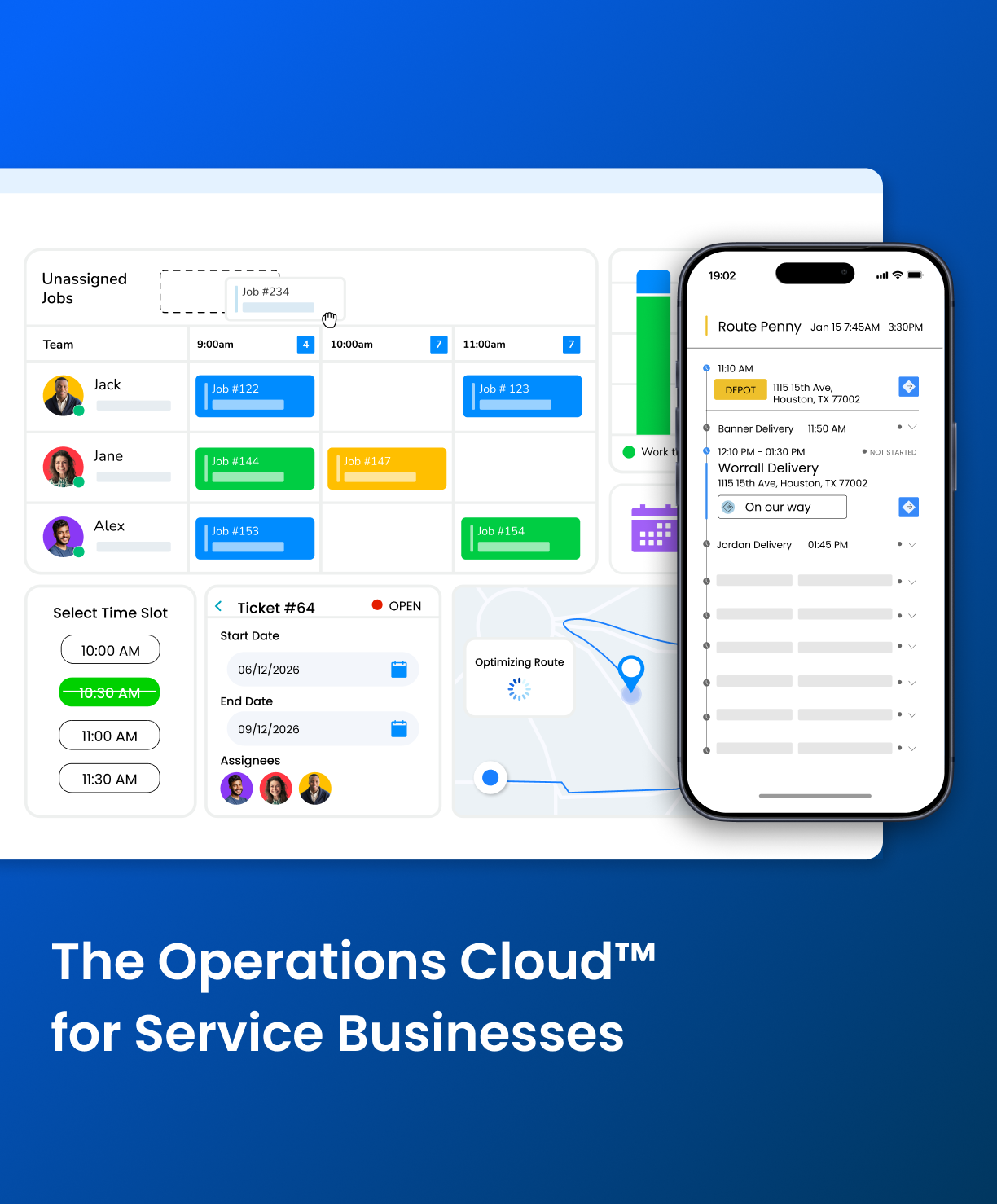
Run your roofing business efficiently with modern tools. For example, a Field Service Management (FSM) platform can simplify and optimize scheduling, dispatching, invoicing and customer updates. Staying organized with job management software helps you focus on growing your business rather than paperwork.
Equipment & Marketing
Invest in the necessary roofing tools and safety gear. Build a simple website or social media presence, and list your license number on all marketing. Word-of-mouth and local building department referrals are important in construction trades.
By keeping your license current and running your business professionally, you’ll be poised for success in Florida’s competitive roofing industry.
Spend Less Time Managing, More Time Roofing
Reduce back-and-forth calls and paperwork with simple tools built for roofing teams.
Florida Roofing License Checklist
Save this checklist for quick reference. ✔ each item as you complete it:
| ✔ | Requirement |
|---|---|
| ☐ | Age 18+ |
| ☐ | 4+ years of roofing experience (verified by forms and affidavits) |
| ☐ | Educational credits (if used) and transcripts |
| ☐ | Valid ID (for exam and application) |
| ☐ | Completed Business & Finance exam (≥70%) |
| ☐ | Completed Roofing Trade exam (≥70%) |
| ☐ | Credit report (FICO ≥660) for you (and your company, if applicable) |
| ☐ | If FICO < 660: Financial responsibility bond or course |
| ☐ | No unsatisfied liens/judgments on record (or have proof of satisfaction) |
| ☐ | Attestation of liability insurance ($100k/$25k minimum) |
| ☐ | Workers’ Comp or Exemption (file Certificate of Election) |
| ☐ | Background check (fingerprints) – scheduled with Livescan vendor |
| ☐ | DBPR application submitted online with fee ($145–$245) |
| ☐ | Check application status and respond to any DBPR requests promptly |
Keep this list handy. Licensing rules can change, so always verify the latest requirements on MyFloridaLicense.com.