 Login
Login



















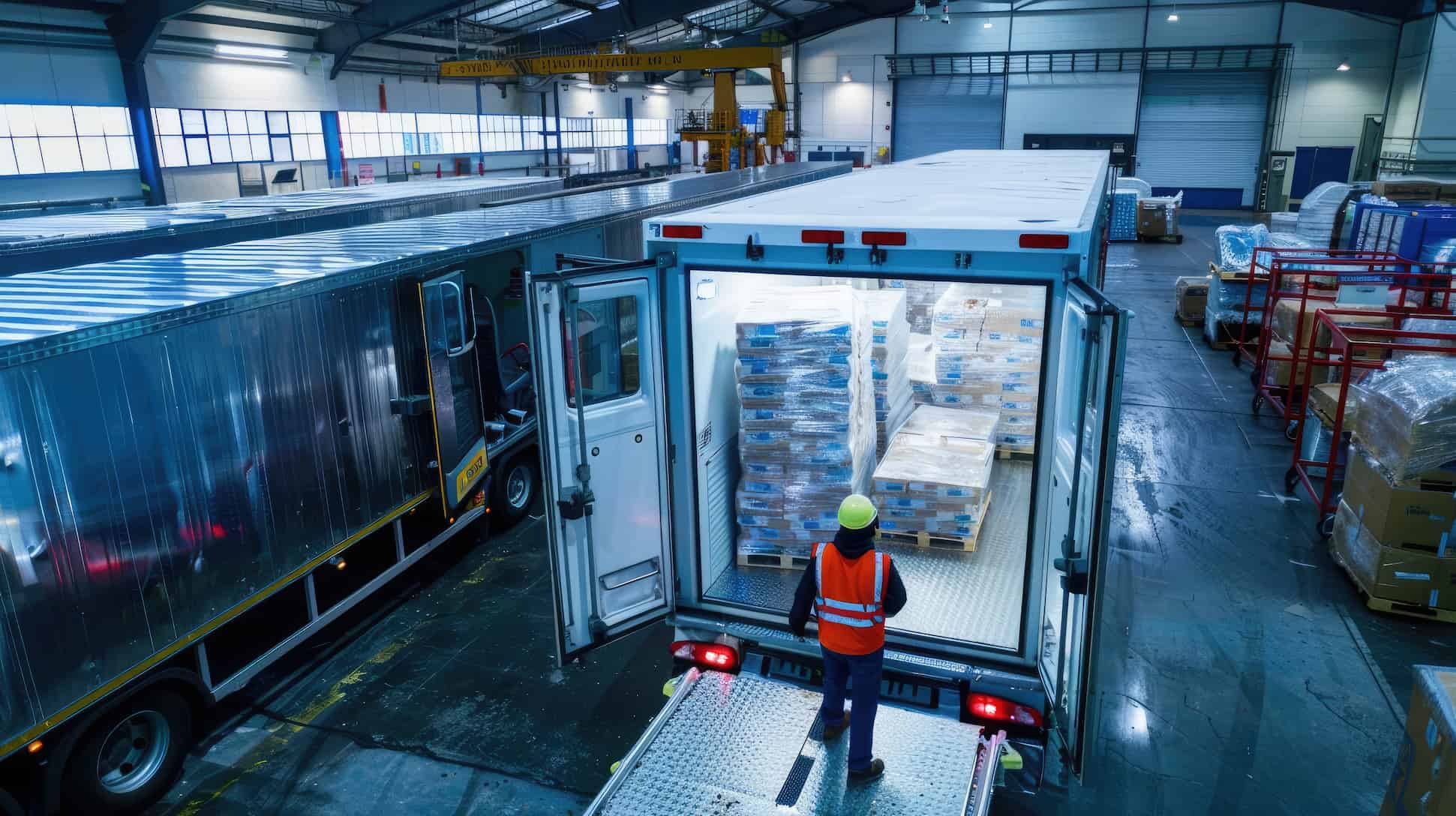


When a refrigerated truck sits waiting at a warehouse dock, the clock starts actively working against you. Every idle minute risks product degradation, burns resources, and eats into razor-thin profit margins. And it happens more often than you’d think. Reefer drivers experience detention at 56.2% of stops, significantly higher than the industry average.
Detention risk is highest in cold storage: Reefer drivers face detention at 56.2% of stops. Every minute waiting at a dock threatens product integrity and increases operational costs.
Cold storage logistics is the invisible infrastructure keeping medicines effective, food safe, and entire industries functioning. It moves everything from vaccines requiring ultra-cold storage to the frozen vegetables in your freezer. The stakes are enormous, as approximately 14% of global food production is lost due to inadequate cold chain management.
Most people assume the challenge is simply keeping things cold. Set the thermostat, close the door, problem solved. But anyone managing cold storage operations knows that temperature control is the easiest part. The real battle is coordinating timing across multiple stakeholders, managing limited dock capacity, maintaining visibility, and doing it all while meeting strict regulatory requirements.
In this guide, we’ll break down exactly what makes cold storage logistics so challenging. More importantly, we’ll look at how dock scheduling software is helping facilities tackle these problems, reduce detention time, and protect cold chain integrity without adding more manual work to already stretched teams.
Recommended Reads
What Is Cold Storage Logistics?
Cold storage logistics refers to the entire ecosystem of storing and moving temperature-sensitive products through a controlled supply chain. It’s closely related to, but distinct from, cold chain logistics. The cold chain encompasses everything from the moment a product is manufactured or harvested through its final delivery. But cold storage logistics specifically focus on the warehousing, handling, and coordination that happens along that chain.
The journey typically looks like this:
Production → A pharmaceutical company manufactures vaccines in a sterile facility.
Transport → Those vaccines are loaded into refrigerated trucks (called “reefers”) and driven to a cold storage warehouse.
Storage → The warehouse maintains them at precise temperatures, sometimes for days or months.
Last-Mile Delivery → Smaller refrigerated vehicles transport them to clinics, hospitals, or pharmacies.
At every single step, temperature must stay within a narrow range, often just a few degrees of tolerance.
What kinds of products need this level of care? More than you might think:
- Frozen foods: Ice cream, frozen vegetables, seafood, meat products
- Fresh produce: Berries, lettuce, and other perishables that need refrigeration but not freezing
- Pharmaceuticals: Vaccines, insulin, biologics, blood products
- Chemicals: Certain industrial chemicals and laboratory materials that degrade at room temperature
- Specialty items: High-end chocolates, wine, flowers, and even some electronics components
Each category has its own temperature requirements, handling protocols, and regulatory standards. A warehouse might manage multiple temperature zones simultaneously, such as frozen at -20°C in one section, refrigerated at 4°C in another, and climate-controlled at 15°C in a third.
Why Cold Storage Logistics Is So Complex
Now, let’s dig into why this is so much harder than regular logistics.
Temperature Control and Compliance
Maintaining exact temperatures throughout the entire journey is the most obvious challenge, and also the most critical one. It’s like navigating a maze of regulatory requirements that vary by product, country, and industry.
For food products, facilities must comply with FDA regulations and HACCP (Hazard Analysis Critical Control Points) standards. These rules dictate everything from how cold storage rooms are constructed to how often temperatures are checked and recorded.
Pharmaceutical products face even stricter oversight through GDP (Good Distribution Practice) guidelines. When temperature-controlled logistics fail, the biopharma industry loses approximately $35 billion annually. In addition to wasted product, it includes recalls, compliance penalties, and the cost of replacing medications that may have saved lives.
The technical complexity multiplies when you’re running multi-temperature zones within the same facility. You might have:
- Deep freeze (-20°C to -30°C) for long-term frozen storage
- Standard freeze (-18°C) for frozen foods
- Refrigerated (2°C to 8°C) for vaccines and fresh produce
- Climate-controlled (15°C to 20°C) for chocolate or wine
Each zone requires its own monitoring system, often with sensors that record temperatures every few minutes. If a single sensor reports an anomaly, warehouse managers need to investigate immediately. Was it a real temperature excursion or a faulty sensor? Either way, time is ticking.
Time-Sensitive Operations and Dock Scheduling
Here’s where things get really complicated. Unlike dry goods that can sit on a loading dock for an hour with no consequences, temperature-sensitive products are on a countdown from the moment they leave controlled storage. Every minute of “dwell time” (the period a truck sits waiting to load or unload) increases risk.
Research shows that reefer drivers experienced detention at more than 25% of stops, with average wait times reaching 1.7 hours beyond the standard 2-hour threshold. In 2023 alone, detention time across for-hire trucking exceeded 135 million hours. It’s a crisis that cascades through the entire supply chain. According to recent data, 57% of drivers reported being late or canceling a delivery due to detention at a previous stop. Another 52% ran out of available driving hours because of delays.
The financial impact is staggering. Between $65 billion and $95 billion of waste is generated at interaction points between shippers, dispatchers, third-party logistics companies, and carriers at the time of delivery. Loading docks become critical bottlenecks. Most cold storage facilities have limited dock doors, and each one needs to be carefully scheduled and managed.
Dwell time gets counted in Hours of Service (HOS) maximums, which means delays reduce the number of hours drivers are legally permitted to drive before having to stop for a rest break. For the average long-haul shipment, one hour of dwell time is roughly equivalent to 50 miles of distance traveled. Shippers who make a driver wait for more than two hours must pay detention fees of between $50 and $100 per occurrence.
And carriers are paying attention. In 2018, 78% of carriers lost the opportunity of at least one load per month due to detention time, while almost half (49%) lost more than one load per month. Carriers and drivers are growing more particular about the quality of the facility at which they pick up or deliver loads.
This is where structured dock scheduling systems become not just helpful, but essential to survival.
Multi-Stakeholder Coordination
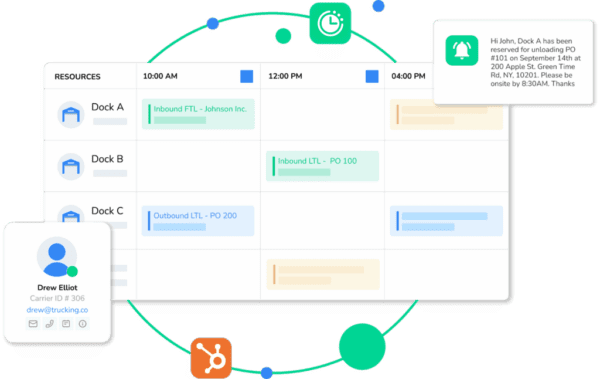
Cold storage logistics isn’t a one-person job. It’s a carefully coordinated process involving:
- Shippers who need their products picked up and delivered on time
- Carriers managing routes and equipment across potentially dozens of stops
- Warehouse managers balancing space, labor, and incoming/outgoing freight
- Quality assurance teams checking that products meet temperature and handling standards
- Customer service reps updating clients on order status
- Compliance officers ensuring regulatory documentation is complete
When these groups don’t communicate effectively, things start to fall apart quickly. In a common scenario, a carrier reports a delay, but the message never reaches the dock supervisor, who is supposed to reassign that slot to another truck. By the time the delayed truck arrives, there’s no space, so it sits in the yard burning diesel while the shipper gets conflicting updates about where their shipment actually is.
Visibility and communication gaps like these lead to delays, product loss, and finger-pointing when something goes wrong. Poor cold chain infrastructure contributes to about 12% of global food loss, and much of that comes down to breakdowns in coordination rather than equipment failure.
Equipment and Infrastructure Limitations
Running a cold storage facility means managing specialized infrastructure that can’t afford to fail. Unlike regular warehouses where you can get by with basic equipment, temperature-controlled operations require significant upfront investment and ongoing maintenance.
Your facility needs:
- Backup refrigeration systems in case primary units fail
- Emergency power generators for outages
- Insulated dock doors with air curtains or strip curtains to minimize temperature loss during loading
- Specialized handling equipment that can operate in sub-zero temperatures
- Monitoring systems with 24/7 alerts for temperature excursions
When a refrigeration unit goes down, you can’t just shut down operations and wait for the repair technician to arrive. You need redundancy built into every system, which means double the maintenance costs and complexity.
The capacity challenge adds another layer of pressure. Global refrigerated warehouse capacity reached 719 million cubic meters in 2020, but more than 80% of U.S. cold storage capacity is operated by third-party, for-hire providers. When demand spikes during harvest seasons or holidays, you’re competing for the same pool of customers while managing limited dock doors and storage space. Every inefficiency directly impacts how much revenue-generating product you can move through your facility.
Data Tracking and Transparency
Running a cold storage facility today means you’re drowning in data from multiple systems that don’t talk to each other.
Your warehouse management system tracks inventory and pallet movements. Temperature monitoring runs on a separate platform generating readings every few minutes. Dock scheduling might happen in spreadsheets or email threads. And when carriers or customers call asking about appointments or shipment status, your team is switching between screens trying to piece together answers.
This fragmented setup creates real operational problems:
Slow response times.
A temperature alert sits in one system while your dock team works from another. By the time someone notices, you’ve already lost critical time.
Manual errors.
One facility manager reported the wrong truck getting loaded about once per month because of incorrectly written plate numbers. When you’re working with handwritten notes and separate systems, mistakes happen.
Compliance issues.
Pulling documentation for audits or investigating a temperature issue means exporting data from multiple platforms and manually matching timestamps. What should take minutes takes hours.
No visibility for improvement.
Without connected data, you can’t spot patterns, like which carriers run late, which time slots get congested, or where your docks sit idle.
Having great monitoring equipment and warehouse systems doesn’t help much if your team can’t access and act on that information quickly. You need visibility that actually connects your operations.
How Technology Simplifies Cold Storage Logistics
Technology is making cold storage logistics dramatically easier to manage in the following ways.
Real-Time Visibility and Communication
The first step in solving cold storage issues is giving everyone access to the same information at the same time. Modern dock scheduling platforms eliminate the endless phone tag between carriers, drivers, and warehouse staff. Instead of drivers calling to confirm appointments or warehouse managers struggling to figure out who’s arriving when, everyone works from a unified system.
Here’s what changes with proper visibility:
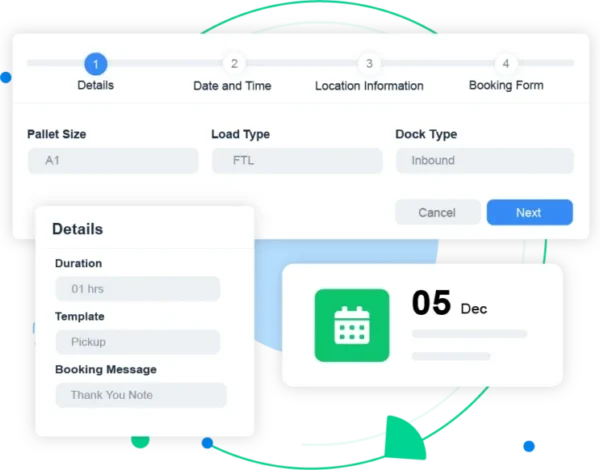
Carriers can book appointments online through a self-service portal, selecting from available time slots that actually work for the facility’s capacity and staffing. Drivers receive automated SMS or email confirmations with all the details they need, including appointment time, dock door assignment, and any special instructions.
Warehouse teams see incoming appointments on a real-time dashboard. They know exactly what’s arriving when, what type of product it is, and which dock door to prepare. When delays happen (and they will), managers can reschedule docks, and the system automatically notifies the warehouse team.
This kind of two-way communication prevents the scenario where a truck shows up unannounced or a warehouse stands idle waiting for a truck that’s stuck in traffic.
Smart Dock Scheduling & Workflows
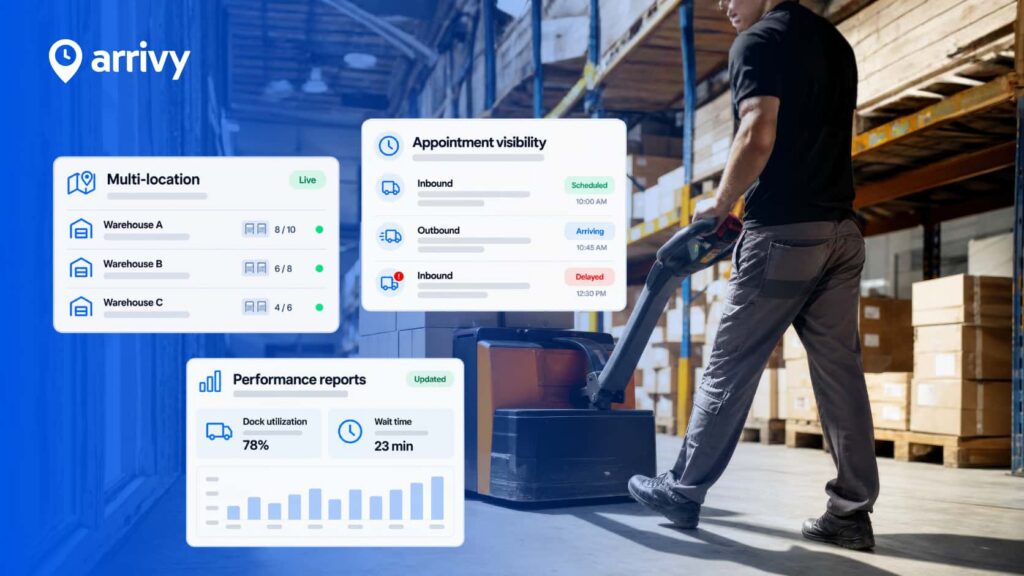
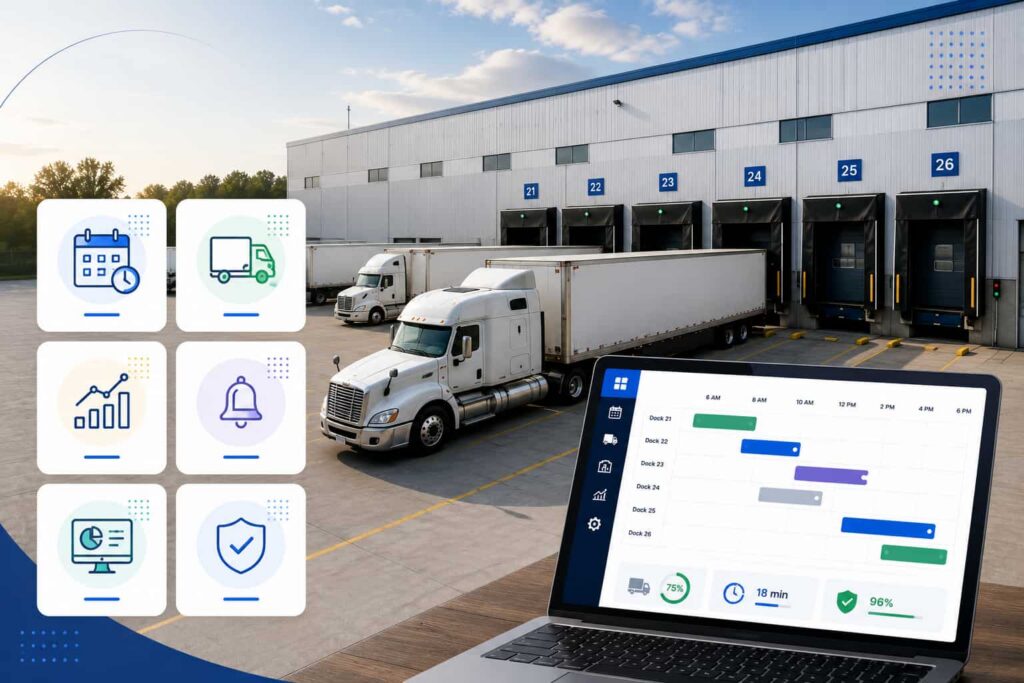
Dock scheduling software directly attacks the detention problem. Arrivy’s dock scheduling solution gives warehouses the tools to run appointment-based operations instead of a first-come-first-served process. The platform allows facilities to:
- Create customized appointment slots based on their actual capacity, such as the number of dock doors, staffing levels, and the type of operation (loading vs. unloading, temperature zone requirements).
- Enable carrier self-scheduling through a branded portal where carriers and drivers can see available slots and book appointments without making a single phone call.
- Automate check-in processes so drivers can notify the facility when they arrive, reducing the time between arrival and getting assigned to a dock door. The system tracks dwell time, too.
- Manage dock door assignments intelligently, ensuring temperature-controlled docks are reserved for refrigerated shipments and that the right equipment and staff are ready when trucks arrive.
- Send automated reminders to drivers before their appointments, reducing no-shows and early arrivals that disrupt the schedule.
As a result, warehouses report significantly reduced wait times, fewer missed appointments, and better utilization of their dock capacity. Drivers spend less time waiting and more time driving, which improves their productivity and reduces detention costs. And critically for cold storage operations, products spend less time in temperature-vulnerable situations.
Data-Driven Decision Making
When your dock scheduling system captures every appointment, delay, and outcome, you suddenly have a goldmine of operational data. Arrivy’s platform provides analytics and reporting that help cold storage facilities understand their performance:
- Average turnaround times by carrier, product type, or time of day
- Detention patterns that reveal which carriers consistently run late,
which docks sit idle or get overburdened, or which time slots tend to have problems - Dock utilization rates showing whether you’re making efficient use of your available capacity
This data enables facilities to have objective conversations with carriers about performance. Instead of vague complaints about delays, you can show a carrier that their average arrival time is 23 minutes late and their drivers spent an average of 47 minutes in detention last month.
For compliance documentation, having a complete digital record of every appointment, arrival time, departure time, and any temperature holds or quality issues creates an audit trail that satisfies regulatory requirements. Many facilities also use this data to optimize their staffing. If the data shows that Tuesday mornings are consistently busier than Thursday afternoons, you can adjust labor schedules accordingly.
The Future of Cold Storage Logistics
The cold storage industry is at an inflection point, driven by massive shifts in demand and technology. The global logistics market is expected to exceed 13.7 trillion U.S. dollars by 2027. Cold storage represents a rapidly growing segment of that market.
E-commerce has transformed consumer expectations around fresh and frozen food delivery. When people order groceries online for same-day delivery, they expect that ice cream to arrive frozen solid. This creates enormous pressure on cold storage logistics to operate with the speed and reliability of dry goods logistics, but with far less room for error.
The pharmaceutical industry is driving even more growth. The biopharma industry’s annual losses from cold chain failures are pushing companies to invest heavily in better logistics solutions. The COVID-19 vaccine rollout, which required ultra-cold storage at -70°C for some formulations, demonstrated both the capabilities and gaps in global cold chain infrastructure.
Artificial intelligence and machine learning are starting to play bigger roles. Predictive maintenance systems can analyze refrigeration equipment data to identify potential failures before they happen. AI-powered demand forecasting helps companies better predict capacity needs and avoid last-minute struggles for storage space.
Automation is expanding beyond just robotics. Smart systems can automatically suggest optimal dock schedules based on historical patterns, weather conditions, and real-time delays. Sustainability is also becoming a competitive differentiator. Energy-efficient cold storage warehouses using solar panels, better insulation, and advanced refrigeration technologies can significantly reduce operational costs while meeting corporate environmental goals. Route optimization algorithms minimize the miles (and fuel consumption) required to make deliveries while maintaining cold chain integrity.
We’re moving toward a future where cold storage logistics is smoothly integrated, automatically monitored, and continuously optimized, a far cry from today’s patchwork of systems and manual processes.
Conclusion
Cold storage logistics complexity doesn’t come from any single challenge. It’s the compound effect of managing precise temperatures, coordinating across multiple stakeholders, racing against time, working with specialized equipment, and maintaining complete visibility, all at once, all the time.
The difference between smooth operations and costly failures often comes down to coordination and timing. When a huge number of reefer drivers experience detention and the industry loses billions annually to scheduling inefficiencies, it’s clear that business as usual isn’t working.
The facilities that thrive in cold storage logistics are the ones that recognize that the real competitive advantage comes from operational excellence, reducing detention time, improving communication, optimizing dock capacity, and making decisions based on data instead of guesswork. Ready to reduce detention time and bring order to your cold storage dock operations? Explore Arrivy’s dock scheduling software.