




















Business Valuation Calculator
Free Business Valuation Calculator
Estimate the value of your service business with our free business valuation calculator. Use Seller's Discretionary Earnings (SDE) and a valuation multiple to calculate an estimated business value.
Built by Arrivy for trade and service businesses, Arrivy helps connect efficient operations with long-term business value through better scheduling, customer communication, and job execution.
Estimate Your Business Value with Arrivy
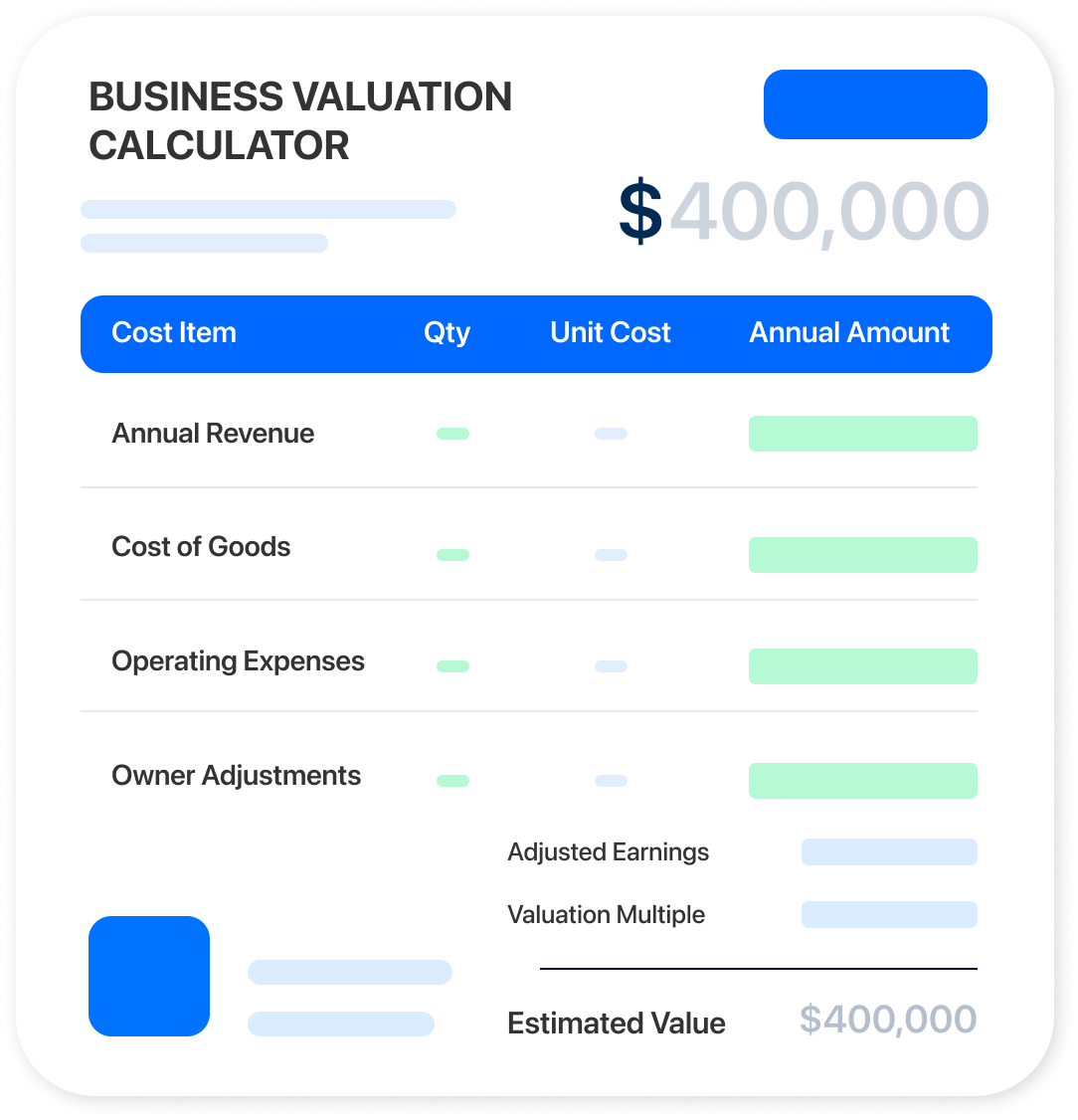
Enter your business earnings and owner add-backs to calculate your Seller's Discretionary Earnings (SDE). Then apply a valuation multiple to estimate the value of your business.
Get New Free Tools in Your Inbox
Arrivy regularly adds new calculators, templates, and other free resources. Get notified when new resources are available.
Understanding Business Value
A business valuation is typically based on two key factors: Seller’s Discretionary Earnings (SDE) and the valuation multiple. SDE reflects the financial performance of an owner-operated business after appropriate owner add-backs, while the multiple reflects factors such as business performance, recurring revenue, customer relationships, and operational stability. Understanding both provides a useful starting point for estimating business value.
Try Arrivy Free for Business Growth
Improving business performance can strengthen long-term business value. Arrivy helps trade and service businesses improve scheduling, customer communication, and operational efficiency to support sustainable growth.
See how Arrivy fits into your service workflow. Book a demo.
Explore Arrivy Operations Cloud™ Capabilities in Full
Arrivy empowers diverse industries with streamlined workflows, real-time coordination, and customer engagement tools that boost productivity, reduce errors, and drive growth.

Scheduling Software
Empower customers to book appointments online at their convenience, without back-and-forth calls.

Digital Forms
Capture field data with customizable, offline-ready forms that sync across workflows.

Route Planning
Plan the fastest, most efficient routes to reduce travel time, fuel costs, and scheduling delays.

Work Order Management
Create, assign, and manage work orders with complete visibility across every job and team.

Dispatch Dashboard
Manage daily dispatch from a unified dashboard. Track jobs, update crews in real time, and keep work on schedule with full team visibility.

All Features
Explore all our features in detail to see what fits your needs
How To Value Service Business
Use the business valuation calculator above or follow these six steps to estimate your business value. For many owner-operated service businesses, Seller's Discretionary Earnings (SDE) is commonly used as a starting point for estimating business value.
- 1. Start with net profit. Use your business's net profit as the starting point for the calculation.
- 2. Add owner compensation. Include owner salary, draws, or other compensation that may be considered part of the owner's discretionary earnings.
- 3. Include eligible owner add-backs. Add qualifying personal expenses, one-time costs, or other appropriate owner add-backs where applicable.
- 4. Calculate Seller's Discretionary Earnings (SDE). Combine your net profit and eligible add-backs to estimate your SDE.
- 5. Apply a valuation multiple. Select an appropriate valuation multiple based on your business, industry, and other relevant factors to estimate business value.
- 6. Review the estimated valuation. Use the results as a planning tool to better understand your business's estimated value. For transactions or formal valuations, consult a qualified valuation professional.
Common Elements of a Business Valuation
A business valuation for an owner-operated service business typically includes:
Net profit
The business's net profit, which serves as the starting point for the valuation.
Owner compensation
Owner salary, draws, or other compensation that may be added back when calculating Seller's Discretionary Earnings (SDE).
Owner add-backs
Eligible personal expenses or one-time business costs that may be adjusted when estimating SDE.
Seller's Discretionary Earnings (SDE)
The estimated earnings available to an owner after applying eligible add-backs.
Valuation multiple
A multiplier used to estimate business value based on factors such as business performance, industry, and operational characteristics.
Estimated business value
The estimated value calculated using SDE and the selected valuation multiple.
Frequently Asked Questions
Know Your True Labor Cost
Get new free tools and templates from Arrivy in your inbox, including calculators and resources for pricing, scheduling, and field operations.
More Free Tools
Explore more free tools built to streamline your business operations:
HVAC Business Valuation Calculator
Estimate your HVAC business value in seconds. Calculate SDE, adjust valuation multiples, and view live results with our free calculator.
BUSINESS VALUATION CALCULATORPlumbing Business Valuation Calculator
Free business valuation calculator. Apply a multiple for an estimated value and range. Built for owner-operated service businesses.
BUSINESS VALUATION CALCULATORSmall Business Valuation Calculator
Find your SDE and apply a multiple for an estimated value and range, using the standard method for owner-operated business.


