 Login
Login



















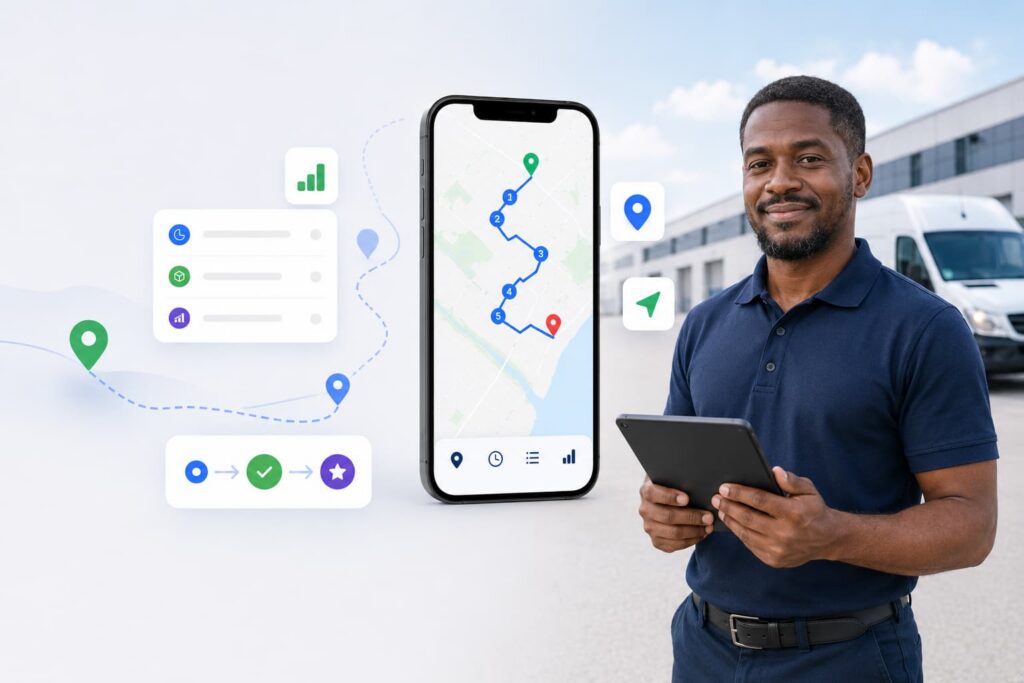
How much time does your team spend driving between jobs each week?
For many service businesses, the answer is more than expected. A technician spends 30 minutes driving across town for a job. Another technician passes within a few blocks of the same customer an hour later. Meanwhile, the dispatcher is busy rearranging appointments after an emergency service call.
These seemingly small inefficiencies add up quickly. They increase fuel costs, reduce the number of jobs completed each day, and make it harder to provide accurate arrival times.
This is where route planning and optimization software becomes valuable. Instead of relying on manual scheduling or basic navigation tools, service businesses can make smarter routing decisions using real-time visibility into technician availability, job priorities, customer appointments, and travel times.
The need for route optimization has become even greater in 2026. Rising labor costs, higher fuel prices, tighter appointment windows, and increasing customer expectations are putting more pressure on service businesses to operate efficiently while maintaining service quality.
This guide explains how route optimization software works, why it matters in 2026, and what service businesses should look for when evaluating a solution.
Quick Answer:
Route planning and optimization software helps service businesses assign the right technician or crew, organize job sequences, reduce drive time, adjust routes when schedules change, and provide more accurate customer ETAs. Unlike GPS navigation, it connects routing with scheduling, dispatching, technician availability, job priority, and work order management.
Recommended Reads
•How Route Planning System Can Rule Your Business?
•Is It Time to Invest in New Field Service Routing Software?
What Is Route Planning and Optimization Software?
Route planning and optimization software is a type of software that helps service businesses assign jobs, schedule technicians, and create efficient routes between customer locations. It considers factors such as appointment windows, technician availability, travel distance, job priority, and service territories to reduce unnecessary travel and support daily operations.
Unlike GPS navigation apps such as Google Maps, route optimization software does more than provide directions. It helps dispatchers decide which technician should perform a job, when to schedule it, and how to organize appointments throughout the day.
For example, an HVAC company with 10 technicians and 40 service appointments might use route optimization software to assign jobs based on technician availability, location, and appointment times. This helps reduce driving time while keeping schedules on track.
Why Does It Matter?
Route optimization affects both operational costs and customer service. Poor routing leads to longer drive times, higher fuel expenses, missed appointment windows, and fewer completed jobs.
Well-planned routes help technicians spend less time on the road and more time serving customers, supporting higher technician productivity.
For businesses managing dozens of appointments each day, even small improvements in routing can save hours of travel time over the course of a week.
How Does Route Optimization Work?
Route optimization software uses operational data to build schedules and routes for field teams. The system evaluates multiple factors before recommending the most efficient route.
These factors often include:
Job locations
Appointment windows
Technician skills and availability
Travel distance and drive time
Job priority
Service territories
Traffic conditions
Existing schedules and work orders
When schedules change, the software helps dispatchers adjust assignments and routes without having to rebuild the entire schedule manually. This helps teams respond to customer cancellations, emergency service requests, delays, and other disruptions throughout the day.
Why Field Service Businesses Need Route Optimization Software in 2026?
Field service operations have become more complex. As schedules, service areas, and customer expectations continue to grow, route planning has become an important part of daily operations.
Rising Customer Expectations
Customers expect service providers to arrive within the promised appointment window and receive timely updates when schedules change. According to Global Market Insights, growing emphasis on customer experience continues to drive adoption of route optimization software as businesses work to improve delivery accuracy and ETA reliability.
A late arrival no longer affects only one appointment. It can lead to customer complaints, negative reviews, and lost business opportunities.
Higher Operating Costs
Labor and fuel remain two of the largest operating expenses for many service businesses. According to the IMARC Group Route Optimization Software Market Report, higher fuel costs are a primary factor behind the growing use of route optimization software. As businesses work to improve productivity and reduce transportation expenses. Every unnecessary mile driven and every hour spent traveling between appointments increases costs.
More Complex Daily Schedules
Many service businesses manage a mix of installations, repairs, inspections, maintenance visits, and emergency calls. Appointment durations vary, customer requests change, and unexpected delays occur regularly.
Coordinating these moving parts becomes increasingly difficult as teams grow and service areas expand.
Need for Real-Time Dispatch Visibility
Dispatchers and operations managers need an accurate view of field activity throughout the day. Delays, cancellations, traffic conditions, and emergency service requests can affect schedules at any time.
Without real-time visibility, teams often rely on phone calls, spreadsheets, or manual updates.
AI and Automation Are Becoming More Important
Manual route planning becomes harder to maintain as appointment volumes increase. What works for a small team often becomes difficult to manage across multiple crews, service territories, and daily schedules.
Many service businesses now use automation to support scheduling, dispatching, and route planning decisions. According to Mordor Intelligence’s Route Optimization Software Market Report, cloud-based route optimization solutions accounted for 65.74% of the market in 2025, reflecting growing demand for real-time routing and operational visibility.
Key Use Cases of Route Optimization Software for Service Businesses
The value of route optimization becomes clearer when applied to real-world service operations. The following use cases highlight some of its most common applications.
1. Daily Technician Route Planning
Daily route planning becomes difficult when technicians have multiple appointments spread across different service areas. A poorly planned schedule can lead to unnecessary travel, missed appointment windows, and lost productivity.
Route optimization software helps dispatchers organize appointments in a logical sequence based on location, technician availability, and scheduling requirements.
2. Dispatching the Closest Available Crew
Finding the right technician for a job becomes more difficult when multiple crews are working across different locations. Without visibility into technician availability and location, dispatchers may assign work inefficiently.
Dispatchers can identify the most appropriate technician based on current schedules, location, and service area coverage.
3. Managing Same-Day Schedule Changes
Schedule changes are common in field service operations. Customers cancel appointments, jobs take longer than expected, and urgent service requests can arise at any time.
Dispatchers can adjust schedules and routes without disrupting the entire workday.
4. Reducing Drive Time and Fuel Costs
Unnecessary travel increases both operating costs and time spent between appointments. As service areas expand, these costs become more difficult to control.
Route optimization software helps create more practical routes by reducing unnecessary mileage and helping technicians move between jobs more efficiently. This allows businesses to make better use of time in the field while limiting avoidable travel expenses.
5. Improving Customer ETAs
Customers want to know when a technician will arrive, especially when appointments are scheduled within broad service windows. Uncertainty can lead to frustration and missed appointments.
More accurate arrival estimates become possible when schedules and routes are planned using real-time operational data.
6. Balancing Technician Workloads
Some technicians may end up with overloaded schedules, while others have unused capacity. This can lead to delays, employee frustration, and uneven service coverage.
Route optimization software helps distribute appointments more effectively across the team by considering technician availability, schedules, and service areas. This helps businesses maintain a more balanced workload throughout the day and supports workforce management efforts.
7. Emergency Job Routing
Emergency service requests often require immediate attention, even when technicians have packed schedules. Finding the right technician without disrupting the rest of the day’s appointments can be challenging.
Dispatchers can identify available technicians and adjust schedules when urgent jobs arise. This supports faster response times while minimizing the impact on existing appointments.
8. Multi-Stop Service Routes
Many field technicians complete multiple appointments during a single shift. Without proper route planning, they may spend unnecessary time traveling between customer locations.
Stops can be organized in a practical sequence based on appointment schedules and geographic proximity.
9. Multi-Team and Multi-Location Operations
Managing multiple crews across different service areas becomes more challenging as a business grows. Dispatchers must coordinate schedules, monitor field activity, and maintain coverage across locations.
Businesses can coordinate routes across teams and service territories while maintaining visibility into daily operations.
How to Choose the Right Route Planning and Optimization Software?
Not every route optimization solution is designed for the same type of business. Before making a decision, consider how well the software supports your daily operations, field teams, customer communication, and existing workflows. Consider these questions before making a choice:
☑ Can the Software Support Your Daily Workload?
☑ Will It Work for Your Field Teams?
☑ Will It Support a Better Customer Experience?
☑ Can It Fit Into Your Existing Operations?
Platforms such as Arrivy are designed to connect all your operational functions within a single system. This helps prevent data silos and provides better visibility into your operations.
Standalone Route Planning Tools vs FSM-Connected Route Optimization
Not every service business requires the same level of operational support. Some teams only need route planning, while others need routing, scheduling, dispatching, and job management in a single system.
| Factor | Standalone Route Planning Tools | FSM-Connected Route Optimization |
|---|---|---|
| Best For | Small teams with simple routing needs | Businesses managing multiple technicians, appointments, and service areas |
| Primary Focus | Route creation and navigation | Route optimization combined with field service operations |
| Scheduling | Managed separately | Connected with route planning |
| Dispatching | Managed separately | Integrated with routing decisions |
| Work Orders | Typically handled in another system | Managed within the same platform |
| Customer Communication | Often requires separate tools | Connected with scheduling and dispatch workflows |
| Visibility | Limited to routes and navigation | Visibility across routes, schedules, technicians, and jobs |
| Ideal Use Case | Fixed service areas and straightforward operations | Complex field service operations requiring coordination across teams and workflows |
As operations become more complex, many field service businesses choose solutions that connect route optimization with scheduling, dispatching, customer communication, and work order management.
Why Arrivy Is a Strong Route Optimization Software Option for Service Businesses?
Throughout this guide, we’ve discussed common field service challenges, including daily route planning, schedule changes, customer communication, workload balancing, and dispatch coordination. Managing these activities across separate systems can make day-to-day operations more difficult.
Arrivy combines route optimization with field service management capabilities, helping businesses manage field operations from scheduling through job completion. This gives teams a single place to coordinate technicians, appointments, routes, customer updates, and work orders.
What Makes Arrivy Different?
Route planning is only one part of managing field service operations. Arrivy connects route optimization with scheduling, dispatching, customer communication, and job management, allowing teams to coordinate field work within a connected workflow.
Key Arrivy Capabilities
Route planning and optimization
AI-powered scheduling and crew assignment with SAL AI
Technician and crew tracking
Customer ETA updates and communication
Work orders and digital forms
Route analytics and reporting
CRM and business system integrations
Best-Fit Businesses for Arrivy
Arrivy is particularly valuable for businesses that manage multiple technicians, recurring appointments, frequent schedule changes, and work orders across different service areas.
Why Connected Field Service Operations Matter?
When route planning operates separately from scheduling, dispatching, and work order management, teams often rely on multiple systems to manage daily work. Arrivy brings these activities together, helping businesses maintain visibility across appointments, technicians, customer updates, and job progress from a single platform.
Route Optimization Use Cases Across Service Industries
While the principles of route optimization remain the same, different industries apply them in different ways. The table below shows how route optimization supports common field service operations.
| Industry | Route Optimization Use Case | Key Benefit |
|---|---|---|
| HVAC | Coordinate seasonal maintenance visits, repairs, and installation appointments | Helps manage appointment schedules and reduce unnecessary travel |
| Plumbing | Respond to emergency leaks and scheduled service appointments | Supports faster response times for urgent requests |
| Roofing | Coordinate inspections, repairs, and project visits across multiple locations | Helps crews stay on schedule throughout the day |
| Solar | Plan site surveys, installations, and maintenance appointments | Improves coordination between field teams and scheduled work |
| Moving Services | Organize vehicle and crew routes across multiple jobs | Helps manage time and resource allocation |
| Cleaning Services | Schedule recurring visits across customer locations | Supports consistent service coverage |
| Pest Control | Manage recurring treatment schedules across service territories | Helps manage recurring appointments and service areas |
| Delivery & Logistics | Plan routes across multiple stops and destinations | Helps reduce unnecessary mileage and travel time |
Common Route Optimization Mistakes Service Businesses Make
Even with the right software, certain practices can reduce the effectiveness of route optimization. Common mistakes include:
Treating route optimization as navigation only
Ignoring real-time schedule changes
Failing to balance technician workloads
Ignoring technician skills and availability
Managing routing separately from scheduling and dispatch
Relying on manual planning as operations grow
Conclusion
Route optimization helps service businesses manage routes, schedules, and field operations more effectively. As service areas expand and daily schedules become more complex, businesses need better visibility into technicians, appointments, and ongoing work.
The greatest value comes from connecting route planning with scheduling, dispatching, customer communication, and work order management. This allows teams to coordinate field activities from a single system and maintain greater control over daily operations. Arrivy brings these capabilities together in a connected field service management platform.