
 Login
Login



















Have you ever faced a situation where customers insist they haven’t received their delivery, while your delivery person claims it has already been delivered? As one Reddit user pointed out, a blurry photograph cannot serve as proper proof of delivery, as it becomes useless when the parcel cannot be found.
Incomplete records, misplaced documents, and limited visibility often lead to confusion and delays. Customers expect speed, accuracy, and transparency. To meet these expectations, you need a modern delivery management software that keeps the process both easy and efficient.
Electronic Proof of Delivery (ePOD) has replaced traditional paper POD. Modern ePOD systems verify task completion and provide multiple benefits for your business. In this post, we have explained digital POD workflows, key features, best practices, KPIs, security, sustainability advantages and more. By the end, you’ll know how to implement POD strategically to optimize your operational efficiency and customer satisfaction.
Key Statistics
The Global Proof of Delivery Platforms market size was valued at $2.1 billion in 2024 and is projected to reach $7.8 billion by 2033, expanding at a CAGR of 15.3% during the forecast period of 2025–2033. (Source)
What Is a Proof of Delivery (POD) Document?
In a highly competitive delivery and service landscape, 53% of e-commerce retailers report challenges in balancing speed, cost, and customer satisfaction. A Proof of Delivery (POD) document is a formal record confirming that a delivery or service task has been completed and reached its intended recipient. When digitized as Electronic Proof of Delivery (ePOD), it becomes a dynamic operational tool that links field activities to backend systems, including dispatch, CRM, billing, and analytics.
Key Elements and Types of Modern POD
Modern POD systems can capture multiple types of evidence to verify deliveries and service tasks. The different types and key elements are as follows:
Paper POD vs ePOD
The logistics and field service industries are increasingly adopting digital workflows. Replacing traditional paper forms with ePOD is common because of the benefits it offers. Here’s a clear comparison of how digital POD improves the workflow compared to paper-based methods:
| Feature | Paper POD | ePOD |
|---|---|---|
| Capture Method | Handwritten forms | Mobile devices (smartphone/tablet) |
| Updates | Delayed, batch entry | Instant, cloud-synced |
| Risk | Loss, damage, illegibility | Encrypted cloud storage, low risk |
| Integration | Manual data entry | Automated to dispatch, billing, and CRM |
| Audit & Analytics | Difficult to track | Actionable dashboards, easy reporting |
| Evidence | Limited (signature only) | Photos, GPS, notes, barcode scans |
By transitioning from paper to digital documentation, your business can capture signatures, photos, GPS data, and notes in real-time. Research shows that ePOD adoption has increased by 35% among logistics providers, reflecting its growing role in improving accuracy, speed, and customer satisfaction.
Why Digital Proof of Delivery is Important
Digital Proof of Delivery (ePOD) is a reliable operational tool that delivers measurable benefits across operations, finance, and customer experience. Since many carriers only provide shipping details for shipments within the last 120 days, accessing older data can be challenging. This makes ePOD essential for keeping records secure, structured, and accessible whenever needed. You can also explore our detailed blog on digitizing critical logistics documents to learn how to implement these practices effectively.
1. Verifies Job Completion
ePOD confirms that a delivery or service task has been fully completed. For delivery teams, it ensures that packages reach the intended customer at the correct location. For field service teams, it ensures that repairs, installations, and maintenance tasks are performed efficiently.
2. Reduces Disputes and Chargebacks
Disputes often arise from missing, damaged, or incomplete deliveries. ePOD captures detailed evidence, including photos, timestamps, digital signatures, GPS coordinates, and technician notes. This gives customer service teams clear proof to resolve issues quickly and minimize refunds or chargebacks.
3. Accelerates Billing and Revenue Recognition
When ePOD data is captured digitally, invoices can be generated immediately after the task is completed. Integration with modern field service platforms, such as Arrivy, allows you to link POD to payment workflows. This ultimately reduces billing lag.
4. Builds Customer Trust and Transparency
Sharing ePOD details with your customers enables the verification of task completion without getting stuck in phone tags.
5. Drives Accountability Across Teams
ePOD tracks who did what, when, and where. Managers can monitor field team performance and identify recurring issues. Notes and photos provide a valid context to spot recurring delivery damages or service errors.
6. Supports Compliance and Audit Requirements
For industries such as healthcare, logistics, and the transportation of regulated goods, precise record-keeping is crucial. In these industries, ePOD ensures secure cloud storage and detailed audit trails.
How ePOD Optimizes Delivery and Field Operations
Electronic Proof of Delivery (ePOD) transforms traditional POD into an advanced operational tool. ePOD helps in the following ways:
Integration with Scheduling and Dispatch
- Assign tasks and optimize routes with real-time dashboards.
- Track live progress and receive alerts for delays or exceptions.
Mobile Data Capture
Mobile data capture enables faster billing and operational insight. The evidence includes:
- Digital signatures
- Photos and videos
- Notes and remarks
- GPS coordinates
Linking POD to Task Records
POD is automatically associated with each task, enabling:
- Error-free billing verification
- Accurate customer communication
- Easy auditing for compliance
Strengthening Customer Communication
Customers receive instant confirmations with photos, timestamps, and signatures, improving customer experience.
Advanced Features by Job Type
The modern configurable workflows allow you to tailor POD requirements by job type or priority. It works as follows:
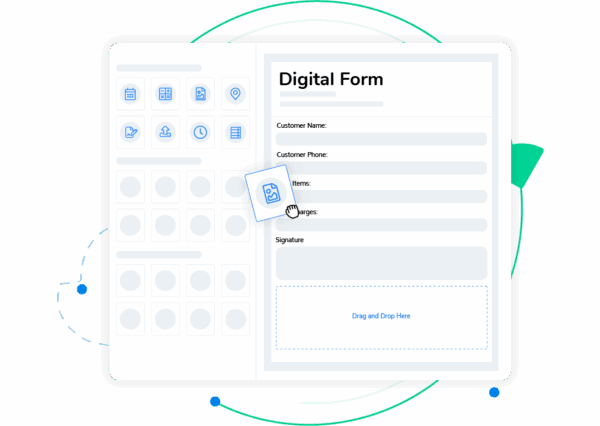
You can also optimize your delivery and field operations by choosing solutions such as Arrivy. It provides an ePOD solution that removes the need for paper. Forms can be filled out directly in the Arrivy mobile app, either when the task is completed or as a required step. The platform also automatically generates documents, such as Bills of Lading (BOL). These are stored with the task history and can be shared with customers via email or SMS.
Operational Benefits of ePOD
The operational benefits of ePOD are explained in the following table:
| Benefit | Impact |
|---|---|
| Faster Cash Flow | Immediate invoicing reduces revenue lag and improves cash conversion cycles |
| Reduced Disputes | Timestamped photos, GPS, and notes minimize claims, refunds, and chargebacks |
| Better Field Team Performance | Track KPIs, coach teams, and improve operational efficiency |
| Improved Customer Satisfaction | Real-time confirmations with photos/signatures build trust |
| Scalable Processes | Supports growth without adding manual overhead |
| Actionable Analytics | Identify trends and optimize operations continuously |
Best Practices for Implementing Digital POD
North America leads the proof-of-delivery platforms market, accounting for about 38% of global revenue in 2024. This shows the rising demand for modern POD methods. If you’re planning to implement ePOD for your business, keep these steps in mind:
Standardize POD Templates
Use consistent forms or checklists for common job types. Standardization simplifies reporting, reduces errors, and ensures uniformity across teams.
Train Field Teams
Provide hands-on training and mobile guides.
Capture Multiple Proof Points
Combine signatures, photos, GPS coordinates, and technician notes into a single compact evidence package.
Automate Customer Confirmation
Configure ePOD systems to automatically send POD summaries (photos, signatures, timestamps) to customers.
Integrate with Backend Systems
Link POD to dispatch, CRM, billing, and reporting dashboards.
Define Data Retention & Security Policies
Use role-based access controls, encryption, and audit logs. Establish retention schedules in compliance with industry regulations.
Pilot and Refine
Start with a small team or region to test templates and workflows. Gather feedback to optimize forms, notifications, and training before full rollout.
Track Key Metrics (KPIs) and Audit Regularly
Monitor metrics like billing lag, dispute rate, on-time completion, and error rates in POD data.
Estimating the Impact of ePOD
Implementing ePOD can significantly improve your delivery and field operations. For instance, considering you have a mid-sized operation completing 1,000 deliveries per month, this is how ePOD will help:
| Metric | Paper POD | Digital ePOD | Improvement |
|---|---|---|---|
| Invoice Processing Time | 8–10 business days | 1–2 business days | 80–87% faster |
| Delivery Dispute Rate | 12% | 3% | 75% reduction |
| Administrative Hours for POD Tracking | 120 hrs/month | 30 hrs/month | 75% reduction |
| Customer Response Time for Proof Requests | 48–72 hrs | Instant | 100% faster |
| Lost or Missing Documents | 5–10% | <1% | Significant reduction |
Conclusion
In 2024, large enterprises accounted for more than 55% of the Proof of Delivery Platform market. It is a clear sign that digital POD systems are crucial to modern operations.
Arrivy brings these capabilities together into a single platform, helping teams reduce errors, speed up deliveries, and create a smoother service experience.
If you want to see how Arrivy can fit effortlessly into your processes, book a demo and explore how it can help you provide clearer, more trustworthy proof of service.