


How many times have contractors brushed off a small leak, thinking it can wait until the next service cycle? It is equivalent to setting up a costly liability down the road. For roofing contractors and property managers, skipping on routine maintenance is a high-risk strategy.
Industry data shows the consequences are steep:
- Roof repair and replacement costs in the U.S. have jumped nearly 30% since 2022 due to material inflation, labor, and more frequent weather damage.
- When maintenance is deferred, damage cascades, roof deck rot, and insulation loss, all multiplying the cost. One report shows small repairs costing $300–$1,500 can balloon into full replacements costing $8,500-$14,300 if not addressed.
Proactive Maintenance vs. Reactive Repairs
| Maintenance Type | Avg. cost per square foot |
|---|---|
| Proactive Maintenance | $0.14 |
| Reactive Repairs | $0.25 |
Aside from expenses, neglected roofs pose safety hazards. Moisture trapped under the membrane eventually weakens roof decking, and a saturated deck can collapse, crushing equipment or injuring workers below.
An Interesting Reddit Thread sums it all up: Why do people not repair roof leaks?
Problems like unchecked ponding and debris also overload drains and gutter systems, leading to leaks and structural damage. Although preventive upkeep also yields huge savings. Even more broadly, preventive facility maintenance often pays off several times over.
Another important aspect is to analyze that the use of technology makes maintenance even more effective. Contractors who use digital tools see lower costs and higher productivity.
In fact, nearly 42% of contractors now use mobile checklist apps for inspections.
Given that ~60% of U.S. workers are mobile, it’s no surprise the booming roof inspection industry (projected to hit $19.5 B by 2033) is going digital.
Why Does It Matter?
Proactive roof care improves safety, extends service life, and saves money. It also ensures warranty and insurance compliance. Many manufacturer warranties require documented inspections (often twice yearly) to stay valid, and insurers may offer lower premiums on well-maintained roofs.
Ignoring minor repairs invites major problems like leaks, stain ceilings, rot supports, and even triggers costly mold abatement. In contrast, routine checks catch problems early when repairs are cheap.
Every dollar spent on preventive maintenance prevents many more emergency fixes.
Recommended Reads
Residential vs. Commercial
The principles are the same, but scale and scope differ.
Residential roofs are typically steep-slope and smaller, often inspected with a 4–6 person crew in a day. The NRCA advises homeowners to inspect at least twice a year (usually spring and fall).
Commercial roofs, by contrast, are often low-slope or flat, house HVAC units and penetrations, and require special equipment (e.g., membrane welders). Large commercial projects span days or months, so they usually have formal maintenance contracts.
In practice, commercial roofs need even more diligent care like frequent ponding checks, routine drain cleaning, and monitoring of roof-top equipment. Both sectors benefit from similar best practices (see below), but commercial clients especially value the documentation and scheduling that digital systems provide.
Roofing Maintenance Checklist (Step-by-Step)
Roof inspections should be performed at least twice a year (spring and fall), and after severe weather.
Section 1: Pre-Inspection Preparation
| Item | Status (✔/✘) | Notes |
|---|---|---|
| PPE checked (harness, boots, helmets, gloves) | ||
| Ladder & stabilizers secured | ||
| Fall-protection installed (anchors, ropes, guardrails) | ||
| Tools prepared (pry bar, sealant gun, utility knife, chalk line) | ||
| Materials loaded (shingles, flashing, underlayment, fasteners) | ||
| Past inspection/repair reports reviewed | ||
| Weather forecast reviewed (no high winds/rain) |
Section 2: Exterior Roof Inspection
| Item | Status (✔/✘) | Notes |
|---|---|---|
| Shingles/tiles intact (no cracks, curling, missing) | ||
| Flashing secured around chimneys, skylights, vents | ||
| Sealants intact (no cracks/gaps) | ||
| Skylights/penetrations watertight | ||
| Ponding water checked/cleared (flat roofs) | ||
| Moss, algae, debris removed | ||
| Rust/corrosion checked (metal roofs) | ||
| Exposed fasteners tightened |
Section 3: Interior & Structural Inspection
| Item | Status (✔/✘) | Notes |
|---|---|---|
| Attic is free of daylight through the boards | ||
| Rafters/sheathing free of mold/rot | ||
| Insulation dry and uncompacted | ||
| Ventilation (ridge/soffit/turbine) functional | ||
| Interior ceilings/walls free of stains, sagging, bulges | ||
| Occupants interviewed for leaks/dampness |
Section 4: Gutters & Drainage
| Item | Status (✔/✘) | Notes |
|---|---|---|
| Gutters cleared of leaves, grit, debris | ||
| Downspouts firmly attached, no corrosion | ||
| Flow tested with water (no backups) | ||
| Flat roof drains/scuppers cleared | ||
| Proper slope confirmed for water runoff |
Section 5: Materials & Supplies Checklist
| Item | Status (✔/✘) | Notes |
|---|---|---|
| Shingles/membrane patches stocked | ||
| Sealants & adhesives available | ||
| Nails/screws/clips restocked | ||
| PPE checked/replaced as needed | ||
| Digital inspection form ready (Arrivy) |
Section 6: Seasonal Maintenance Checklist
| Seasonal Task | Check |
|---|---|
| Spring: Inspect for winter damage, ice dam effects. | |
| Summer: UV stress, thermal expansion cracks. | |
| Fall: Clear leaves/debris, prep for storms. | |
| Winter: Monitor snow load, ice dams, freeze-thaw issues. |
Section 7: Documentation & Reporting
| Requirement | Completed (✔/✘) | Notes |
|---|---|---|
| Before/after photos uploaded | ||
| Maintenance notes completed | ||
| Customer/building manager signature obtained | ||
| Technician signature | ||
| Supervisor signature | ||
| Next inspection scheduled |
Seasonal Roofing Maintenance Schedule
Roof care should adapt to the seasons. Following a regular schedule keeps the roof in shape year-round:
| Seasons | Key Tasks |
|---|---|
| Spring | Inspect the roof post-winter for ice dam damage, cracked/missing shingles, and sealant issues. Clean gutters, ensure flashings are intact. Repair minor damage before the rainy season. |
| Summer | Check for UV damage, loosened fasteners, and sealant deterioration. Trim back trees to avoid shade & debris. Inspect attic ventilation to prevent heat buildup. |
| Fall | Clear leaves and debris from roof valleys, gutters, and drains. Secure loose flashing. Apply or refresh sealants. Confirm drainage setup is clear before snow/ice. |
| Winter | Monitor snow loads (especially on flat roofs). Remove excess snow safely. Prevent ice dams at eaves. Maintain attic ventilation and insulation to reduce interior condensation. |
Digital Tools to Simplify Roofing Maintenance
Modern software can transform roof inspections from paper drudgery into a streamlined workflow:
Digital Checklists & Forms
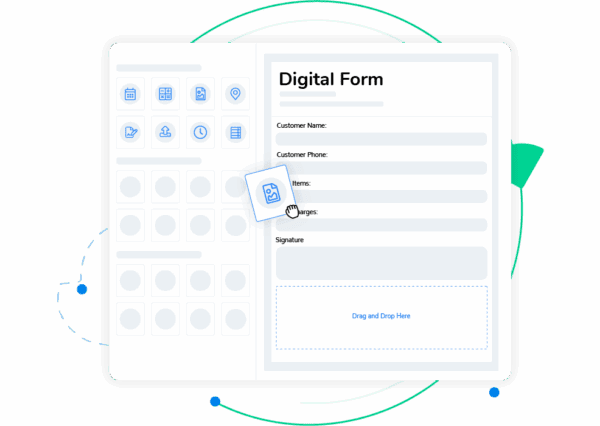
Instead of clipboards, use a mobile app with a built-in roof inspection and maintenance checklist. Digital forms let your crew fill out a structured report on-site, tapping checkboxes, entering measurements, snapping photos, and capturing e-signatures. These digital checklists can be directly attached to each scheduled task, with mandatory fields ensuring no critical step or photo is skipped before submission. Additionally, checklists can be attached to the tasks with mandatory fields for submission. For example, Arrivy lets you design a custom inspection form that matches your exact checklist. Crews enter conditions (shingle count, flashing status, etc.) and take photos. The data goes straight into the system, eliminating any transcription errors.
Scheduling & Dispatch
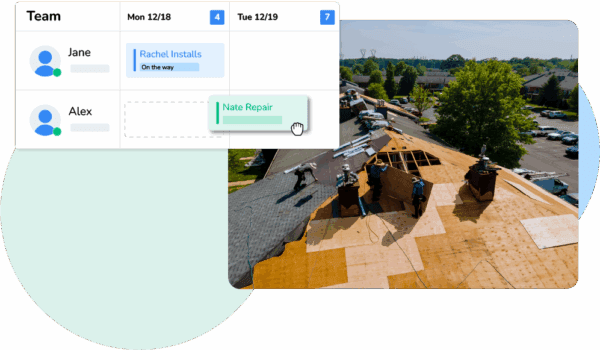
Use Arrivy’s field management platform to create recurring service appointments. You can set up quarterly or annual maintenance jobs on repeat, and the software will automatically dispatch crews and send reminders. This ensures no customer ever forgets a season’s inspection.
Documentation & Proof
Digital tools capture proof of service as you work. Every completed task can be logged with GPS time-stamps, photos, and signatures. That means instant before/after photo logs, digital sign-off by the building owner, and a complete record saved in the cloud.
Analytics & Compliance
The same software can enforce quality. You can build “required fields” so a form can’t be submitted until every section is filled. Custom statuses can gate the work – e.g., a job cannot move to “done” without a signed inspection form. This eliminates the “who forgot to write that down?” problem. On the admin side, dashboards show which roofs are due for service and which faults are common. Over time, you’ll spot patterns (say, a particular roof model needing extra attention) and improve your offerings.