 Login
Login




















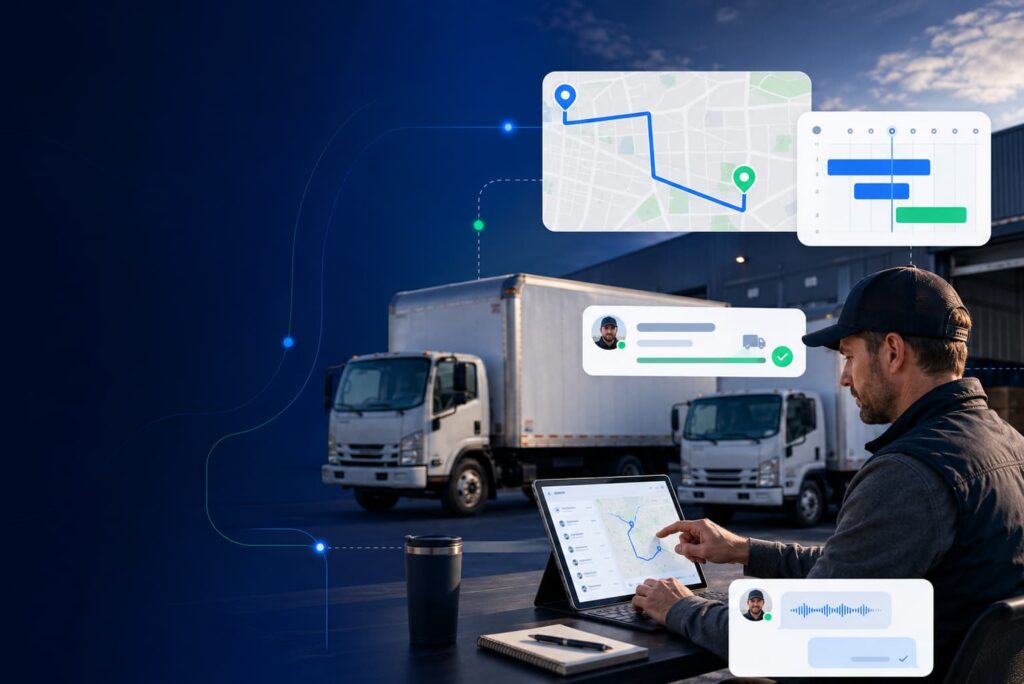
Did you know that manual dispatching is rapidly becoming obsolete in the contemporary business world? It is because modern work requires real-time coordination. Businesses are facing more challenges due to high customer expectations for instant updates and timely deliveries. Hence, operations now require continuous visibility into their workflows to identify and address any operational failures.
To overcome such challenges, dispatching solutions have become the pivotal element of operational intelligence. They are helping companies manage field operations by utilizing mobile workforces with ultimate transparency and control. Modern logistics management solutions such as Arrivy are transforming how teams coordinate tasks, optimize routes, and communicate across departments.
Key Stats for Smarter Decisions
50% of supply chain organizations are already investing in AI and advanced analytics to optimize their operations.
If you are looking for similar solutions, this article will help you to examine why dispatching solutions have become integral to achieving efficiency. Additionally, we will discuss the benefits, key features, and real-world use cases of this software, which will help you draw measurable improvements for your organization.
Recommended Reads
Why Does 2026 Mark a Turning Point for Dispatching Solutions?
According to a recent survey, 74% of supply-chain companies are ready to invest in modern planning and scheduling tools. This is because companies have to deal with complex operations, growing compliance demands, and strict timelines, which is not practical to maintain without a dispatching solution.
Three key factors that make intelligent dispatching integral are:
1. Evolving Demands from Customers and Regulators
Customers these days have specific demands; for instance, a survey shows that 73% want to receive delivery in a convenient time slot. Apart from this, you would have also heard frequent questions from your customers, like When will the technician arrive? Where has the order reached? Is the service on schedule? Who will provide the service? etc. All these questions can be addressed through data-driven answers.
Additionally, government and industry regulators these days are enforcing strict service standards. The parameters like carbon emissions, driver hours, and safety compliance have to be followed strictly. Hence, Dispatch platforms are important to track all these elements automatically so that your business can improve its accountability as well as productivity.
2. Advanced Technology Is Powering Smarter Dispatching
As more companies move toward smarter solutions, staying competitive will become increasingly difficult if you do not keep pace with technological advancements. The dispatch software has evolved from disconnected tools to a modern AI and IoT-powered cloud architecture. Hence, staying ahead now means staying technologically advanced.
If you are looking for real-time coordination across your teams, vehicles, and customers, select a smart dispatching software that can:
- Assign jobs based on skill, location, and availability via AI-driven scheduling
- Monitor vehicles and assets via IoT sensors
3. Sustainability Is Now a Strategic Priority
The modern world is moving towards sustainable goals. Hence, efficiency without sustainability is no longer effective. Many field service companies now use dispatch systems to support sustainability, for example, by measuring carbon reduction through optimized mileage. This helps in aligning with environmental and social goals that customers and investors demand. Modern dispatching solutions make operations more environmentally friendly by lowering carbon emissions up to 93%.
Key Benefits of Dispatching Solutions in 2026
Are you concerned about the expenses that come with adopting dispatching solutions? You’re not alone — a survey found that 45% of fleet-operating enterprises cited cost as their biggest barrier to technology implementation. However, it’s important to understand that this investment ultimately drives greater revenue.
Here are the key benefits of dispatching solutions that can help you in 2026:
1. Increased Efficiency
Automation is the key to increasing work efficiency in modern workflows. Instead of wasting your time on paperwork, phone tags, and manual emails, you can automate your tasks and let the software handle the operational challenges.
For example, Arrivy automates task scheduling and route optimization for your business, which results in reduced idle time and manual coordination. It ensures the right technician or driver is assigned based on skill, proximity, and availability. Hence, it improves utilization and productivity.
2. Reduced Costs
The modern transportation and logistics businesses use route optimization and predictive fleet maintenance to cut costs by up to 25%, producing a 15.6% CAGR for field service management solutions. Apart from cutting costs, dispatching solutions also help in better workforce allocation that results in fewer overtime hours and reduced administrative overhead. Furthermore, modern route optimization also reduces delivery time by 30-40%, which helps reduce fuel outlay and increases customer retention. The digitized forms also reduce paperwork costs while organizing billing and reporting.
For instance, Arrivy’s dispatching solutions help businesses cut costs by up to 50k annually and boost efficiency through automation and real-time optimization. The platform reduces fuel expenses with smart route planning, minimizes no-shows through automated customer notifications, and eliminates paperwork with digital forms. Real-time tracking and automated job assignments keep operations efficient, while integrated communication tools reduce admin effort and missed updates. As a result, companies report significant savings in fuel and labor costs, along with experiencing more reliable field operations.

3. Improved Customer Service
According to a recent survey, 80% of customers rate service quality equal to product value. Hence, improved customer service has become a significant factor in driving organizational success. Modern customers value transparency, and dispatching solutions deliver it through real-time updates and accurate ETAs.
Platforms like Arrivy help businesses to send live notifications, status updates, and arrival times, keeping customers informed without manual follow-ups. Self-service portals and automated reminders also reduce no-shows and allow customers to manage appointments effortlessly. This ultimately leads to improved customer experience.
4. Enhanced Communication
Communication barriers can cause revenue loss even if your operations are well-planned. Hence, a good dispatching solution is mandatory for centralized communication. This ultimately leads to a communication flow between dispatchers, field staff, and customers. Field teams can update job statuses, share notes, or upload proof-of-service documents directly from their mobile app, even if offline. 99.5 % of field service engineers use mobile devices for field work, which ensures that operational managers have a clear picture of the entire workflow.
For example, Arrivy’s dispatching software promotes enhanced communication by uniting office teams, field crews, and customers on one platform. Real-time updates, task journals, and role-based notifications keep everyone aligned and informed without unnecessary hassle. With built-in file sharing and CRM integration, all teams have access to accurate data in one place. This leads to fewer phone tags, quicker issue resolution, and faster overall response times.
5. Better Resource Management
Due to ineffective job scheduling, some service technicians nearly lose 50% of their work time. This shows that managing resources is almost impossible without dispatching software. Live GPS and telematics integration can help managers see how resources are being used so they can timely identify inefficiencies.
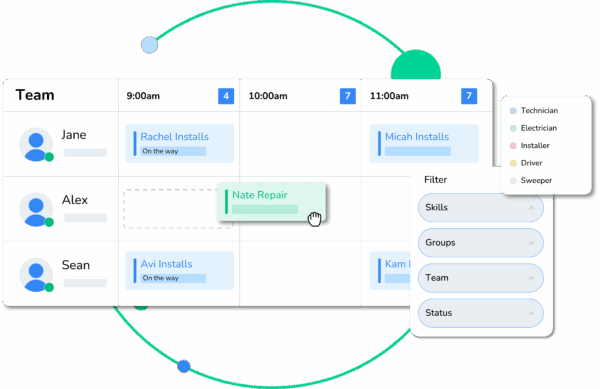
Arrivy’s visual dispatch board helps prevent overbooking and overlapping routes by providing a clear view of availability and territory assignments. It also tracks equipment utilization, ensuring assets are deployed effectively rather than sitting idle.
6. Scales With Your Business
Whether you manage a large enterprise or a small to mid-sized business (SMB), modern dispatching solutions are built to scale with your business needs. Dispatch software grows as your company grows. Its cloud-based architecture allows the system to adapt to changing volumes without requiring major upgrades.
Dispatching platforms like Arrivy help to scale your business without adding any unnecessary complexity. The software efficiently assigns tasks and optimizes schedules according to the team sizes.
7. Data-Driven Decision-Making
With a modern dispatch solution, managers can monitor KPIs such as average job duration, fuel usage, or delay frequency. These insights can be used to make timely and smart operational decisions. Predictive analytics also help in forecasting demand, identifying resource gaps, and even suggesting preventive maintenance schedules based on usage trends.
Arrivy helps you to make data-driven decisions by turning your everyday operations into actionable insights. It tracks technician performance, on-time arrivals, and service durations to highlight efficiency gaps and training needs. Through these insights, managers can analyze route performance, fuel savings, and equipment usage time. Ultimately, leading to analyzing ROI, CSAT, response times, and feedback patterns.
8. Compliance and Safety
Modern dispatching software ensures safety and efficiency for your business. Advanced dispatch systems assist fleet managers in monitoring driver behavior, which ultimately reduces accident risks and ensures on-time performance. The in-vehicle sensors can track metrics like speeding, harsh braking, and idle time. This helps in maintaining compliance and reducing insurance costs.
Arrivy also provides a built-in safety analytics that connects directly to operational KPIs. Fleet managers can set safety thresholds and flag drivers at risk. It helps them to link performance data to incentives and retraining programs. The platform also allows easy tracking of metrics such as incident rates, safety scores, and insurance trends that can help your business to maintain accountability across teams.
Core Features of Smart Dispatch Systems in 2026
Dispatching solutions combine AI, data analytics, and cloud technology. It helps to create an end-to-end operational control. Here are the core features of smart dispatch systems like Arrivy in 2026:
| Feature Category | Capabilities | Arrivy’s Implementation |
|---|---|---|
| AI-Powered Scheduling | Predictive job assignment, dynamic rescheduling, and capacity optimization. | Automatically assigns jobs based on real-time factors and adjusts schedules instantly for delays or urgent requests. |
| Integrated CRM | Bi-directional synchronization with major CRMs and automated task creation from sales data. | Seamlessly integrates with Salesforce, HubSpot, and others, syncing field updates directly back to the CRM. |
| Route Intelligence | Live traffic adaptation, multi-stop optimization. | Saves up to 30% of operations time while accounting for vehicle specifications and load capacity. |
| Unified Communications | Role-based messaging, task journals, and automated customer notifications. | Centralizes all job communication, reduces status calls, and cuts missed appointments by nearly 50%. |
| Real-Time Visibility | GPS tracking for crews, machine-learning-based ETAs, and digital proof of work. | Provides a map-based dispatch console with automated customer alerts for complete transparency. |
| Automation Suite | Auto-dispatch rules, digital workflows, and instant invoice generation. | Eliminates over 8 hours of manual work weekly and supports fully paperless operations. |
| Advanced Analytics | Performance dashboards, cost-per-job tracking, and predictive capacity planning. | Identifies operational inefficiencies and forecasts staffing needs for better resource allocation. |
Emerging Trends in Dispatch Solutions for 2026
According to a recent survey, 64% of fleets using FSM solutions rated them extremely beneficial for business productivity. If you are also planning to upgrade according to the emerging trends, then these are the futuristic features you can look for in an intelligent, connective, and sustainable dispatching solution:
Artificial Intelligence and Machine Learning (AI/ML)
- Predictive Estimated Time of Arrivals (ETAs)
- Smart job assignment based on real-time conditions
- Automated delay alerts for proactive communication
- Self-optimizing routes that improve efficiency over time
Internet of Things and Telematics (IoT/Telematics)
- Integration with Samsara for connected fleet insights
- Vehicle diagnostics and health monitoring
- Electronic Logging Device (ELD) compliance tracking for safety and regulations
Mobile-First and Voice Technology
- Native iOS and Android applications for on-the-go management
- Voice-enabled task updates for hands-free convenience
- Hands-free navigation for safer and faster field operations
Cloud and Application Programming Interface-First (Cloud/API-First)
- REST (Representational State Transfer) API integrations for seamless connectivity
- Web-based dispatch console accessible from anywhere
- Software Development Kit (SDK) for creating custom user interfaces (UIs)
Green Logistics
- Idle time tracking and reduction to save fuel
- Carbon footprint reporting to support sustainability initiatives
Compliance Technology
- Digital Driver Vehicle Inspection Reports (DVIRs) for accurate recordkeeping
- Automated log generation and management
- Audit trails that enhance transparency and accountability
- Geo-fenced compliance checks to ensure regulatory adherence
Real-World Use Cases of Dispatch Software
Dispatch software is designed to organize operations and enhance customer experience across various industries. Below are the key capabilities of dispatch software and how they benefit different industries:
1. Plumbing / HVAC / Cleaning / Electrical Services
Booking – Enables self-scheduling through dynamic calendars, allowing dispatchers to manage time buffers and avoid appointment conflicts.
Routing / Scheduling – Uses automated, skill, area, or task-based scheduling to assign jobs by proximity, workload, or technician expertise.
Dispatch View – Displays live job statuses (e.g., En Route, Completed) and crew locations for improved visibility.
Technician App – Allows field crews to clock in/out, access customer notes, fill digital forms, and upload job photos on-site.
Digital Forms – Offers customizable checklists (such as safety inspections) with real-time review and supervisor sign-off.
Customer Portal – Sends automated notifications, collects feedback, and gathers post-service ratings via email or SMS.
Reporting – Provides downloadable insights on technician productivity, attendance, and recurring service issues.
Invoicing / Payments – Auto-generates invoices after job completion and syncs with accounting systems like QuickBooks or Xero.
2. Solar/ Roofing/ Pool Services
Booking Portal – Uses dynamic calendars that adapt to project size or duration (e.g., roof area or solar setup).
Surveys – Captures pre-job site photos, checklists, and compliance templates for better preparation.
Estimation – Attaches quotes to bookings and converts them to invoices upon approval.
Scheduling / Dispatching – Tracks materials and inventory (e.g., solar panels, roofing supplies) to allocate resources efficiently through a mobile app.
Digital Forms – Enables job documentation with geotagged photos to ensure compliance and quality assurance.
Customer Experience – Shares transparent progress updates (e.g., “Your pool liner is 50% installed.”) to enhance trust and satisfaction.
3. Delivery and Logistics
Multi-Stop Routing – Optimizes routes using AI-powered sequencing for 50+ stops, reducing both fuel consumption and delivery time.
Digital Proof of Delivery (POD) – Enables drivers to collect electronic signatures, notes, and photos that sync instantly with customer records.
Dynamic ETAs – Provides live tracking links so customers can monitor driver location and receive updated arrival estimates (e.g., “Delayed by 15 minutes.”).
4. Healthcare and Home Services
Booking / Self-Scheduling Portal – Enables patients or clients to schedule appointments online within predefined time windows.
Tracking – Enables administrators to view caregiver status, route, and patient visit completion in real time.
Customer Experience – Sends automated confirmations and follow-ups to enhance patient satisfaction and reduce no-shows.
Team Notifications – Issues instant alerts for schedule changes or urgent visit requests, keeping caregivers informed and aligned.
Data Security – Protects sensitive medical information through encryption and audit logs, ensuring compliance with regulatory standards.
Collectively, these capabilities illustrate how dispatch software aligns with the distinct requirements of each industry.
Choosing the Right Dispatching Solution for Your Business
A good dispatch software helps in saving costs of up to 40%. When choosing the dispatching solution for your business, you can focus on your operational goals. Keep these criteria in mind when making a decision:
Scalability
The solution can grow with your business and handle any shift in seasonal demand.
AI and Automation
It should be suitable for predictive scheduling, smart reassignments, and adaptive optimization.
Integration Flexibility
The software must be compatible with your CRM, ERP, and financial systems via open APIs.
User Experience
Before selecting a solution, take a sandbox test to evaluate both dispatcher and field-agent interfaces for ease of use and offline functionality.
Compliance Support
Confirm that the platform simplifies regulatory reporting and safety tracking.
Security
A reliable dispatching solution should include strong encryption, access controls, and audit trails.
Vendor Support
Onboarding guidance and responsive customer support are mandatory for system adoption.
ROI Tracking
Set measurable KPIs, such as reduced fuel costs or faster job completion, to check quick wins and monitor value over time.
Overcoming Common Implementation Challenges
Many businesses using dispatch software for the first time are unaware of the potential challenges it can bring. The common issues you may encounter during implementation are explained here:
1. Cost Management
Focus on essential features instead of overpaying for unnecessary add-ons.
Choose a pricing model that can scale with your business growth.
2. User Adoption
Opt for software designed with a clean, intuitive interface.
Ensure the vendor provides onboarding materials and continuous support.
3. System Integrations
Prioritize platforms built with native integrations and open APIs for easy integration with your existing tools.
Conclusion: The Need for Dispatching Solutions
The dispatch software market is estimated to grow at an annual rate of 10.6% between 2025 and 2033, reaching an estimated value of USD 6.15 billion by the end of 2033. These statistics highlight the importance of having an up-to-date dispatching solution for your business growth. The best software can make it easier to deliver fast service, reduce waste, and use resources more effectively. Platforms like Arrivy bring together automation, live tracking, and predictive insights for your operations. With efficient dispatching software, you can also guarantee increased ROI and enhanced customer experience. The future belongs to technology; therefore, companies that invest in modern dispatch systems today are planning ahead of time.